





Gas Fund’s Interventions At N430bn, Speed Up N1.6trn Investments
Gas infrastructure
The Midstream and Downstream Gas Infrastructure Fund (MDGIF) said its interventions in Nigeria’s gas sector had risen to more than N430 billion and have catalysed approximately N1.6 trillion in total investments.
The executive director of the MDGIF, Oluwole Adama, made this known on the sidelines of the official commissioning of the Rolling Energy High-Capacity CNG Station by President Bola Tinubu.
Recall that the Nigerian Midstream and Downstream Petroleum Regulatory Authority (NMDPRA) had, in November 2025, revealed that the MDGIF had committed over N287 billion to gas infrastructure development across the country.
Adama, who is represented by the director, Project Management at MDGIF, Hussaini Basaka, said that MDGIF has taken a 45 per cent stake in Rolling Energy’s project.
“This development in Abuja consists of 18 facilities: three mother stations, seven daughter stations and eight LNG unloading stations designed to serve industrial customers.”
He added: “So far, we have invested in 31 gas infrastructure projects, comprising 125 gas infrastructure facilities. About ten of those have been commissioned, while many are at different stages of completion.”
“We are building a portfolio that spans mother and daughter stations, LNG facilities and the attendant logistics to service industry and transport,” he said. “Our goal is clear — drive down costs, promote cleaner energy, and catalyse private investment across the gas value chain,” Adama noted.
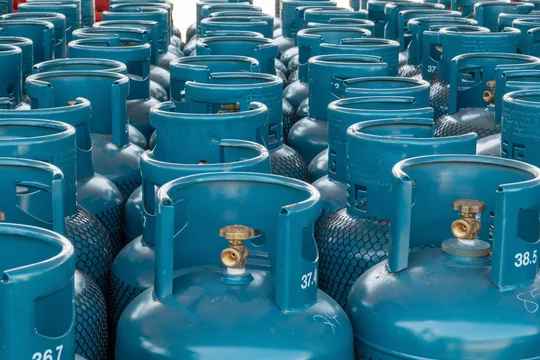
The four MDGIF‑backed projects commissioned on Friday were listed by President Tinubu. “FEMADEC Energy at the Federal University of Technology, Owerri — the first of twenty CNG refuelling stations in our federal universities; Portland Gas at Ojota, Lagos — a 96,000 SCMD CNG mother station, with a daughter station in Kubwa, Abuja; Ibile Oil and Gas, with its network of fifteen CNG refuelling stations across Lagos State; and Rolling Energy at Jahi, Abuja — anchoring a portfolio of seventeen RLNG and LCNG facilities across Kaduna, Kano and Borno,” he said.
“These projects will lower transport costs, expand cleaner energy adoption, and strengthen Nigeria’s energy sovereignty,” the president added.
The Presidential Compressed Natural Gas Initiative (PCNGI) chairman, Barrister Ismaeel Ahmed, stressed that the programme has attracted significant private funding. “You cannot call this a political uptick,” he told reporters. “The private sector has invested two billion dollars and counting from its own funding.”
Ahmed also highlighted the government’s contribution. “Government has invested more than N400 billion of its own funding,” he said, adding that the roll‑out of gas infrastructure takes time because “people are accustomed to a particular form of energy.”
“The private sector has invested $2 billion and counting.” He added a note on timing: “Infrastructure development in gas takes time because behavioural change does not happen overnight.”Ahmed reiterated.
On financing for vehicle conversion, the senior special assistant to the president on Digital/New Media, O’tega Ogra, told the press that the administration has tools to help motorists switch to CNG. “Currently, you can go through Moniepoint and CreditCorp to get a loan at a discounted rate to convert your motor vehicles, tricycles, lorries or trucks to CNG, and repay over a long period of time,” he said. “This is aimed at ensuring wider adoption of the CNG revolution.”
Ogra said the CNG projects formed part of a wider presidential agenda. “These projects originated from President Tinubu’s initiative aimed at curbing the excesses of the fuel subsidy regime while reducing wastage in government spending,” he said.
On the day, President Tinubu hailed the projects while noting their expected economic benefits. “These interventions will lower transport costs, expand cleaner energy adoption, and strengthen our energy sovereignty,” he said.
Background information from the PCNGI shows the federal government has already taken steps to support conversion and local industry.
“In March 2025, we launched a N2.5 billion credit scheme to encourage the conversion of vehicles to the use of CNG and the manufacturing of conversion kits,” the initiative said in a statement. “The scheme is intended to ease energy and transportation costs and boost gas mobility.”


