





Manny Ita
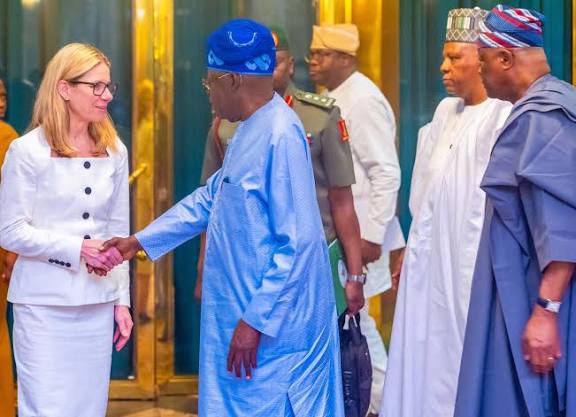
The World Bank has lauded President Bola Tinubu’s administration for its economic reform agenda, describing Nigeria as a frequent global reference point for reform implementation and results. During a high-level delegation visit to the State House in Abuja on Tuesday, February 3, 2026, the World Bank’s Managing Director of Operations, Anna Bjerde, noted that the outcomes achieved by Nigeria over the past two years have become a central topic of discussion among global leaders and investors. “Nigeria is a frequent example in my discussions around the world because the results achieved in two years are really commendable,” Bjerde stated, adding that the President’s consistency in leadership has built significant confidence despite the inherent challenges of the process.
Ms. Bjerde further emphasized that feedback from the Nigerian private sector indicates an improvement in investor sentiment and a recognition of strong reform outcomes. She informed the President that the bank’s upcoming Country Partnership Framework would align with Nigeria’s vision of achieving a $1 trillion economy and a seven percent growth rate, with a primary focus on job creation for the continent’s growing youth population. Identifying priority sectors, the World Bank official highlighted infrastructure investment, agriculture modernization, and access to finance for small and medium enterprises. “Even when reform implementation is difficult, there is no turning back. You are staying the course,” she said, noting that the bank is preparing a new reform-linked budget support operation to complement the government’s efforts. “Your reforms and our budget support go hand in hand,” she added.
In his response, President Tinubu reaffirmed that his administration’s reform agenda is irreversible, describing the removal of the fuel subsidy and the unification of the exchange rate as difficult but vital decisions for long-term stability. “Since we went into this turn of reform, we are never going to look back,” the President asserted, noting that while the initial impact caused high inflation, the economy has since shown signs of dramatic stabilization. “The first reaction was high inflation, but it has come down dramatically. Now that it is stable, we can help investors,” he said. The President identified agriculture as a key pillar for future growth and urged the World Bank to reduce bureaucratic hurdles to accelerate innovative financing and skills development.
The World Bank disclosed that its current public sector portfolio in Nigeria stands at approximately $17 billion, with the International Finance Corporation (IFC) investing an additional $5 billion annually. As the meeting concluded, Ms. Bjerde reiterated the bank’s commitment to supporting Nigeria through expanded risk guarantees to attract private capital. President Tinubu assured the delegation of Nigeria’s openness to deeper engagement, stressing that the country has “its hands on the plough” and remains focused on securing a prosperous future through sustained partnership and accountability.