




Manny Ita –
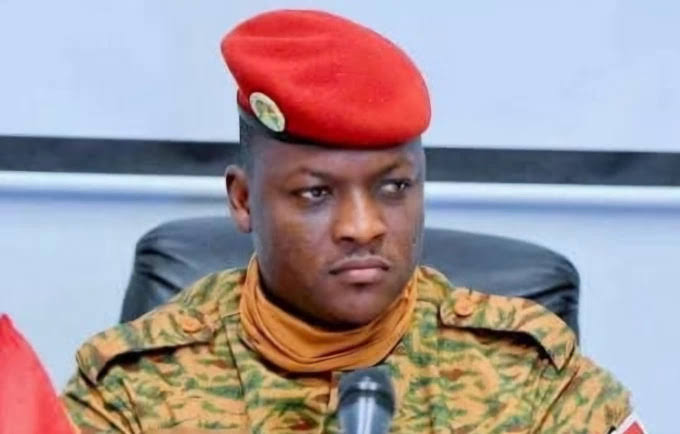
Burkina Faso’s military ruler, Ibrahim Traoré, has declared that democracy is unsuitable for his country, urging citizens to “forget” the system entirely. His remarks came during a televised interview aired on state media, marking one of his strongest rejections yet of democratic governance.
Traoré, who seized power in a 2022 coup, argued that democracy has caused more harm than good in Africa. According to him, attempts to impose democratic systems—particularly by Western powers—have often led to instability and violence rather than progress. He cited the situation in Libya as a cautionary example, pointing to the turmoil that followed the fall of longtime ruler Muammar Gaddafi.
Initially, the junta had promised to restore civilian rule by July 2024. However, just months before that deadline, authorities extended military governance by an additional five years. In January 2026, the regime escalated its stance by banning all political parties, describing them as divisive and incompatible with its national vision.
In the interview, Traoré criticized traditional politics, portraying politicians as dishonest and self-serving. He insisted that Burkina Faso is developing a unique governance model centered on sovereignty, patriotism, and grassroots participation. While he did not provide clear details, he emphasized a system that relies more on traditional leadership structures and mass mobilization than electoral politics.
Beyond governance, Traoré stressed the importance of economic and military self-reliance. He argued that Burkina Faso must move away from dependence on foreign powers and adopt a culture of hard work to compete globally.
Despite positioning himself as a revolutionary and pan-African figure challenging Western influence, his administration has faced significant criticism. Reports indicate increasing repression of dissent, with opposition figures, journalists, and civil society actors facing crackdowns. There have also been allegations that critics are being forced into frontline military service amid the country’s ongoing conflict with Islamist insurgents.
Security remains a major concern. Burkina Faso continues to battle a decade-long insurgency, which has worsened despite shifting alliances away from Western partners like France toward new cooperation with Russia. A recent report by Human Rights Watch claims that more than 1,800 civilians have been killed since Traoré took power, with a significant number of deaths attributed to government forces and allied militias.
Traoré’s stance reflects a broader trend in parts of West Africa, where military-led governments in countries like Mali and Niger are increasingly challenging democratic norms while promoting alternative governance models rooted in nationalism and anti-Western sentiment.
Even so, most African nations continue to hold elections, though some face criticism over transparency and fairness. Traoré’s comments are likely to intensify debate across the continent about the future of democracy, governance, and sovereignty in Africa.