





The Federal Government says it is working on major policy to cut Nigeria’s heavy reliance on imported medical equipment, a challenge that sees 85% to 99% of devices and in vitro diagnostics in West Africa brought in from abroad.
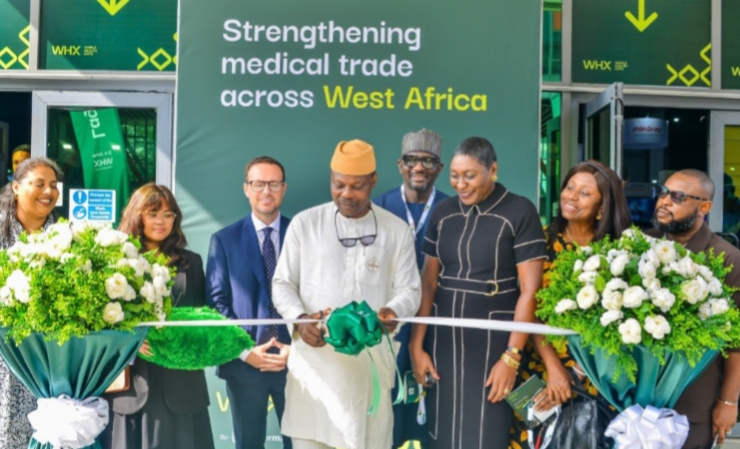
While speaking at the 2026 World Health Expo, formerly Medic West Africa, in Lagos, Minister of State for Health and Social Welfare, Dr. Isiaq Adekunle Salako,who represented President Bola Tinubu. The 3-day event drew over 8,000 health professionals and 500 exhibitors from 40 countries.
Salako said the administration has activated two key directives: the Presidential Initiative to Unlock Healthcare Value Chains, PVAC, and an Executive Order for the Pharmaceutical and Allied Sectors. Both are designed to strengthen health security, drive economic growth, and create jobs through private sector partnerships and PPPs.
He highlighted ongoing reforms including the $1.2 billion Sector-Wide Approach, SWAP, which targets financing, workforce, and infrastructure gaps. For 2025 alone, the government earmarked N402 billion for health infrastructure upgrades. “Our commitment to equipping hospitals with modern technology is backed by action,” he said.
With Nigeria’s health sector expected to grow 7.1% to $161.7 million by 2027, and West Africa’s market topping $11 billion, Salako called on global investors to tap the opportunity. “Nigeria is open for healthcare investment. Platforms like WHX Lagos must turn ambition into real tech gains,” he added.
Healthcare Federation of Nigeria President Njide Ndili stressed the need for patient capital, saying HFN is building links to make local health firms scalable. Lagos Health Commissioner Prof. Akin Abayomi pointed to the NHIA Act’s rollout in Lagos as a step toward affordability and universal coverage. Africa CDC’s Prof. Aliko Ahmed noted COVID-19 and Ebola showed Africa’s vulnerabilities but also opened doors for homegrown solutions.