


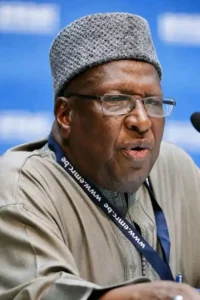





Davos Forum: Local Capital Crucial To Nigeria’s Energy Transition – Okunbo
Elegbede Abiodun
… Says Africa’s energy transition depends on strong indigenous partnerships and supportive regulation.
At the World Economic Forum (WEF) in Davos, Executive Director of Pipeline Infrastructure Nigeria Limited (PINL), Osahon Okunbo, said the retreat of global financiers from Africa’s oil and gas sector presents a unique opportunity for local capital and indigenous expertise to drive Nigeria’s energy future.
Speaking on the panel “Powering Africa’s Next Growth Cycle: Gas, Renewables, Capital & Entrepreneurs in a Pragmatic Energy Transition Concept”, Okunbo described the strong Nigerian presence at Davos as encouraging, stressing that capital for energy infrastructure still exists within Africa.
“There is capital available in Africa and in Nigeria,” he said, citing the Ajaokuta–Kaduna–Kano (AKK) gas pipeline as a game-changing project for domestic gas supply and northern industrialisation.
“Nigeria must increasingly build for itself with Nigerian solutions to Nigerian problems,” Okunbo said.
Addressing investors’ concerns, he dismissed security fears as overstated, noting that PINL has successfully delivered over 600 kilometres of pipeline infrastructure across hundreds of communities.
“If security were truly the problem people claim, these projects would not have been delivered,” he said, attributing this success to improved collaboration between host communities and security agencies in the Niger Delta.
He also downplayed political risk, arguing that Nigeria is more stable today than in past decades, citing fuel subsidy removal and exchange-rate unification as reforms boosting investor confidence.
“Nigeria is ready and open for business,” he said.
However, he warned that maintenance culture and long-term reinvestment remain weak links in infrastructure planning. Using the Trans-Niger Pipeline built in the 1970s as an example, he said decades of underinvestment left critical assets vulnerable.
“We are now rebuilding infrastructure with reinvestment built in from day one,” he said.
He identified community buy-in as a decisive factor, noting that production reliability surged from 3 per cent to 98 per cent during the transition from SPDC to Renaissance Energy after communities were fully engaged.
“We achieved results by carrying communities along, not by force or heavy kinetic deployment,” he said.
He insisted that Africa’s energy transition depends on patient capital, strong indigenous partnerships and supportive regulation, expressing optimism that ongoing power-sector reforms, including cost-reflective tariffs and improved revenue collection, will unlock private investment.


