






Manny Ita –
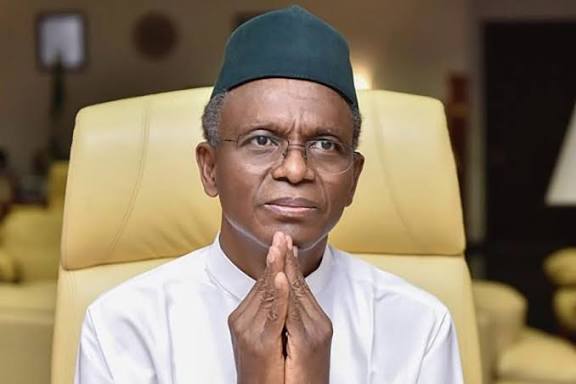
The Independent Corrupt Practices and Other Related Offences Commission (ICPC) has officially confirmed the detention of former Kaduna State Governor Nasir El-Rufai for interrogation, marking a sharp escalation in the coordinated legal scrutiny of his eight-year administration. The development occurred late Wednesday, February 18, 2026, when El-Rufai was reportedly taken into custody by armed operatives shortly after being granted administrative bail by the Economic and Financial Crimes Commission (EFCC). In a formal statement issued just before midnight, the ICPC’s Head of Media and Public Communications, John Odey, verified the former governor’s status, stating, “The Independent Corrupt Practices and Other Related Offences Commission (ICPC) writes to state that Malam Nasiru El-Rufai, the former Governor of Kaduna State, is in our custody as at close of work today, Wednesday, the 18th day of February, 2026. Malam Nasiru El-Rufai is in the custody of the Commission in connection with investigations.”
The transfer to the ICPC headquarters in Abuja follows two days of intensive questioning by the EFCC regarding alleged financial misappropriation amounting to over ₦432 billion, as highlighted in a 2024 indictment by the Kaduna State House of Assembly. Beyond these fiscal allegations, the former governor faces a complex web of legal challenges, including a three-count criminal charge filed by the Department of State Services (DSS) at the Federal High Court in Abuja. These charges, marked FHC/ABJ/CR/99/2026, allege that El-Rufai admitted to the “unlawful interception of the phone communications” of the National Security Adviser, Nuhu Ribadu, during a recent television interview. The federal government contends that such actions constitute a serious breach of the Cybercrimes (Prohibition, Prevention, etc.) Amendment Act and pose a significant threat to national security.
Despite the mounting allegations, El-Rufai has consistently maintained his innocence, previously describing the investigations as “politically motivated” maneuvers by the current administration. Before his recent detention, the former governor, who recently defected to the opposition African Democratic Congress (ADC), had accused the National Security Adviser of orchestrating his arrest as a form of political intimidation. While his legal team has yet to issue a fresh statement following the ICPC’s midnight confirmation, the anti-graft agency has indicated that the interrogation is ongoing, though it declined to specify if a formal arraignment is imminent. This multi-agency approach—encompassing the EFCC, ICPC, and DSS—underscores a rare level of institutional synergy in the investigation of a high-profile political figure, signaling a pivotal moment in the nation’s anti-corruption and internal security landscape for 2026.


