



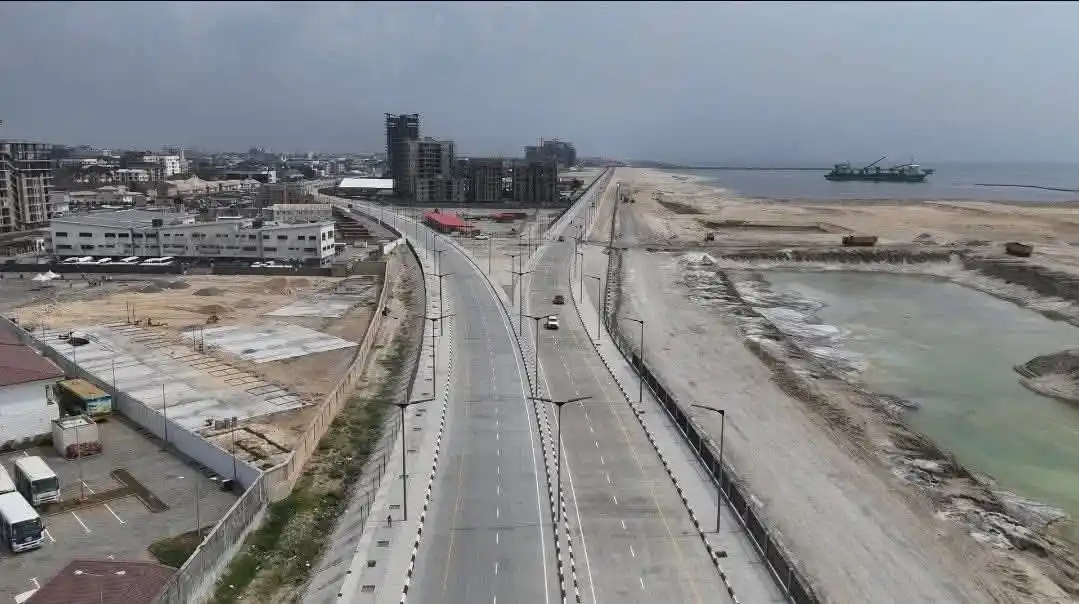
File: Lagos-Calabar Coastal Highway
The Ijaw Youth Council Worldwide has appealed to President Bola Tinubu to intervene in the controversy surrounding the proposed diversion of the Lagos-Calabar Coastal Highway.
It urged Tinubu to direct the Minister of Works, David Umahi, to retain the original route approved by the Federal Executive Council.
The council warned that diverting the 750-kilometre highway to the existing East-West Road from Ondo State would undermine the interests of Edo, Delta, Bayelsa and Rivers states, which were included in the original coastal alignment.
The IYC made the appeal at a press conference held on Thursday at the Ijaw House in Yenagoa, Bayelsa State, describing the reported plan to alter the route as unacceptable to the Ijaw nation and other ethnic nationalities in the South-South.
The council, led by its National President, Dr Doubra Okotete, called on Tinubu to ensure that the project follows the original coastal corridor through Ondo, Edo, Delta, Bayelsa and Rivers states.
It said the federal government should also release the approved designs and engineering drawings of the entire highway to the public to address concerns over the project’s direction.
“We call on His Excellency, President Bola Ahmed Tinubu, to address this matter with the needed urgency it deserves. Prove to us that the President is not just the Asiwaju of Lagos State or the Jagaban of the West, but the President of Nigeria,” the council said.
The IYC urged the President to call the Minister of Works to order and ensure that the highway is constructed in accordance with the original design approved before the contractor was mobilised to site.
The council also demanded the immediate start of work on the Rivers, Bayelsa, Delta and Edo axis, alongside construction on the Lagos-Ondo and Cross River-Akwa Ibom sections.
According to the IYC, the reported justification of financial constraints and difficult terrain for altering the route was unacceptable, particularly given the contributions of the South-South to the nation’s economy.
“How can a project be too expensive or its terrain too difficult in the very region that produces over 85 per cent of the nation’s wealth?” the council asked.
It argued that oil and gas revenues from the region had contributed to national development and the construction of major infrastructure projects in other parts of the country, insisting that the South-South should not be excluded from a project intended to benefit its coastal communities.
The council further cited ongoing road and bridge projects by the Bayelsa State Government and the Niger Delta Development Commission as evidence that challenging swampy and riverine terrain could be overcome with adequate political will and commitment.
It specifically referenced the Nembe-Brass Road project, the Yenagoa-Oporoma-Ukubie Road and the Ekeremor-Agge Road in Bayelsa, as well as the Port Harcourt-Okrika Road and Bonny Ring Road projects.
The IYC also offered to sponsor a fully funded visit by former Cross River State Governor Donald Duke to Bayelsa to inspect some of the infrastructure projects and assess the challenges of road construction in the Niger Delta.
The council maintained that the difficulty of the terrain should not be used as a reason to abandon the original coastal alignment after the project had undergone feasibility studies, design, and commencement of construction.
On the political implications, the IYC warned that any diversion of the highway could damage Tinubu’s acceptance and the All Progressives Congress’ electoral prospects in the South-South ahead of the 2027 general elections.
It noted that some South-South governors, including Bayelsa Governor Douye Diri, Delta Governor Sheriff Oborevwori and Rivers Governor Siminalayi Fubara, had defected to the APC amid expectations of greater federal presence and people-oriented projects in the region.
“But where the Minister of Works is allowed to follow through with his plan to divert the road from Ondo State and merge it with the already dilapidated East-West Road, then Mr President should be prepared to lose his wide acceptance and goodwill in the entire South-South.
“You cannot seek our votes while taking away our roads,” the council said.
The council said the Federal Government must take concrete steps to restore public confidence in the project, arguing that assurances alone would not be sufficient without the release of the approved engineering documents and the commencement of work across the affected states.
It also expressed reservations about the Minister of Works’ subsequent clarification on the controversy, insisting that the government should demonstrate through action that the original route would be maintained.
The IYC warned that diverting the coastal highway into a rehabilitation project on the East-West Road would reinforce concerns that the project was not originally intended to serve the South-South.
The council, however, stressed that the Ijaw people were peaceful and accommodating, urging the minister of works to exercise caution in his public statements and decisions on a project of national importance.
It cautioned that any decision capable of excluding the region from the highway could have unintended political consequences as the 2027 elections approach.
The IYC reiterated its demand that the 750-kilometre Lagos-Calabar Coastal Highway should retain its original alignment and that construction should proceed across all the designated sections without further delay.