






Lagos converts 65 vehicles to work on CNG, 550 more by July — Commissioner

CNG Bus
Lagos converts 65 vehicles to work on CNG, 550 more by July — Commissioner
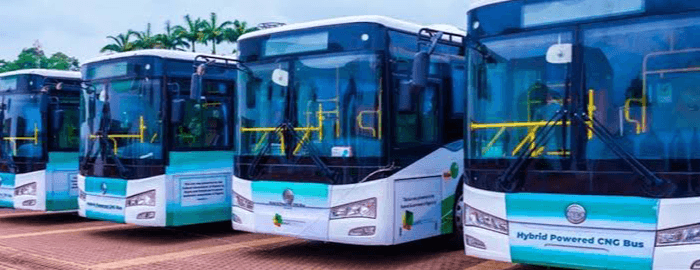
The Lagos State Government through the IBILE Oil and Gas Corporation has disclosed that 65 vehicles have already been converted to run on Compressed Natural Gas with an additional 550 vehicles expected to be converted by July 2025.
This development is part of the state’s clean transport energy programme designed to ease the burden caused by the removal of fuel subsidies.
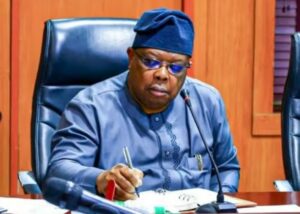
The announcement was made by the state Commissioner for Energy and Mineral Resources, Biodun Ogunleye, during the 2025 ministerial press briefing held at Alausa, Ikeja on Tuesday.
The briefing formed part of activities marking Governor Babajide Sanwo-Olu’s six years in office.
Ogunleye explained that the CNG initiative aligns with the Presidential CNG Initiative, championed by President Bola Tinubu.
Providing updates on progress, Ogunleye stated that, ”65 vehicles so far converted to CNG, ongoing 550 vehicles to be completed by July 2025
“85 technicians trained from existing OEM workshops
“17 master train-the- trainer technician completed 316 training hours and certified
“17 CNG filling stations will be operational by October 2025
“11 CNG delivery trucks will be operational by October 2025.”
According to him, the programme is intended to provide “cleaner, cost-effective alternatives for transportation,” helping to mitigate the effects of rising fuel prices in the aftermath of the subsidy removal.
He added, “IOGC is providing clean, reliable energy by developing infrastructure and supplying gas for domestic, transportation, and industrial uses across all five divisions of the state.”
Reiterating the administration’s focus on safety and sustainability, Ogunleye noted that the CNG initiative is part of a broader energy transition plan being led by the Ministry of Energy and Mineral Resources.
The ministry recently launched a comprehensive energy roadmap aimed at ensuring universal energy access, boosting electricity reliability, and fostering local manufacturing of power infrastructure.
Under the Lagos State Electricity Law of 2024, the government is now implementing the Lagos Electricity Market.
This includes issuing licences to independent electricity distribution companies, supporting embedded generation solutions, and launching the Lagos Independent System Operator to enhance power supply stability across the state.
“We are taking deliberate steps to transition Lagos into a 24-hour economy through reliable and sustainable energy solutions,” Ogunleye said.
He also outlined ongoing efforts to complete and energise eight interconnected mini-grids in underserved communities.
As part of this push, the state will soon launch the Lagos State Electrification Agency and deepen its collaboration with the Rural Electrification Agency through the DARES Programme.
According to him, these efforts are designed to ensure “no community is left behind in the energy transition.”


