






Manny Ita –
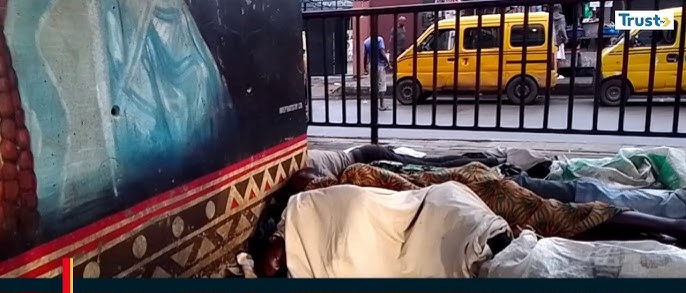
A new form of informal housing has emerged in Lagos State, where some residents are now living on pedestrian bridges as the city continues to grapple with severe housing shortages and rising accommodation costs.
The development was reported along major corridors of the state, including sections of the Lagos–Badagry Expressway, where makeshift structures have been observed on pedestrian bridges constructed to ease movement across busy highways.
According to observations, the settlements differ from traditional “under-bridge” communities that have existed for years in areas such as Ojuelegba, Ijora, Ojota, and Orile. While under-bridge settlements are typically located beneath road infrastructure, the new trend involves occupants erecting temporary shelters on top of pedestrian bridges.
The structures are largely constructed with improvised materials, including wooden supports, tarpaulin sheets, and recycled items used to create rudimentary living spaces. Some of the shelters reportedly function as sleeping areas for individuals who spend extended periods in these locations.
The report noted that similar informal settlements have also developed along parts of the Lagos–Badagry corridor, where residents have occupied roadside spaces, medians, and other non-designated areas for habitation and small-scale activities.
The situation has been linked to broader socio-economic challenges in Lagos, including unemployment, poverty, and the widening gap between housing demand and supply in Nigeria’s commercial capital.
Authorities have previously carried out clearance operations on illegal settlements under bridges and in restricted areas, including a 2024 exercise at Dolphin Estate Bridge in Ikoyi where partitioned rooms were discovered and removed.
Urban planners and observers have raised concerns that the proliferation of such settlements could pose environmental, safety, and public health risks, particularly where sanitation facilities and proper waste disposal systems are lacking.
The emergence of on-bridge habitation highlights ongoing pressure on urban infrastructure in Lagos, as population growth continues to outpace available affordable housing options.


