




Aims to ease Lagos congestion and support the growing population.
The Lagos Metropolitan Area Transport Authority has unveiled an ambitious long-term mobility strategy aimed at transforming transportation across the state, marking a decisive shift from road expansion to a fully integrated mass transit system under its updated Strategic Transport and Mobility Master Plan projected through 2050.
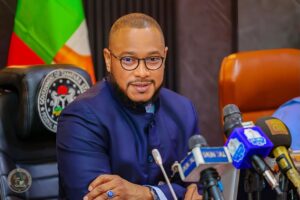
At a high-level stakeholders’ workshop supported by the French Development Agency, the Lagos State Commissioner for Transportation, Oluwaseun Osiyemi, said reliance on road construction alone is no longer sufficient to tackle the city’s mounting congestion challenges.
The LAMATA 2050 transport master plan outlines a multimodal framework centred on expanded rail infrastructure, improved Bus Rapid Transit corridors, and structured ferry services designed to operate as a seamless urban network.
Osiyemi said the state also intends to modernise its public bus fleet with cleaner energy alternatives while strengthening last-mile connectivity to improve accessibility across the metropolis.
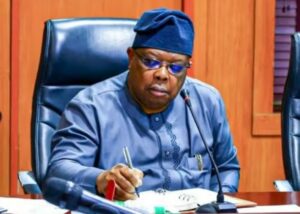
Managing Director of LAMATA, Abimbola Akinajo, highlighted the urgency of the reforms, pointing to projections that Lagos’ population could rise to 45 million by 2050.
With more than 20 million daily trips already recorded, Akinajo described the demand as formidable and requiring a resilient, forward-looking transport system.
She added that the updated master plan is at an advanced stage, supported by extensive multimodal surveys and a newly developed travel demand model to guide infrastructure investment and service delivery.
Stakeholder engagement, she noted, remains central to refining a strategy capable of meeting the city’s long-term mobility needs.
The workshop drew participation from key regional and federal stakeholders, including the Nigerian Railway Corporation and the Ogun State Ministry of Transportation, reflecting the broader geographic scope of the initiative.
Technical sessions were led by the ROM/AEC Consortium, alongside contributions from ministries and agencies responsible for economic planning, infrastructure, urban development, and waterways management.
The coordinated effort signals a powerful commitment to building a more efficient, sustainable, and interconnected transport ecosystem for Africa’s largest city, as authorities seek to future-proof mobility against rapid urban growth.


