
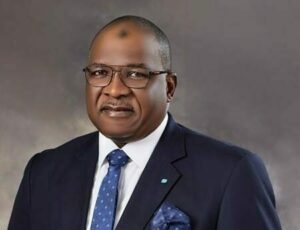




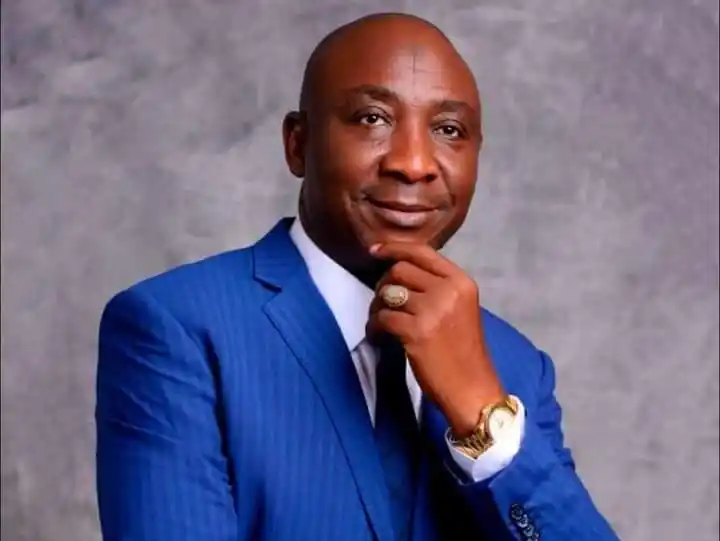
NFF President Ibrahim Musa Gusau
* NFF confirmed on its official X account that General Secretary Mohammed Sanusi had also stepped down.
Nigeria Football Federation (NFF) President Ibrahim Musa Gusau has confirmed his resignation, ending a tenure marked by successive World Cup qualification failures across the men’s, women’s and age-grade national teams.
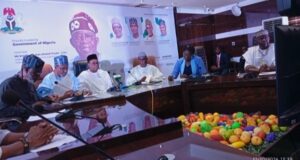
Gusau announced the decision at a press conference in Abuja on Thursday, saying the move followed “consultation with family, friends and stakeholders.”
“As Nigerians, nobody is greater than this country. We all love our country and its progress. And as people who have been in football and managing football, we need to look at ourselves and ask, ‘What next?’ So we made a lot of consultations,” he said.
He added that he had advised NFF board members to follow suit, though he could not say whether they would heed the call.
Minutes after Gusau’s announcement, the NFF confirmed on its official X account that General Secretary Mohammed Sanusi had also stepped down.
The National Sports Commission (NSC) is reportedly working to appoint a chairman for a Normalisation Committee to oversee the federation’s affairs, with an announcement expected soon. Gusau was elected NFF president in 2022, with his tenure due to end this month and an elective congress scheduled for 27 September in Lafia, Nasarawa State. The congress’s fate remains uncertain pending the committee’s formation.
Pressure on Gusau’s board had built for months amid a run of poor results across Nigeria’s national teams. The Super Eagles’ failure to qualify for the 2026 FIFA World Cup in the United States, Canada and Mexico left Nigeria out of the tournament for a second consecutive edition, despite Africa’s expanded allocation of slots.
The crisis deepened when the Super Falcons failed to qualify for the 2027 FIFA Women’s World Cup, ending a run that had seen Nigeria feature at every edition since the tournament’s inception in 1991. The Falcons’ campaign ended with a 2-1 defeat to South Africa in the African play-off in Morocco.
Nigeria’s age-grade teams were similarly affected, with the U-17 side also missing out on its World Cup cycle.