






Elegbede Abiodun
The Alternative Bank (‘AltBank’) is making a major push into electric vehicle (EV) financing, positioning the sector as a key growth opportunity as it seeks to bring Nigeria’s largely informal transport market into the formal financial system.
The Bank said beyond clean energy, EVs are emerging as income-generating assets that can create jobs, reduce operating costs, and open new pathways to financial inclusion for transport operators who have historically been shut out of conventional lending.
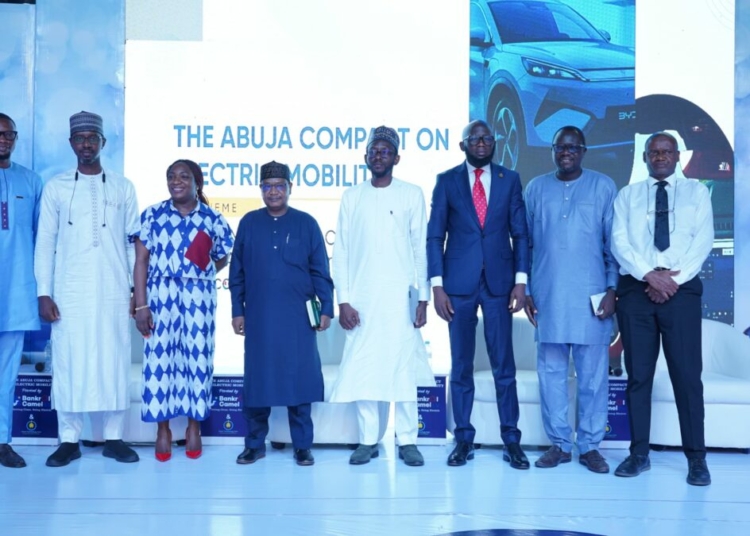
Divisional head, Commercial & Institutional Banking (Core North),Mohammed Abdul, laid out the case at the Abuja Compact on Electric Mobility Roundtable, where government officials, financiers, and industry players gathered to explore how electric mobility can strengthen Nigeria’s economy and support its energy transition.
“Without transport, you cannot effectively achieve growth in any of the other sectors. Mobility powers everything. If you need to get to a hospital, you need mobility. If you are moving from home to the farm, you need mobility. Even in renewable energy operations, mobility is essential,” Abdul said.
He pointed to the sector’s growing economic impact, particularly in job creation and income growth, noting that the shift toward EVs is generating higher-paying opportunities and improving livelihoods across the value chain.
The Bank is already working with partners to expand EV adoption across the country, including exploring retrofitting as a lower-cost entry point for operators looking to transition from petrol-powered vehicles.
AltBank’s strategy draws on its roots as a non-interest banking institution. Abdul said the Bank adopts financing structures suited to the realities of Nigeria’s transport sector, where many operators lack formal credit histories and earn irregular incomes.
“Using models such as Musharakah, where both parties contribute capital and share profits, or Mudarabah, where we provide funding and you bring expertise, we can jointly invest in viable ventures,” he said.
“These models are designed to address the realities of Nigeria’s informal transport sector, where credit histories are limited and income streams are irregular. Our goal is to provide end-to-end financing solutions that are practical, accessible, and aligned with real economic activities.”
Building on its efforts supporting Nigerian automobile companies like NORD and Bankrol CamelEV, AltBank is also collaborating with state governments, including Niger State, and private operators such as Metro Africa Express to test and expand EV financing options for local stakeholders. Ahmed said the current effort is a pilot, with ambitions to scale across Nigeria and into West Africa.
The roundtable featured a closed-door session, keynote address, panel discussions, and an open strategy dialogue. Discussions explored how EVs can extend beyond transport to support mini-grids, local manufacturing, and more stable incomes for operators facing volatile fuel costs. Other stakeholders present at the dialogue included Kolade Kolawole, Deputy Manager, Energy Access, Clean Technology Hub; Engr. Ibrahim Yazid, Principal Industrial Officer, National Automotive Design and Development Council; Omolara Obileye, Head, Stakeholder Management, Presidential Initiative on Compressed Natural Gas and Electric Vehicles (Pi-CNG & EV); Dr. Lawal Gada, CEO, Greenado; Yusuf Suleiman, CEO, Bankrol CamelEV and Blue Camel Energy; Engr. Dapo Adesina, President, Electric Mobility Promoters Association of Nigeria, and more.


