







Manny Ita –
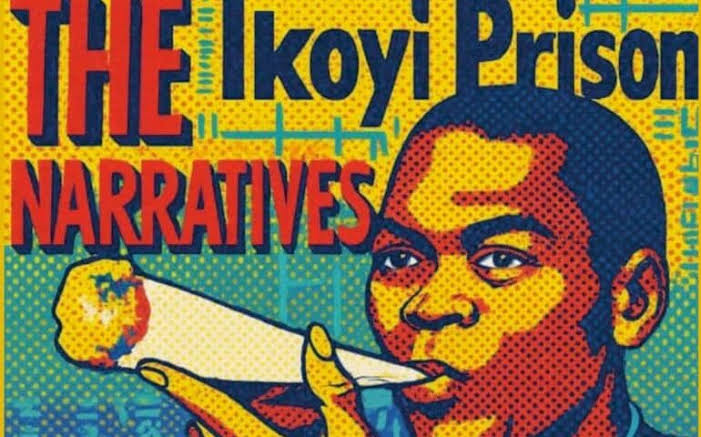
British-Nigerian author and historian Majemite Jaboro has disclosed that his three-month incarceration alongside Afrobeat pioneer Fela Anikulapo-Kuti at Ikoyi Prison in Lagos in 1993 served as a defining moment for his career in writing and social activism. In a discussion surrounding the release of his new book, The Ikoyi Prison Narratives, Jaboro recounted the circumstances that led to his detention and the profound influence of sharing a cell with the musical icon.
At the time, Jaboro, then about 20 years old, had recently been admitted to the University of Lagos to study history. Between January and April 1993, he and Fela were confined in the prison’s “White House” VIP section while awaiting trial. Jaboro described the period as an “intellectual and spiritual awakening,” detailing a daily routine that began at 6:00 AM and included hours of intensive dialogue, during which Fela expounded on African history, political philosophy, and mysticism. “That was when the writing began,” Jaboro stated. “His talks motivated me. I realized future generations might not fully understand Fela beyond his music unless someone documented his thoughts, spirituality, and philosophy from a personal perspective.”
Having previously served as a personal assistant to Fela at the Kalakuta Republic, Jaboro used his prison time to record what he described as an “archive in motion.” He emphasized that the environment of the cell exposed a version of Fela stripped of celebrity myth, revealing a man committed to his convictions despite government pressure. “I was not interested in mythologising Fela. Heroes without flaws are propaganda. History must be honest,” Jaboro said.
Jaboro also highlighted resilience as a central lesson from his interactions with Fela. “The greatest lesson I learnt from Fela is simple but powerful: continue to do what you believe in, no matter the opposition,” he noted. He framed his book not merely as a biography, but as a fulfillment of a historical responsibility to preserve a chapter of Nigeria’s evolution that unfolded away from public attention. “He proved that a microphone could be as powerful as a manifesto,” Jaboro concluded, affirming that his writing career is a direct extension of the “truth, struggle, and consciousness” he witnessed within Ikoyi Prison.


