






Manny Ita –
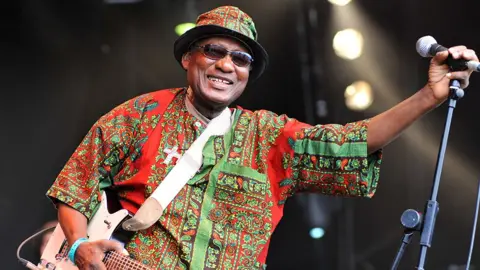
The West African arts community is in mourning following the death of legendary Ghanaian highlife musician and composer Ebo Taylor, who passed away at the age of 90. Widely regarded as one of the most influential figures in African music, Taylor’s death marks the end of an era that shaped the evolution of highlife and Afrobeat across the continent and beyond.
Family sources confirmed that the veteran musician died peacefully, though details surrounding the circumstances of his passing were not immediately disclosed. Tributes have since poured in from musicians, cultural institutions and political leaders across Ghana, Nigeria and the wider African diaspora, celebrating a career that spanned more than six decades.
Born in Cape Coast, Ghana, in 1936, Ebo Taylor began his musical journey at a young age before traveling to London in the early 1960s to study at the Eric Gilder School of Music. It was during this period that he encountered fellow African musicians, including Fela Anikulapo Kuti, with whom he later shared a creative relationship that would influence the development of Afrobeat. Taylor’s work fused traditional Ghanaian highlife rhythms with jazz, funk and Afrobeat elements, producing a distinctive sound that earned him international acclaim.
Over the years, Taylor served as bandleader, arranger and producer, mentoring generations of Ghanaian musicians while also releasing a string of acclaimed records. Albums such as “Love and Death” and “My Love and Music” became cult classics, later rediscovered by global audiences during the resurgence of interest in vintage African recordings in the 2000s.
In a tribute issued by Ghana’s Ministry of Tourism, Arts and Culture, officials described Taylor as “a national treasure whose music carried the soul of Ghana to the world.” The statement added, “Ebo Taylor’s contributions to highlife and Afrobeat are immeasurable. His legacy will continue to inspire future generations.”
Nigerian musicians also paid homage to the late icon, recalling his collaboration and shared stage moments with Fela Kuti. Music historian and broadcaster Kwame Dadzie said, “Ebo Taylor was not just a musician; he was a bridge between eras and genres. His arrangements and guitar work shaped the sound of modern West African music.”
Throughout his career, Taylor remained vocal about preserving African musical identity. In a 2018 interview, he stated, “Our music tells our story. If we do not play it and protect it, nobody else will.” That philosophy defined his life’s work, as he consistently championed indigenous sounds while embracing innovation.
Despite advancing age, Taylor continued to perform well into his later years, appearing at international festivals and collaborating with younger artists who regarded him as a mentor. His enduring relevance underscored the timelessness of his compositions and the depth of his artistry.
He is survived by his children and grandchildren. Funeral arrangements are expected to be announced by the family in the coming days.
With his passing, West Africa loses one of its most revered cultural ambassadors, but Ebo Taylor’s rhythms, melodies and message remain etched in the continent’s musical history.


