






Manny Ita –
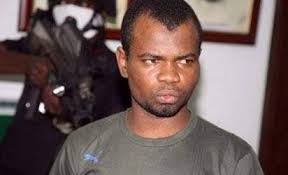
Twelve years after his conviction over the 2011 bombing of St. Theresa Catholic Church in Madalla near Abuja, suspected Boko Haram member Kabiru Umar, widely known as Kabiru Sokoto, has filed an appeal challenging the life imprisonment sentence handed to him by a Federal High Court.
The Christmas Day bombing of December 25, 2011, which Boko Haram claimed responsibility for, killed about 35 worshippers and injured many others.
According to court documents, Mr Umar argued that circumstances beyond his control prevented him from filing the appeal within the legally required period. He cited the deaths of his two former lawyers, repeated transfers between detention facilities, and severe financial difficulties faced by his family.
Kabiru Sokoto was first arrested on January 14, 2012, at the Borno State Governor’s Lodge in Asokoro, Abuja, alongside a serving military officer. During an investigation trip to Abaji, Abuja, where officers were searching a property allegedly linked to him, he escaped from police custody.
The escape triggered major controversy within the police force. Then-head of Zone 7 Police Command’s Criminal Investigation Department, Zakari Biu, who supervised the investigation team, was suspended and placed under house arrest along with other officers involved.
The incident also prompted former President Goodluck Jonathan to issue a 24-hour ultimatum to then Inspector-General of Police Hafiz Ringim to produce the suspect. After failing to do so, Mr Ringim was later retired from service.
Nigeria’s State Security Service later announced that Kabiru Sokoto was re-arrested in February 2012 following a gun battle between security operatives and members of his group in Taraba State.
On December 20, 2013, the Federal High Court in Abuja convicted him on terrorism-related charges. One count attracted life imprisonment, while another carried a 10-year prison term.
Through his lawyers, Don Akaegbu & Company, the convict has now asked the Court of Appeal in Abuja to grant him permission to challenge the judgment despite the long delay.
His legal team filed four major requests before the court, including an extension of time to seek leave to appeal, permission to challenge the conviction, additional time to file a notice of appeal, and an order validating the already-filed appeal documents.
The appeal is based on 12 grounds. Among them, his lawyers argued that he was wrongly convicted under the Economic and Financial Crimes Commission Act instead of the Terrorism (Prevention) Act of 2011, which they insist was the proper law applicable to the case.
They also claimed prosecutors failed to provide credible and direct evidence linking him to the bombing, arguing that the conviction relied heavily on hearsay evidence and a confessional statement allegedly obtained under questionable circumstances.
The defence further argued that the trial court improperly relied on statements that were never formally admitted as evidence and failed to call key witnesses or present mandatory video recordings tied to the investigation.
Another ground of appeal accused the trial judge of making prejudicial remarks by allegedly describing the defendant as a “pathological liar,” while also reversing the burden of proof by expecting the accused to explain gaps in the prosecution’s evidence.
The legal team additionally argued that there was no physical exhibit or eyewitness testimony directly connecting Kabiru Sokoto to the bombing, insisting that the conviction was against the weight of evidence presented in court.
Court filings also revealed that his family only recently traced him to Kirikiri Prison in Lagos, where he is believed to be serving his sentence.