







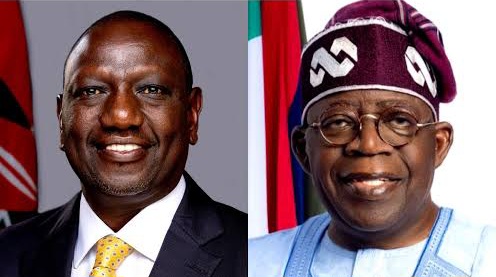
Manny Ita –
A diplomatic and cultural storm is brewing between Nigeria and Kenya following controversial remarks by William Ruto, who appeared to mock Nigerian English during a recent public engagement, triggering widespread outrage across Nigeria’s political and cultural circles.
The comments, which quickly went viral on social media, were interpreted by many Nigerians as dismissive of the country’s linguistic identity and rich literary tradition. Critics argue that Nigerian English—shaped by history, culture, and local expressions—is a legitimate and globally recognized variant of the language.
Among those who strongly condemned the remarks is Shehu Sani, who described Ruto’s statement as “misinformed and culturally insensitive.” Sani pointed to Nigeria’s towering contributions to global literature, including its Nobel laureate legacy, as evidence of the country’s intellectual and linguistic influence.
“Nigeria’s literary heritage speaks for itself,” Sani said. “From our globally celebrated writers to our dynamic use of language, Nigerian English is not something to ridicule—it is something to study.”
The backlash has extended beyond political figures, with academics, writers, and citizens weighing in. Many have highlighted how Nigerian English has evolved into a vibrant linguistic form, influencing music, film, and digital culture across Africa and the diaspora.
In Kenya, reactions have been mixed. While some defended Ruto’s comments as lighthearted or taken out of context, others acknowledged the need for greater cultural sensitivity, especially given the historical and diplomatic ties between both nations.
Analysts warn that while the row may appear cultural on the surface, it reflects deeper sensitivities around identity, respect, and regional influence. Both Nigeria and Kenya are continental heavyweights with strong soft power footprints, and public exchanges of this nature risk escalating into broader diplomatic friction if not carefully managed.
Despite the tensions, there are growing calls for dialogue and mutual respect, with cultural leaders urging both countries to use the moment as an opportunity to celebrate Africa’s linguistic diversity rather than diminish it.


