






Manny Ita
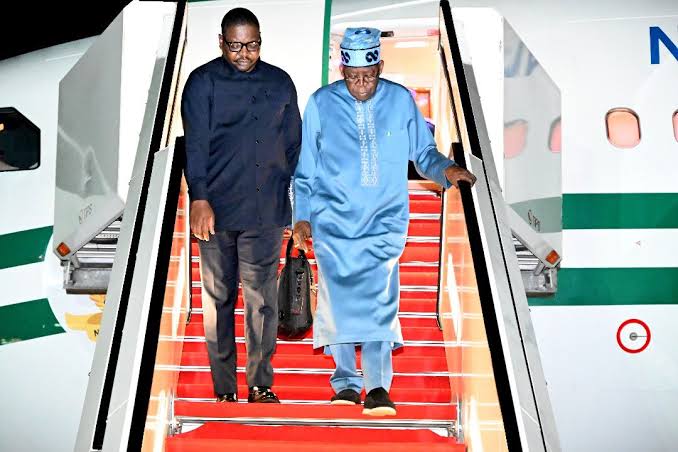
President Bola Tinubu returned to Abuja on Saturday night, January 31, 2026, following a five-day state visit to Turkey aimed at deepening bilateral ties and expanding economic cooperation. The presidential aircraft landed at the Nnamdi Azikiwe International Airport at approximately 8:55 p.m., concluding a trip that centered on a “paradigm shift” in Nigeria-Turkey relations. During the visit, President Tinubu and his Turkish counterpart, President Recep Tayyip Erdoğan, oversaw the signing of nine strategic agreements and Memoranda of Understanding (MoUs) spanning defense, energy, education, and trade. These agreements are designed to provide a legal framework for a shared ambition to increase bilateral trade volume from the current $2 billion to an annual target of $5 billion.
The high-level talks resulted in a new Military Cooperation Protocol, which prioritizes intelligence sharing and specialized training to bolster Nigeria’s counter-terrorism efforts. Other key instruments signed include a joint declaration establishing the Joint Economic and Trade Committee (JETCO), a pact on Halal Quality Infrastructure to improve Nigerian agricultural exports, and MoUs on higher education and media cooperation. President Erdoğan pledged Turkey’s “significant experience” in defense and infrastructure to support Nigeria’s development goals, acknowledging the recent economic reforms initiated by the Tinubu administration as a catalyst for increased Turkish private sector investment.
Upon his arrival in the capital, President Tinubu was received by a delegation of top government officials, including the Minister of the Federal Capital Territory, Nyesom Wike. Reflecting on the outcomes of the diplomatic mission, the President characterized the discussions as “practical and forward-looking,” noting that the agreements were tailored to meet immediate national needs. “Our conversations spoke directly to jobs, investment, and opportunity for our people,” the President stated, reaffirming his administration’s commitment to leveraging international partnerships for domestic economic growth. The presidency further noted that the deals regarding energy and diaspora policy would be implemented with immediate effect to enhance service delivery for Nigerians at home and abroad.