






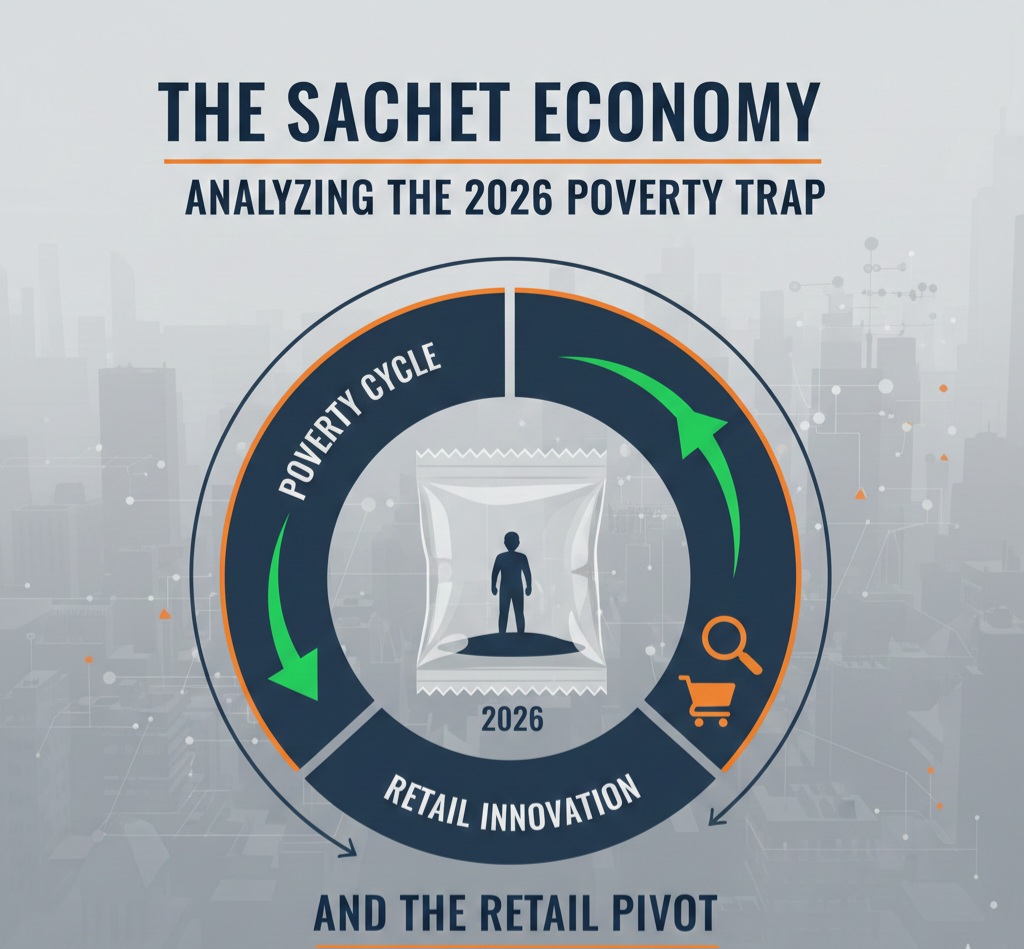
Manny Ita analyzes how poverty projections detailed in the newly released Nigeria Economic Outlook 2026: Turning Macroeconomic Stability into Sustainable Growth might impact specific sectors, such as retail or fast-moving consumer goods (FMCGs)
A harrowing economic forecast has emerged for Nigeria’s most vulnerable citizens. Professional services firm PwC Nigeria has raised an alarm, projecting that the nation’s poverty headcount could surge to 141 million people by the close of 2026.
The revelation, detailed in the newly released Nigeria Economic Outlook 2026: Turning Macroeconomic Stability into Sustainable Growth, suggests that while the government’s recent policy overhauls were intended to steady the ship, the welfare dividend for the average household remains tragically absent.
The projection that 141 million Nigerians—62% of the population—will fall below the poverty line by the close of 2026 signals a fundamental re-tiering of the national marketplace. For the retail and Fast-Moving Consumer Goods (FMCG) sectors, the PwC forecast of stagnant real wages and persistent essential-commodity inflation transforms the consumer landscape from a mass market into a fragmented survival economy. The most immediate impact is the aggressive “sachetization” of products; as household financial buffers evaporate, the demand for bulk purchases is being replaced by single-use, micro-packaged formats (₦50 to ₦200 units).
While these smaller price points facilitate daily survival for the vulnerable 62%, they ironically impose a poverty tax through higher unit costs, further straining the very incomes they aim to accommodate.
In this climate, brand loyalty is becoming a luxury that the Nigerian middle and lower classes can no longer afford. Value has officially usurped Brand as the primary driver of purchase intent, leading to a widespread trading down phenomenon where consumers abandon premium international labels for cheaper local alternatives or supermarket white labels. For FMCG giants like Nestlé, Unilever, and Dangote Sugar, the challenge is no longer just about maintaining margins amidst high energy and logistics costs, but about engineering products that signal affordability with efficacy.
Market data from early 2026 suggests a widening divergence in the stock market: while “Value” players and those with strong backward integration (local sourcing) like BUA Foods see bullish interest, traditional premium heavyweights face volume contractions.
Retailers are reacting by shifting inventory away from slow-moving luxury goods toward essential staples, increasingly utilizing social commerce and digital micropayments to reach a disillusioned generation that manages life one daily transaction at a time.