




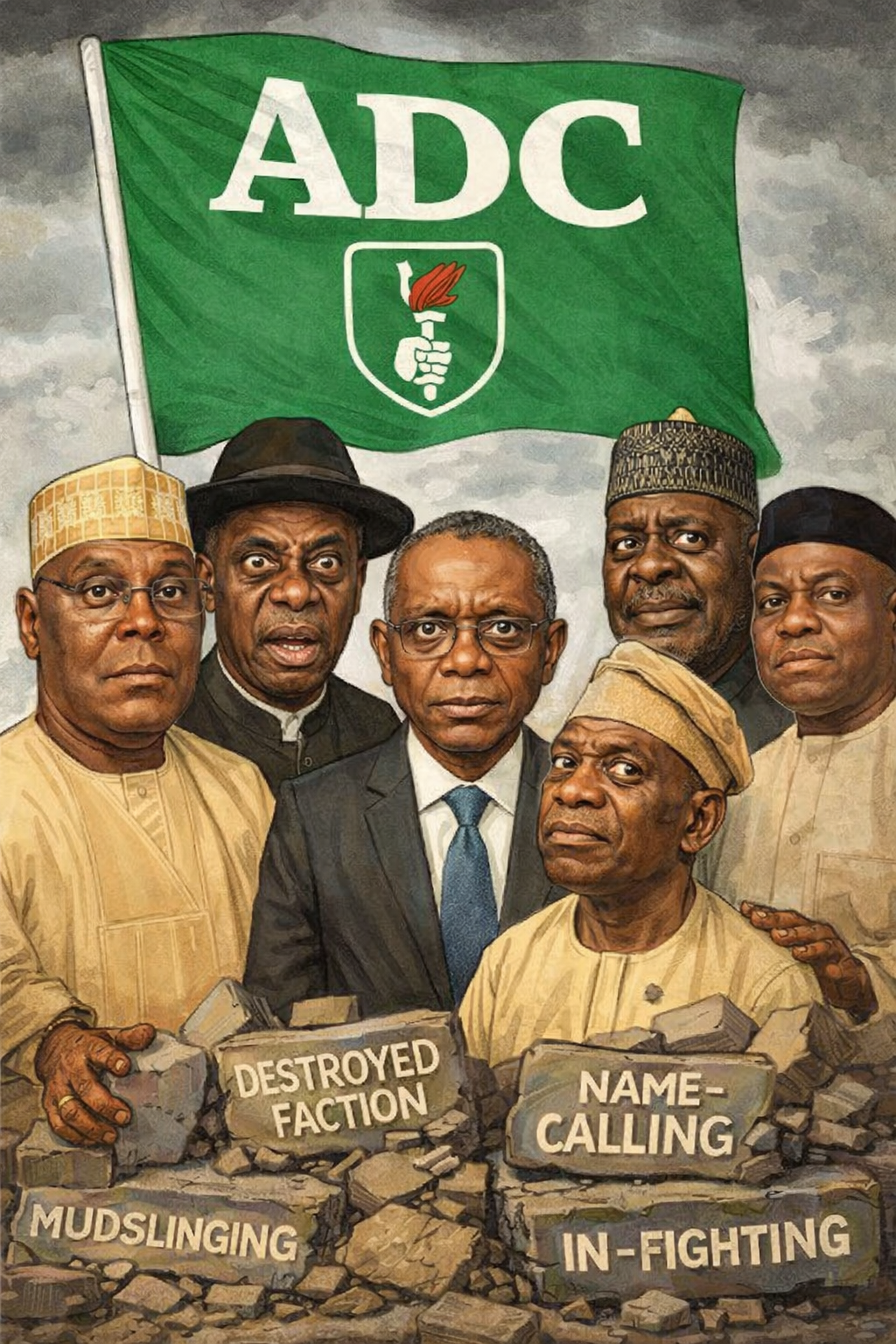
The latest round of state congresses in the Peoples Democratic Party (PDP), which saw allies of Nyesom Wike and Ayo Fayose secure key victories, has once again drawn attention to the troubled state of Nigeria’s leading opposition party. While such contests are not unusual in a democratic organisation, the symbolism of the moment is difficult to ignore: a political house attempting to rebuild its roof while its foundation continues to tremble.
Opposition parties in any democracy carry a responsibility that goes beyond electoral ambition. They serve as the institutional counterweight to power, the critical mirror through which government policies are interrogated and public interest defended. In Nigeria’s present political climate, where the ruling party already enjoys considerable dominance, the need for a coherent and credible opposition is even more urgent. Yet what the PDP has offered in recent months appears less like a strategic rebuilding process and more like a familiar cycle of internal contestation among entrenched power blocs.
The emergence of candidates backed by Wike and Fayose in key state structures underscores a continuing struggle for influence within the party’s ranks. Both men are experienced political actors with deep networks and undeniable grassroots presence in their respective regions. But the significance of these victories goes beyond personalities. They highlight the enduring reality that within the PDP, political organisation is still heavily shaped by factional alliances rather than a shared ideological direction or strategic vision.
This is not a new challenge. Since its defeat at the presidential polls in 2015, the party has struggled to redefine itself in opposition. Periodic attempts at internal reform have often been overtaken by leadership disputes, legal battles and regional rivalries. The result has been a party that oscillates between moments of renewal and episodes of fragmentation.
The recent congress outcomes may therefore be interpreted in two ways. On the surface, they demonstrate that the PDP retains a vibrant internal political structure capable of mobilising delegates and sustaining competitive contests. In a country where party organisations sometimes collapse after electoral defeat, this is not entirely insignificant. But beneath the procedural success lies a deeper question: are these internal victories building a stronger national opposition, or merely redistributing influence among familiar political actors?
For many Nigerians, the distinction matters greatly. The electorate’s confidence in opposition politics depends not only on the ability to challenge the ruling party at the ballot box but also on the capacity to offer a credible governing alternative. That credibility must be built on policy clarity, organisational discipline and a unifying national message. It cannot emerge from a perpetual cycle of factional manoeuvring.
The danger for the PDP is that prolonged internal rivalries could reinforce public perception that the party remains trapped in the political habits that contributed to its earlier decline. If the party’s dominant narrative continues to revolve around who controls which structure rather than what ideas it represents, it risks weakening its own relevance in the national conversation.
Nigeria’s democratic development cannot thrive without a strong and purposeful opposition. The concentration of political power in any single direction inevitably weakens accountability. When opposition parties are distracted by internal power struggles, the broader democratic system loses an essential layer of scrutiny and debate.
This is why the PDP’s present moment carries significance beyond its internal politics. The party’s ability to resolve its structural tensions and articulate a coherent national vision will shape the political landscape ahead of the 2027 elections. If it succeeds, it could re-emerge as a formidable platform capable of challenging the ruling establishment and enriching Nigeria’s democratic competition. If it fails, it risks drifting further into irrelevance while new political formations fill the vacuum.
History offers a clear lesson. Political parties that survive long periods in opposition do so not merely by preserving their networks but by reinventing their purpose. They rebuild not only their leadership structures but also the trust of the electorate. Without that deeper renewal, organisational victories become little more than temporary rearrangements within a shrinking political space.
The PDP therefore stands at a crossroads. The congress victories of Wike and Fayose allies may consolidate certain internal alliances, but they do not in themselves answer the larger question confronting the party. That question is whether the PDP is preparing to become a credible national alternative or simply rehearsing another chapter in its long-running struggle for internal supremacy.
Until the party resolves that question with clarity and purpose, the image will remain apt: a political house busily repairing its roof while the ground beneath it continues to shift.