







The Universal Basic Education Commission (UBEC)
• Alausa said that Nigeria has unified foundational literacy delivery under a single national standard.
The Federal Government has said it plans to raise the Universal Basic Education Commission (UBEC) share of the Consolidated Revenue Fund from 2 percent to 4 percent.
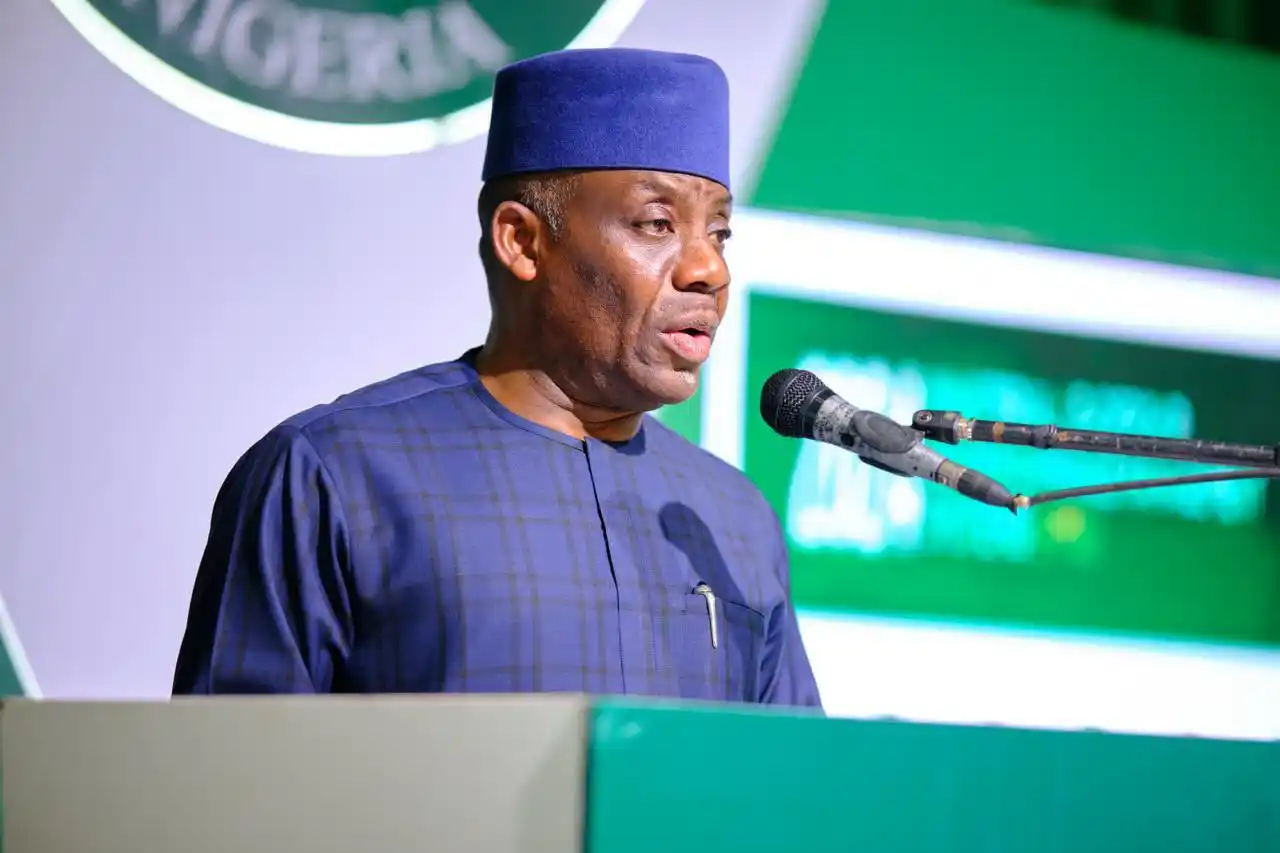
Minister of Education, Tunji Alausa, made the disclosure on Monday during a high-level roundtable session at the Education World Forum (EWF) in London, United Kingdom, where he presented Nigeria’s ongoing education reforms to global education ministers and development partners.
In a statement signed by Ikharo Attah, Special Adviser (Media and Communications), Alausa said the proposed increase would significantly boost investments in foundational learning and strengthen efforts to tackle Nigeria’s education challenges, including poor literacy levels and the out-of-school children crisis.
According to him, President Bola Tinubu’s administration is prioritising foundational literacy and numeracy as part of the Renewed Hope Agenda, with reforms designed to deliver measurable improvements across both formal and non-formal education systems.
The minister explained that Nigeria has now unified foundational literacy delivery under a single national standard.
He noted that programmes such as Reading and Numeracy Activity (RANA) for Primary 1 to 3 and Teaching at the Right Level for Primary 4 to 6 are being expanded across 15 states through UBEC, using structured lesson plans, regular assessments, and continuous teacher coaching.
He also highlighted the Accelerated Basic Education Programme (ABEP), developed by the Nigerian Educational Research and Development Council (NERDC), which provides an alternative learning pathway for out-of-school children and adolescents to achieve basic literacy and numeracy within three years.
Alausa said both formal and non-formal education tracks are now integrated into the National Education Data Initiative (NEDI), allowing government to track education performance from a single national dashboard for the first time.
He pointed to state-led interventions such as EKOEXCEL in Lagos, KwaraLEARN in Kwara State, and BayelsaPRIME in Bayelsa State, describing them as evidence that data-driven and technology-enabled teaching models are improving learning outcomes.
He added that KwaraLEARN has reduced foundational learning gaps by 50 percent in less than two years, while BayelsaPRIME recorded a 20 percentage point increase in literacy within just 19 weeks.
On policy direction, the minister said a new National Policy on Foundational Literacy and Numeracy is being finalised to provide a stronger legal and institutional framework for reforms across all levels of education.
He also disclosed that 70 percent of funding under Nigeria’s Partnership Compact with the Global Partnership for Education (GPE) is now tied to measurable outcomes in learning, teacher management, and data use.
Alausa further said the Accelerated Basic Education Programme offers a structured pathway for out-of-school children to transition into Junior Secondary School, with both ABEP centres and formal schools now sharing the same tools, coaching systems, and supervision structures to ensure consistency.
He noted that the newly deployed NEDI has exposed gaps in donor funding effectiveness, adding that the government is now shifting focus from inputs to measurable learning outcomes.
The minister expressed confidence that the ongoing reforms will significantly reduce learning poverty nationwide, saying the ultimate goal is to build a sustainable education system that outlives individual policy cycles.


