






Electricity: Federal Govt to share subsidy costs with states, councils
Elegbede Abiodun
* Says fair sharing will encourage better performance in the power sector.
Henceforth, States and councils will share the payment of electricity subsidies with the Federal Government, which had solely borne the subsidy cost on electricity.
In a year, between September 2024 and October 2025, the Federal Government paid N1.98 trillion.
Director-General of the Budget Office of the Federation, Tanimu Yakubu, announced the plan to share the subsidy cost during a meeting with Ministries, Departments, and Agencies (MDAs) on the 2026 Budget.
Yakubu added that President Bola Ahmed Tinubu wants to ensure that the heavy bill for electricity subsidies is not left for the Federal Government alone to carry.
He said: “Subsidy costs must be explicit, tracked and funded, so they do not return as arrears, liquidity crises or hidden liabilities in the power market.
“Let me be direct. If we want a stable power sector, we must pay for the choices we make. When tariffs are held below cost, a gap is created. That gap is a subsidy. And a subsidy is a bill.”
He added that when the benefits of such decisions are shared across different levels of government, the costs must also be shared in a clear and agreed way.
According to him, fair sharing of the burden will encourage better performance in the power sector and stronger support for protecting vulnerable consumers.
“When everyone carries a fair share of the cost, everyone also has an incentive to support cost-reflective efficiency, targeted protection for the vulnerable, and a power market that can actually deliver,” he said.
Yakubu explained that the goal of the directive is to ensure that the costs of electricity are tracked and funded so they do not turn into “hidden debts” that ruin the power sector.
The Budget Office chief stressed that if any level of government decides to keep electricity prices low for citizens, the financial responsibility for such a decision must be clearly agreed and enforced.
Yakubu also stressed that the costs of electricity subsidies can no longer be treated as the responsibility of the Federal Government alone.
He told MDAs that they must now clearly show all subsidy-related costs in their budget plans and avoid pushing unpaid obligations into the power market as debts that later create problems for electricity companies and consumers.
Beyond power subsidies, he said, the Federal Government is changing how projects are treated in the 2026 budget.
Yakubu noted that projects must be ready to be delivered and, where needed, ready to attract financing before they are included in the budget.
“If it cannot be implemented, it should not be proposed. If it cannot be measured, it should not be defended,” he said.
Yakubu warned that listing many projects without proper funding and planning often leads to disappointment for citizens who expect real results on the ground.
“A long list of projects is not a development strategy. It is often a map of disappointment. What citizens feel is delivery – completed roads, reliable power, functional schools, working hospitals,” the Budget Office chief said.
He explained that the government is now focusing on proper project financing, which means that every project must be carefully planned, costed and matched with a clear source of funding, whether from the federal budget, partnerships with the private sector or other financial arrangements.
Yakubu said MDAs must show that their projects are ready, with designs, approvals, procurement plans and clear timelines. They must also explain how each project will be funded and what results Nigerians should expect.
On government spending rules, he explained that President Tinubu directed a review of the Fiscal Responsibility framework to make it stronger and better suited for current economic conditions.
“Fiscal rules are not a slogan. They are the guardrails of government. Without guardrails, spending becomes impulsive, debt becomes casual, and the budget becomes a statement of intent rather than a tool of delivery,” Yakubu said.
He explained that the review will lead to clearer limits on spending, stronger reporting, better control of future financial risks and a closer link between long-term planning and yearly budgets.
“For MDAs, this changes the conversation. You will not only be asked what you want to spend.
“You will be asked how it fits the fiscal rules, how it affects sustainability, and what measurable results it will deliver,” he said.
He urged MDAs to build their proposals around available funds, clearly explain their priorities and disclose any risks, especially future costs that could fall on the government.
As part of the 2026 budget process, Yakubu said all MDA proposals will be tested to ensure they match national priorities, can be carried out, offer value for money and respect the country’s financial limits.
He said the overall goal is to make the 2026 budget focus on completing projects and solving real problems for Nigerians, rather than creating long lists of plans that are never fully delivered.
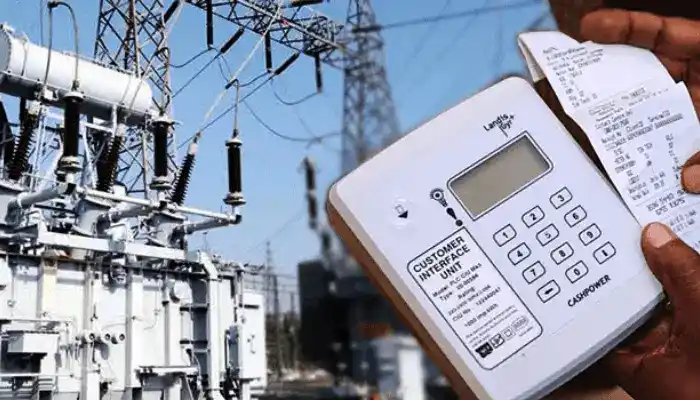
The Federal Government introduced the Presidential Metering Initiative (PMI) to improve efficiency and restore public trust through. Under the PMI, the government has been deploying millions of smart meters to bridge the metering gap, protect vulnerable Nigerians, and make the power sector financially viable.
The government plans to eliminate estimated billing where consumers are billed based on assumptions rather than actual consumption.
It also aims to ensure that consumers pay only for the electricity they use, promoting transparency, revenue protection help DisCos recover revenue loss to non-payment and inefficiencies.
According to Power Minister Adebayo Adelabu, the initiative would also boost local production and foster local meter manufacturing and job creation.
Adelabu said that the Federal Government had secured about N700 billion, for the rollout of two million meters annually over the next five years under the initiative.
He dropped the hint at the 2025 Nigerian Energy Forum, with the theme: “Powering Nigeria through investment, innovation and partnership”.
The fund, as he explained was obtained by the Federal Government from the Federation Account Allocation Committee (FAAC).
According to him, the PMI aims to close Nigeria’s metering gap, improve transparency, and enhance the financial stability of the power sector.
He said the initiative complemented the 3.2 million meters being procured through the World Bank’s Distribution Sector Recovery Programme (DISREP), positioning the country to bridge the metering gap within five years.
The minister said that the Federal Government was leveraging bilateral funding and development finance to attract private investment and expand electricity access in underserved communities, schools, hospitals and public institutions.
He said: “In the past two years, more than two billion dollars has been mobilised through key programmes, including the World Bank’s DARES, NSIA’s RIPLE, and the JICA fund. “These interventions are accelerating renewable energy deployment and access to reliable power.”
The Federal Government, through the Nigerian Electricity Regulatory Commission (NERC), approved the disbursement of N28 billion to DisCos for the procurement and installation of prepaid meters under the Meter Acquisition Fund (MAF) Tranche B scheme.
NERC said that the amount was for the procurement of meters for all outstanding unmetered Band A customers at no cost.
This announcement was contained in the Order on the Operationalisation of “Tranche B” of MAF issued by NERC and signed by its Vice Chairman, Musiliu Oseni, and Commissioner, Legal, Licensing and Compliance, Dafe Akpeneye.
According to the order, the funds approved under Tranche B of MAF are intended to meter all outstanding unmetered Band A customers.
They also focus on expediting the closure of the metering gap for customers currently classified under Tariff Band B
The Order said: “The N28 billion shall be allocated in proportion to the respective contributions of the DisCos, and the DisCos are expected to meter all outstanding unmetered Band A customers.
”They are also required to expedite the closure of the metering gap for customers currently classified under Tariff Band B.
“Schedule 1 provides the detailed breakdown of the funds available to each DisCo for the purchase of end-use customer meters.
“All the meters to be procured and installed under the MAF framework shall be provided at no cost to the customers.”
The commission said that the order seeks to establish a clear and transparent framework for the implementation of Tranche B of the MAF scheme.
It also said that the order sought to define the eligibility requirements and obligations of DisCos and Meter Assert Provider (MAP) in accessing and utilising funds.
Giving a breakdown of the releases of funds accrued under MAF, NERC explained that in April 2024, out of the accrued sum of N21.864 billion, it released N21 billion to the DisCos for the procurement of meters under tranche A of the MAF scheme.
It said that the latest is the N28 billion released under tranch B of the MAF scheme.
Also recently, NERC said that between 600,000 and 700,000 electricity meters are currently available for distribution across the country.
Oseni, said this at the 4th Nigerian Electricity Supply Industry (NESI) Stakeholders’ Meeting in Abuja.
Urging DisCos to speed up the rollout of the meters, Oseni said that government had already made the necessary investments to make the meters available.
According to him, DisCos should take the responsibility of ensuring that the meters reach customers without delay.
He said: “There are currently 600,000 to 700,000 meters available in the country. Government has made the investment, so the DisCos need to step up.”
Oseni, who also spoke on the ongoing transition to State Electricity Regulatory Commissions, called on the DisCos to fully cooperate with the new regulators, saying no operator is above regulatory oversight.


