





Manny Ita
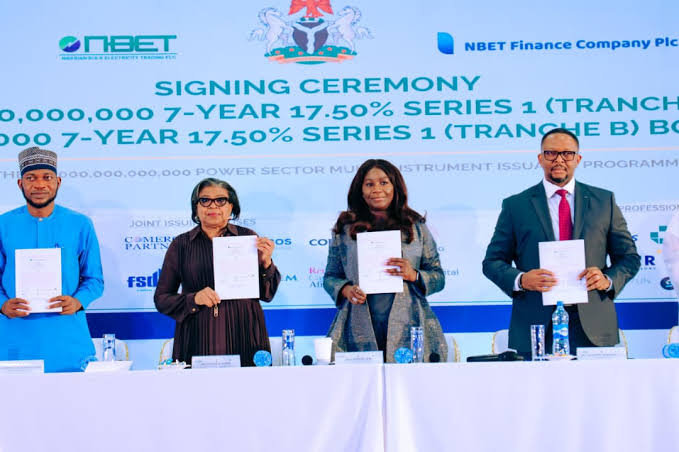
The Federal Government of Nigeria yesterday concluded a landmark ₦501 billion inaugural bond issuance under the Presidential Power Sector Debt Reduction Programme (PPSDRP), achieving a 100% subscription rate from institutional investors. The bond, executed through NBET Finance Company Plc, marks the most significant fiscal intervention to date aimed at resolving the liquidity crisis that has crippled the Nigerian Electricity Supply Industry (NESI) for over a decade.
Special Adviser to the President on Energy, Olu Arowolo Verheijen, speaking at the signing ceremony in Lagos, described the capital raise as a “decisive reset” of the electricity market. She noted that the program is designed to settle verified arrears for electricity supplied between February 2015 and March 2025, stating, “The Programme represents a decisive reset of the electricity market, combining debt resolution with broader financial and structural reforms.” The total negotiated settlement for the first phase stands at ₦827.16 billion, with the proceeds of this ₦501 billion Series 1 bond covering approximately 50% of that obligation through a combination of cash and notes.
The ₦501 billion total comprises ₦300 billion raised directly from the capital markets—attracting heavy participation from pension funds, banks, and asset managers—and ₦201 billion in bonds allotted directly to participating power generation companies (GenCos). To date, five major generation firms representing 14 power plants nationwide have signed onto the agreement: First Independent Power Limited (FIPL), Geregu Power Plc, Ibom Power Company Limited, Mabon Limited, and the Niger Delta Power Holding Company Limited (NDPHC).
Industry stakeholders have lauded the move as a vital step toward restoring investor confidence. Kola Adesina, Group Managing Director of Sahara Power Group, remarked that the settlement provides a “line of sight in recovering investments previously made,” which is essential for fresh capital formation. The government expects the program to ultimately impact 4,483.60 MW of generation capacity and improve service reliability for approximately 12.03 million registered customers by stabilizing the balance sheets of the companies that keep the national grid powered.


