

Manny Ita –
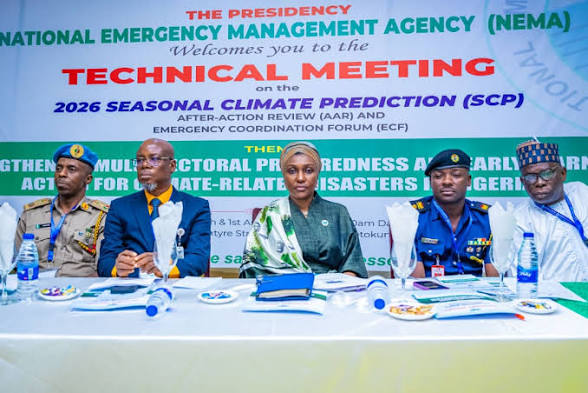
The National Emergency Management Agency (NEMA) has convened an emergency stakeholders’ meeting to initiate early preparedness measures ahead of the 2026 flood season, following warnings of potential widespread flooding across several parts of Nigeria.
The high-level meeting brought together representatives from federal and state emergency agencies, meteorological experts, environmental authorities, and humanitarian organisations to assess risks and coordinate a proactive response strategy. The move comes amid forecasts indicating above-average rainfall levels and heightened flood risks in vulnerable regions.
Officials at the meeting emphasized the need for early action to avoid a repeat of previous flood disasters that displaced thousands of residents, destroyed farmlands, and disrupted economic activities. They noted that lessons learned from past incidents are being integrated into this year’s preparedness framework, with a focus on prevention, rapid response, and community resilience.
Data and projections from the Nigerian Meteorological Agency and the Nigeria Hydrological Services Agency were central to the discussions, highlighting flood-prone states and river basins likely to be affected. Authorities warned that coastal and riverine communities, particularly along the Niger and Benue river corridors, remain at significant risk.
As part of the preparedness plan, NEMA is set to intensify public awareness campaigns to educate citizens on flood risks, evacuation procedures, and safety measures. Community engagement is expected to play a critical role, with local leaders tasked with disseminating information and ensuring compliance with early warning advisories.
The agency also outlined plans to pre-position relief materials, including food supplies, medical kits, and temporary shelter equipment, in strategic locations across the country. Emergency response teams are to be placed on standby, while coordination mechanisms between federal, state, and local authorities will be strengthened to ensure swift intervention when needed.
Stakeholders stressed the importance of clearing drainage systems, enforcing environmental regulations, and preventing illegal construction on waterways as part of mitigation efforts. Urban flooding, particularly in densely populated cities, remains a major concern due to poor drainage infrastructure and rapid urbanisation.
Development partners and humanitarian organisations at the meeting pledged support in areas such as logistics, funding, and technical expertise, underscoring the need for a unified approach to disaster risk management.
Authorities concluded that while flooding may not be entirely preventable, its impact can be significantly reduced through timely preparation, effective coordination, and public cooperation. Nigerians living in flood-prone areas have been advised to remain alert and adhere strictly to official warnings as the rainy season approaches.
