





Manny Ita –
The traditional approach to hair coloring undergoes a fundamental shift as women enter their 50s, moving away from the aggressive concealment of youth toward what industry experts call “editing” rather than erasing age. According to Ashley J. DiMella, a professional stylist and contributor to The Custom Studio, the psychological motivation behind salon visits in this demographic often transcends simple vanity. “I’ve spent decades watching women cross that subtle, shaking bridge between ‘young’ and ‘not-young-anymore,’ at least as the world insists on defining it,” DiMella notes, observing that for many, there is a quieter urgency focused on recognition and possibility rather than a literal reversal of time.
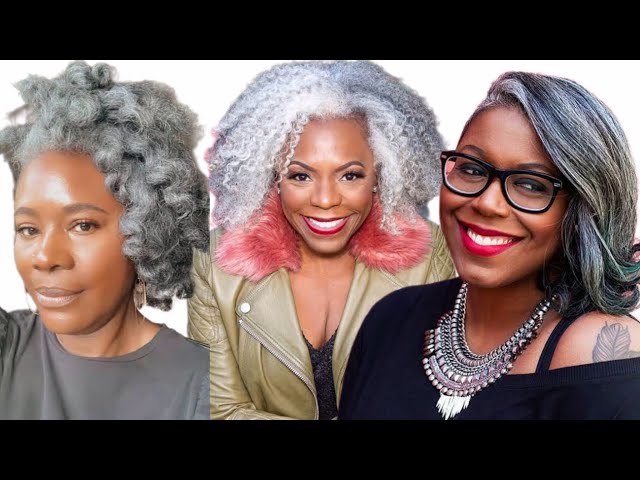
As biological changes occur—specifically alterations in hair texture, density, and pigment patterns—clinging to a shade worn in one’s 30s can create a visual disconnect. Experts suggest that when hair color fails to evolve alongside changing skin undertones, the result often leaves the individual looking fatigued regardless of their actual energy levels. The prevailing professional mantra is to treat color as a “flattering filter” by softening harsh lines and diffusing stark contrasts. DiMella advises that this often involves moving one or two shades lighter or warmer to harmonize with the current complexion, sometimes even building a “color story” around natural grey streaks rather than treating them as a flaw to be eliminated.
Technical challenges also mount during this decade as the hair cuticle often toughens, making strands more resistant to pigment. This structural change frequently leads to the “box color trap,” where DIY applications result in dense, flat color at the ends and a “glowing,” overly warm band at the scalp. Professional intervention is often framed as “damage control and future-proofing,” allowing for specialized formulations that account for the fragility of the hairline compared to the resilience of the back sections. DiMella emphasizes that “at this stage, integrity is everything,” and warns that repeated home coloring can lead to chronic scalp irritation as the skin becomes more sensitive with age.
The shift from opaque, single-process color to multi-tonal dimensions—such as babylights or fine highlights—is often described by stylists as “turning the lights on” in a room. By reintroducing natural variation, women can avoid the “helmet hair” effect that results from painting every strand a uniform shade. Professionals increasingly rely on demi-permanent glazes and glosses, which fade gracefully and eliminate the harsh line of demarcation at the root. “This highlight right here is your free non-surgical eye lift, and this lowlight is your cheekbone sculpt,” DiMella says, highlighting how strategic placement acts as architectural support for the face.
Maintenance routines in the 50s are recommended to mirror high-end skincare philosophies, prioritizing hydration and protection over aggressive styling. This includes the mandatory use of heat protectants and a transition to lukewarm water to preserve color molecules. Stylists argue that while color can always be adjusted, “broken hair has a much longer recovery story.” Ultimately, the decision to maintain a rich auburn or transition to a natural silver is a personal evolution rather than a cultural surrender. As DiMella concludes, the most effective color for a woman in her 50s is one that supports her actual lifestyle, because “the best color doesn’t hide your age; it lights it from within.”