







Manny Ita –
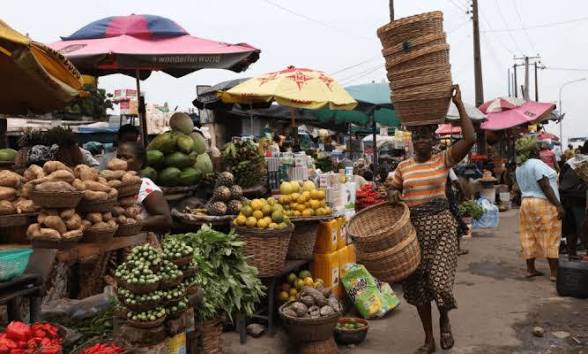
Food prices across markets in Nigeria’s Federal Capital Territory have surged significantly, as rising fuel costs linked to the Middle East crisis continue to ripple through the economy, placing mounting pressure on households and small businesses.
A market survey conducted by the News Agency of Nigeria across key trading hubs in Abuja indicates that the increase in the pump price of petroleum products has sharply elevated transportation and production costs, forcing traders to adjust prices upward in response to shrinking margins.
At the Orange Market along the Abuja-Keffi road, a major bulk food distribution centre, traders reported steep increases in staple commodities. The price of a large basket of tomatoes, which sold for between N9,000 and N10,000 in February, has risen to as high as N35,000. Similarly, a large bag of onions now sells for between N40,000 and N45,000, compared to previous prices ranging from N15,000 to N25,000.
In Lugbe market, a basket of sweet potatoes has doubled to between N2,000 and N2,500, while five tubers of yam now cost as much as N10,000. Beans have also recorded notable increases, with white beans selling for up to N1,600 per mudu. Comparable price movements were observed in Orozo and Karu markets, where essential items such as yam, tomatoes, pepper, and onions have all risen significantly.
Traders in Wuse and Utako markets reported similar upward trends across staple goods, although some mixed price movements were recorded at Garki Modern Market, where slight reductions were noted in select items, including tomatoes.
Beyond food items, the rising cost of fuel and persistent electricity challenges are driving increases in the prices of essential goods and services. Producers and small business operators say they are increasingly dependent on petrol and diesel to power operations, further inflating operating costs.
A sachet water distributor said, “The price of a bag of water has risen from about N300 to as high as N500 due to increased diesel expenses and poor electricity supply,” adding that production has been constrained despite strong demand driven by the hot season.
An ice block seller also reported raising prices from N500 to N800, noting that escalating fuel and generator costs are affecting her ability to meet customer demand.
Residents say the impact extends beyond food to everyday services. A parent in Apo stated that the cost of children’s haircuts has more than doubled within weeks, reflecting broader inflationary pressures across the economy. A single mother of three said her standard of living has declined steadily, calling on the government to address rising transportation and energy costs, which she described as key drivers of the current price surge.
A yam seller at Nyanya market said transportation costs for moving produce from Benue State to Abuja have tripled, significantly affecting retail prices. Business operators warned that without urgent intervention, rising input costs could further constrain supply, deepen inflation, and weaken consumer purchasing power in the months ahead.
The developments come amid a surge in global crude oil prices, driven by the ongoing U.S.-Israel-Iran conflict, which has pushed oil prices above $100 per barrel and petrol prices above N1,000 in Nigeria.
The Federal Government has maintained its commitment to market-based pricing for petroleum products. The Minister of Finance, Wale Edun, stated during a recent interview that the government would not introduce price controls despite rising costs, noting that the administration would instead explore alternative measures to ease the burden on Nigerians.
According to him, the current economic strategy is anchored on market-driven pricing for petroleum products and foreign exchange, reforms aimed at eliminating long-standing distortions in the economy.


