





Manny Ita –
Oil-producing states including Rivers State, Abia State, and Imo State have emerged among the worst performers in Nigeria’s 2025 Subnational Audit Efficacy Index, according to a report by Paradigm Leadership Support Initiative, highlighting deep-rooted weaknesses in transparency and accountability despite substantial revenue inflows.
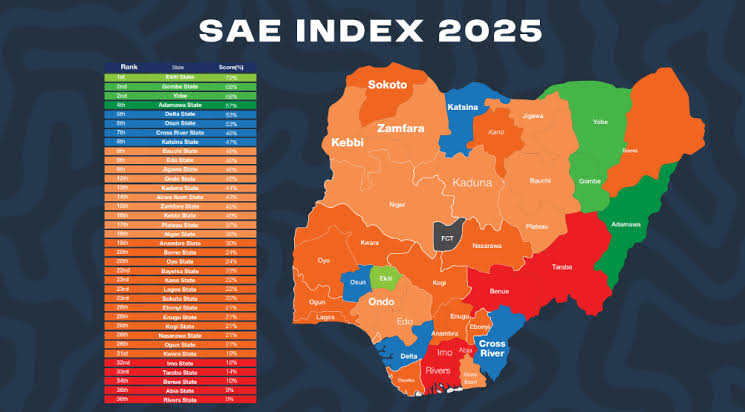
The report, unveiled in Abuja on March 31, ranked Rivers and Abia states joint 36th with a score of nine per cent each, placing them at the bottom of the index, while Imo State ranked 32nd with 18 per cent. Other low-performing states include Benue State and Taraba State, which ranked 34th and 33rd respectively.
The index, now in its sixth year, evaluates how effectively states manage public funds through audit systems, with a focus on transparency, legal compliance, and institutional accountability. It examines indicators such as the existence and implementation of audit laws, submission and publication of audit reports, legislative oversight, performance audits, and the involvement of civil society and the media.
Findings from the report indicate that Abia State has experienced a steady decline, falling from 12th position in 2022 to last place in 2025. Although the state enacted the Abia State Audit Law in 2021 to guarantee financial autonomy for the Auditor-General’s office, there is no evidence that the law has been implemented. The report also cited the absence of an Audit Service Board, failure to submit annual audit reports to the State House of Assembly, and lack of publicly available audit documents. It further noted that citizens’ accountability reports are not published and that civil society participation in the audit process remains minimal, with similar deficiencies replicated at the local government level.
Rivers State, once ranked first at the inception of the index in 2020, has recorded a sharp decline to the bottom position. The report attributes this drop to the non-implementation of legal provisions meant to guarantee financial autonomy for the Auditor-General, as well as the absence of an Audit Service Board. It also identified a failure to publish audit reports, conduct performance audits, and ensure legislative scrutiny of audit findings. At the local government level, audit documentation and annual activity reports are largely unavailable, while administrative independence remains weak.
Imo State, which ranked ninth in 2021, continues to struggle with persistent accountability gaps, placing 32nd in the latest ranking. Despite having legal provisions supporting financial autonomy for the Auditor-General, the report found no evidence of implementation. It also highlighted the lack of published audit reports and citizens’ accountability documents, absence of performance audits, and weak legislative engagement with audit findings. While the state made some progress by publishing its 2024 audited financial statements online, the documents reportedly lacked sufficient detail to promote meaningful public scrutiny. At the local government level, although some audit reports were published, they were said to lack critical information such as observations and recommendations.
Officials from Abia and Rivers states, when contacted, stated they were not aware of the report and requested copies for review but had not provided further responses as of the time of filing. Attempts to reach officials in Imo State were unsuccessful.
The organisation recommended urgent reforms across the affected states, including strengthening audit institutions, ensuring the enforcement of existing laws, and improving access to public financial information. It stressed that effective audit systems are essential for enhancing governance, promoting transparency, and restoring public trust in the management of public resources.
Meanwhile, Ekiti State retained its position as the best-performing state for the third time since the index was introduced, underscoring disparities in governance standards across the country.