




Manny Ita –
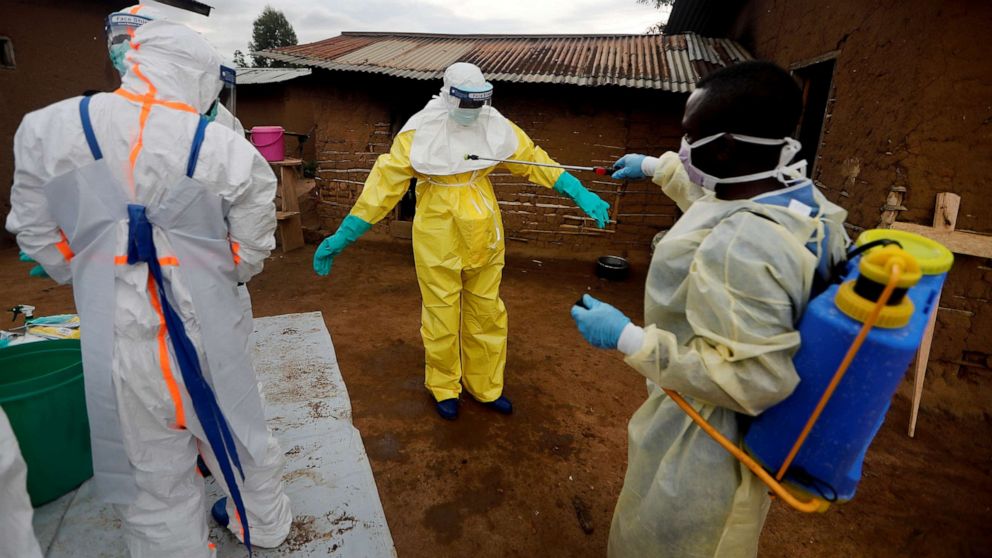
A fresh outbreak of the deadly Ebola virus has been confirmed in eastern Democratic Republic of the Congo, with health authorities reporting 246 suspected infections and at least 65 deaths in the remote Ituri province.
According to the Africa Centres for Disease Control and Prevention, the majority of the cases have been identified in the Mongwalu and Rwampara health zones. Four of the deaths were among laboratory-confirmed Ebola patients, while additional suspected cases are currently being investigated in Bunia, the provincial capital located near the Ugandan border.
Ebola is a highly infectious disease spread through direct contact with bodily fluids such as blood, vomit, sweat, or semen. Though relatively rare, it is often severe and can be fatal if not quickly contained.
Initial laboratory testing confirmed the Ebola virus in 13 out of 20 collected samples. Health experts say the current outbreak may involve a strain different from the Ebola Zaire variant, which was responsible for several previous outbreaks in Congo. Further genetic sequencing is ongoing to identify the exact strain.
Meanwhile, neighboring Uganda has already recorded one Ebola-related death linked to the outbreak. Ugandan authorities said a Congolese man who died in Kampala had tested positive for Ebola after being admitted to hospital three days earlier. Officials described the case as imported and confirmed that all known contacts have been quarantined, including close family members.
The World Health Organization stated that Congo still has access to Ebola treatments and approximately 2,000 doses of the Ervebo vaccine. However, the vaccine is specifically designed to fight the Ebola Zaire strain, meaning its effectiveness will depend on the final identification of the current virus type.
WHO Director-General Tedros Adhanom Ghebreyesus said the organization had already deployed emergency teams to support Congo’s investigation and response efforts. He added that WHO is releasing $500,000 in immediate support funding to help contain the outbreak.
Health officials are increasingly concerned about the possibility of cross-border transmission because the affected areas lie close to both Uganda and South Sudan. High population movement, mining activities in Mongwalu, insecurity caused by armed groups, and poor healthcare access are also complicating containment efforts.
The Africa CDC announced plans for an emergency coordination meeting involving Congo, Uganda, South Sudan, U.N. agencies, and international partners. Discussions are expected to focus on surveillance, laboratory testing, infection prevention, safe burials, public communication, and emergency funding.
This latest outbreak marks the 17th Ebola outbreak recorded in Congo since the virus was first identified there in 1976. One of the country’s deadliest outbreaks occurred between 2018 and 2020, killing more than 1,000 people in eastern Congo. The massive West African Ebola outbreak between 2014 and 2016 claimed more than 11,000 lives across the region.
The current outbreak comes at a difficult time for Congo, which continues to battle armed insurgencies in the eastern region, including attacks linked to the Allied Democratic Force militant group and ongoing tensions involving the M23 rebels.
Public health experts say Congo has developed considerable experience in handling Ebola outbreaks over the years, with trained personnel and laboratory systems already in place. However, they warn that rapid deployment of medical equipment, vaccines, and emergency support will be critical to preventing the virus from spreading further.