






Manny Ita –
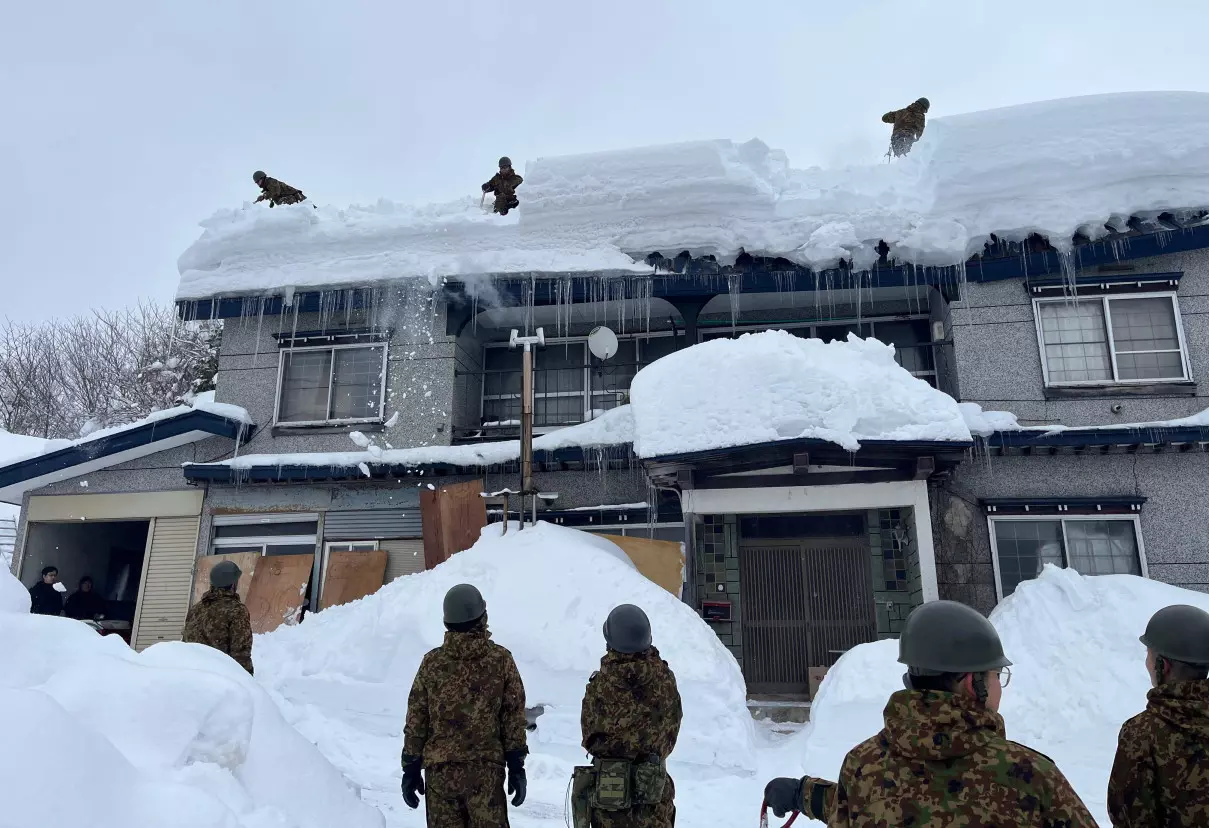
Almost three weeks of relentless and unusually heavy snowfall across Japan has resulted in at least 46 fatalities and left 549 others injured, according to updated figures from the Fire and Disaster Management Agency (FDMA) released on February 12, 2026. The powerful winter weather system has dumped record amounts of snow—piling up more than 2 meters in regions such as Niigata, Yamagata, and Aomori—paralyzing northern coastal areas and trapping residents in their homes. Authorities confirmed that the majority of victims were elderly individuals who suffered fatal accidents while attempting the arduous task of clearing snow from rooftops or walkways.
In Niigata Prefecture, which has recorded the highest death toll with 17 confirmed fatalities, emergency services have been stretched thin responding to reports of residents being struck by falling snow or slipping on ice. “Many of the fatalities have occurred when residents — particularly older adults — were clearing snow from rooftops or walking around snow-burdened areas, a routine but dangerous task in communities buried under deep snow,” a representative from the FDMA stated during a briefing on the crisis. In the northern regional hub of Aomori, residents are currently contending with 1.3 meters of snow on the ground, a depth that has rendered many local roads impassable and led to the total collapse of several residential structures.
The infrastructure impact has been widespread, with significant disruptions to air and rail travel across the country. All Nippon Airways reported the cancellation of dozens of flights, affecting thousands of passengers, while several universities were forced to postpone entrance examinations due to the whiteout conditions. Beyond the human toll, the weight of the accumulation has partially or completely destroyed dozens of buildings. Police officials and local governments have intensified their calls for caution, urging the public to work in pairs and use safety harnesses when clearing roofs. “Please pay close attention to your safety, wearing a helmet or using a lifeline rope, especially when working on clearing snow,” Defense Minister Minoru Kihara warned as Self-Defense Force troops continue to assist in clearing buried communities.
Meteorologists from the Japan Meteorological Agency indicate that while the pressure pattern is shifting, the immediate danger remains high due to the risk of avalanches and “snow-slides” from rooftops as temperatures fluctuate. As of Thursday morning, rescue teams remain on high alert in Akita and Hokkaido, where several households are still reported to be without power. The government has pledged further emergency funding for the affected prefectures to bolster snow-removal efforts and provide support to the thousands of elderly residents living in isolation within the heavy snowfall zones.