



The Doctor Who Defied the Odds: Dr. Omoniyi Patrick Akerele’s (Dr. Niyo) Journey from Rural Nigeria to South Africa’s Medical Frontier
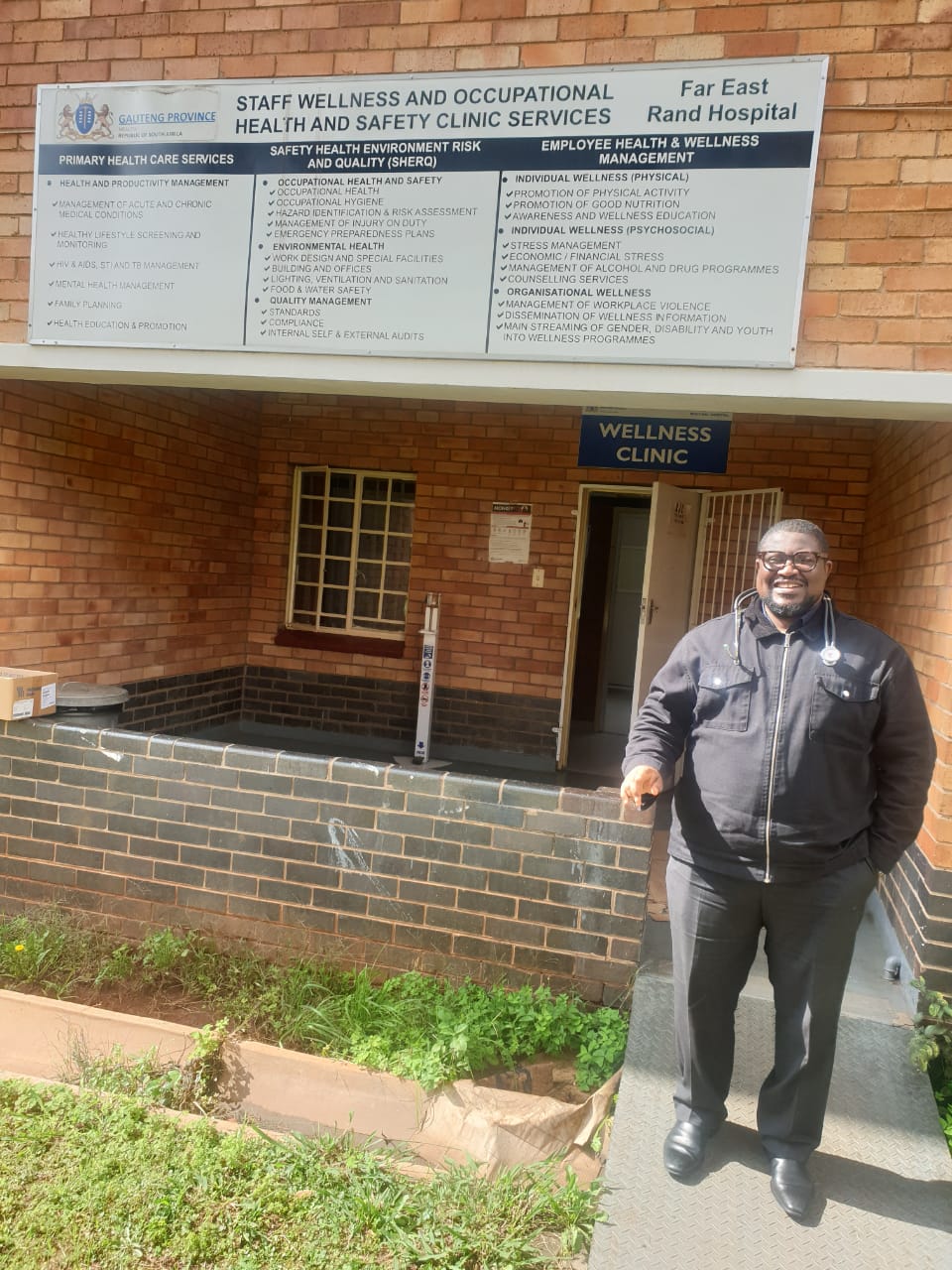

Dr Omoniyi Patrick Akerele
The Zoom call hums to life, and Dr. Omoniyi Patrick Akerele’s face fills my screen, his eyes reflecting a quiet intensity forged over 27 years of medical practice. His voice, warm yet measured, carries the weight of a journey that began in the rural heartlands of Nigeria and stretches to the bustling streets of Johannesburg’s Braamfontein and beyond. I’m Moleboheng Matli, Editor-in-Chief of Southgerian Lifestyle Magazine, and today I’m privileged to explore the life of a family physician whose credentials, MBBS (Ibadan), DOH&M (UP), MMed FamMed (UP), Dip FamMed (UP), tell only part of a remarkable story. Known to friends as Dr. Niyo, he embodies resilience, a man who has shattered barriers from his youth in Nigeria to his determined entry into South Africa’s medical sphere, all while maintaining an unwavering commitment to rural medicine, a cause close to his heart and central to his identity.
Early Life (The Dreamer)
Dr. Omoniyi Patrick Akerele entered the world on March 1, 1971, in Nigeria’s Ondo State, a region of rolling hills and modest villages where ambition often contended with limited opportunity. His father, Peter Akerele, was a respected educationist and school principal whose passion for knowledge shaped a household that prized learning above all. His mother – Janet Akerele, a nurse who dedicated her later years to training others, instilled in him a profound respect for healthcare and its power to uplift communities. Growing up in Ikare Akoko, a small town steeped in community spirit, Dr. Niyo emerged as a prodigy early on. At just 15, he graduated high school as the best student in the West African Examination Council (WAEC) at Victory College, earning his certificate in June 1986 with a first-class GPA from the University of Lagos, a rare feat that marked him as exceptional among his peers. “I thought I’d be a failure if I didn’t do medicine,” he confesses, a candid reflection that reveals the depth of his early resolve. That conviction propelled him to the University of Ibadan, Nigeria’s oldest and most prestigious medical school, where he enrolled in 1988 to pursue an MBBS.
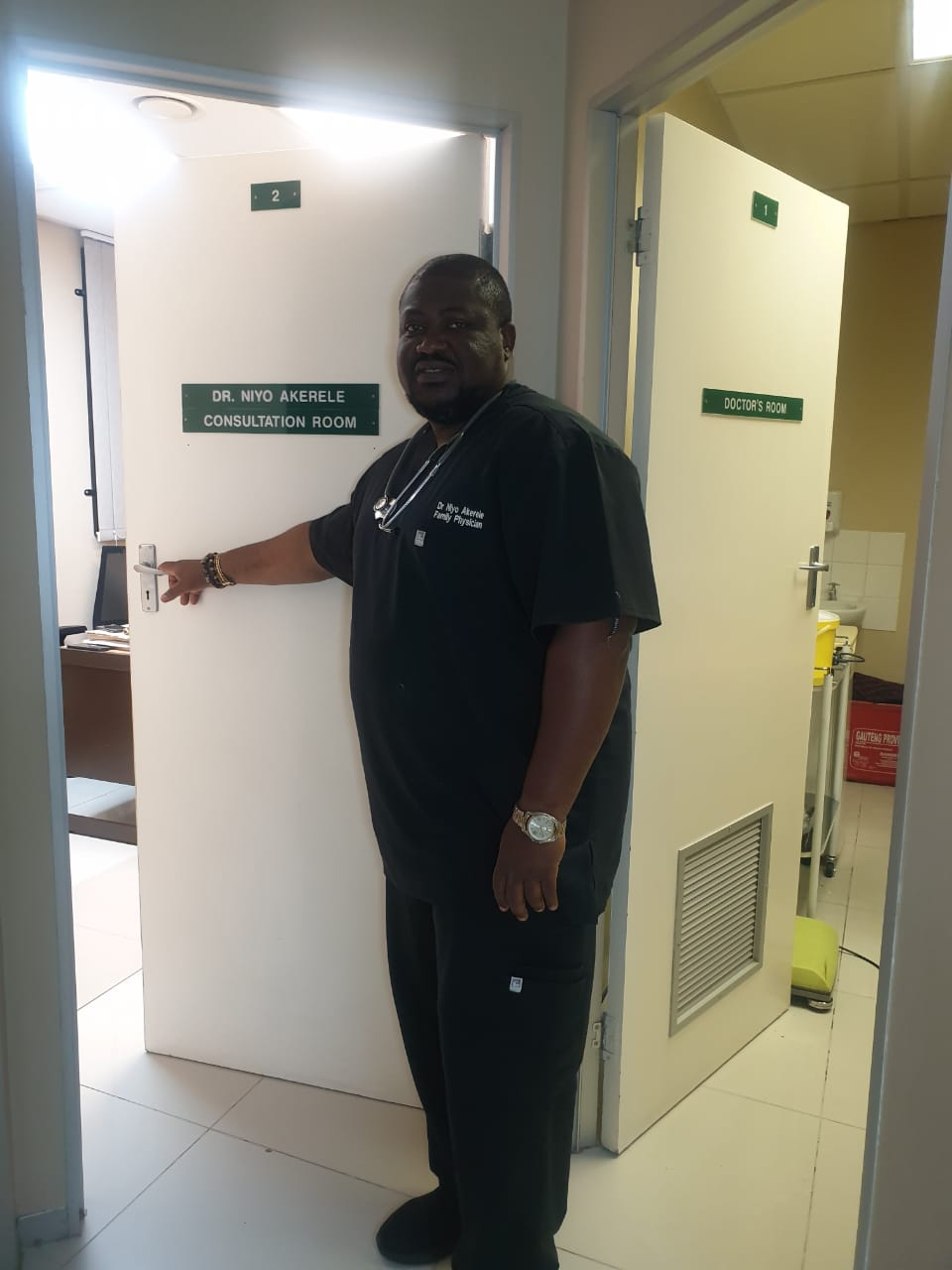
The road to his medical degree was far from straightforward. Academic strikes and funding challenges plagued Nigerian universities in the late 1980s and early 1990s, stretching his six-year program into seven. Yet, Dr. Niyo thrived amid the chaos, immersing himself in anatomy labs, pharmacology lectures, and clinical ward rounds, driven by a vision of healing that transcended the classroom. He graduated in December 1995 at 24, clutching his MBBS (Ibadan), a hard-won prize that symbolized not just academic success but personal triumph over systemic obstacles. His youth was a crucible of determination, a time when he balanced gruelling studies with the expectations of a family that saw him as their beacon of hope, all while nurturing a dream to serve beyond the confines of his homeland.
That dream took shape through hands-on experience. From December 1995 to March 1997, Dr. Niyo completed his internship at Ogun State University Teaching Hospital in Sagamu, a bustling facility where he rotated through Paediatrics, Obstetrics & Gynaecology, Internal Medicine, and Surgery. Under the guidance of seasoned registrars and consultants, he mastered the art of suturing lacerations, delivering babies, and stabilizing patients during frantic after-hour shifts in the emergency room. In May 1997, he embarked on his mandatory National Youth Service Corps at Braithwaite Memorial Hospital in Port Harcourt, serving until June 1998. The program began with six to eight weeks in a paramilitary camp, a rite of passage that tested his physical endurance before he transitioned to clinical duties. Stationed in outpatient clinics and the emergency department, he provided primary care to rural communities, diagnosing fevers, treating infections, and learning the nuances of patient interaction under supervision. By June 1998, he joined Victoria Island Consultancy and Hospital Services (VICHS) in Lagos for six months, refining his skills in a private setting, assisting in surgeries, and managing complex cases across departments. Fully registered with the Nigerian Medical and Dental Council in 1998 after a provisional nod in 1996, Dr. Niyo stood at a crossroads, his ambitions outgrowing Nigeria’s constraints, his gaze turning toward South Africa.
Early Career (The Traveller)
In June 1998, Dr. Niyo Akerele arrived in South Africa, a 27-year-old traveller spurred by a colleague’s tales of opportunity from Swaziland. Nigeria’s unreliable power grid, capped salaries, and stifled academic prospects couldn’t hold his restless spirit, which craved better pay, global exposure, and a chance to expand his medical horizons. Yet, his arrival coincided with a crushing blow from the Health Professions Council of South Africa (HPCSA), which enforced a policy barring doctors of African descent from practicing. “They said we weren’t welcome,” he recalls, his voice tightening with the sting of rejection. “If you were black from Europe or America, fine, but from Africa? No.” Aimed at preventing brain drain from neighbouring countries in the post-apartheid era, the moratorium left Dr. Niyo and countless peers stranded, their qualifications dismissed. Refusing to surrender, he joined the Foreign Doctors Association, a collective that rallied support from influential figures like Thabo Mbeki, then a key political leader, and Archbishop Desmond Tutu, whose moral weight bolstered their cause. “Friends, doctors, worked as security guards, waiters,” he says, still incredulous at the indignity. Bolstered by his parents’ financial support, he sidestepped such fates, choosing instead to enrol at the University of Pretoria in January 2000 as a full-time student.
At UP, Dr. Niyo’s hunger for knowledge flourished. By April 2002, he earned a Postgraduate Diploma in Occupational Health and Medicine, DOH&M (UP), mastering the intricacies of workplace injuries, from silicosis in miners to needle-stick risks for healthcare workers. In June 2003, he added a Diploma in Family Medicine, Dip FamMed (UP), a qualification that deepened his ability to care for patients across their lifespans, from infants to the elderly. His persistence paid off in December 2001, when he passed the HPCSA exam for limited registration as a General Practitioner in public service, a hard-fought entry into South Africa’s medical system. Assigned to Zeerust Hospital in the North West from December 2001 to August 2002, he supervised interns, managed emergencies like fractures and tuberculosis flare-ups, and earned R12,000 monthly, a sum he recalls with a chuckle as “more than I’d ever seen.” From September 2002 to August 2004, he moved to Matlala District Hospital in Limpopo, a three-hour drive from Pretoria, where he rose to Senior Medical Officer. There, he lectured interns, led outreaches to seven rural clinics, and rotated through Obstetrics & Gynaecology, Paediatrics, Surgery, Medicine, Psychiatry, and Family Medicine, delivering babies via caesarean sections, treating gunshot wounds, and stabilizing diabetic emergencies, all while embedding himself in South Africa’s rural fabric.
Full HPCSA registration beckoned, but the path was arduous. In September 2004, Dr. Omoniyi Patrick Akerele journeyed to Cape Town to rewrite final-year medical exams, a requirement for foreign-trained doctors seeking unrestricted practice. At the University of Cape Town, he spent weeks immersed in a gruelling academic ordeal, far from his Pretoria base and the rural wards he knew. Housed in temporary accommodations near the campus, he pored over textbooks and attended revision sessions, covering obstetrics, paediatrics, surgery, medicine, and more alongside undergraduates half his age. “It was demeaning,” he admits, the memory sharp as he recalls sitting in lecture halls, a seasoned physician forced to prove himself anew. The process spanned several months of preparation, culminating in intense exam days in Cape Town’s crisp coastal air, a stark contrast to Limpopo’s dusty heat. Yet, his resolve held firm, he excelled, securing independent practice status with his MBBS (Ibadan), DOH&M (UP), and Dip FamMed (UP). By then, he’d gained permanent residency in 2002 and citizenship in 2004, cementing his place in South Africa against all odds. This milestone, reached before his 2009 marriage, closed a chapter of struggle and opened one of opportunity, his Cape Town triumph a testament to his unyielding spirit.
Family Life (The Husband & Father)
In 2008, Dr. Omoniyi Patrick Akerele became a husband, marrying a woman whose drive mirrored his own, a union that would anchor him through the years ahead. Together, they built a family in South Africa, welcoming two sons, Tito and Tami, who grew into spirited teenagers with a love for soccer, a passion Dr. Niyo fostered from his own childhood days kicking a ball in Ikare Akoko. For over a decade, his wife – Susan balanced motherhood with her career in Pretoria, earning a master’s in tourism while nurturing their boys through school projects, sports matches, and the everyday chaos of family life. She stood by Dr. Niyo as he juggled long hospital shifts and rural outreaches, her support a quiet strength behind his relentless schedule. Recently, she seized a new chapter, relocating to Atlanta with Tito and Tami to pursue an MBA, attached to OIS, the Nigerian Consulate, a move that reflects their shared belief in education as a gateway to progress. “She’s mother, father, pastor, doctor, everything,” he chuckles, pride mingling with the ache of distance. From his Pretoria home at 486 Jacqueline Drive, Garsfontein, he makes the 15-hour flight to Atlanta twice a year, a pilgrimage to reconnect with his heart. “They’re my center,” he says, his voice softening with emotion.
Separation challenges their bond, yet it underscores their mutual ambition. Dr. Niyo stays close to Tito, now 16, and Tami, 13, through video calls and messages, coaching them on soccer drills, algebra homework, and life lessons, determined to remain a guiding presence despite the miles. His wife’s MBA pursuit inspires him, a parallel to his own academic quests, and he marvels at her ability to juggle studies, work, and parenting in a new country. “I visit twice a year,” he notes, a rhythm that sustains their connection, though he admits the quiet of his Pretoria home feels heavier without their laughter. This chapter of fatherhood and partnership shapes Dr. Niyo profoundly, reinforcing his view of family as the foundation of his work, a philosophy he brings to his patients with MBBS (Ibadan), DOH&M (UP), MMed FamMed (UP), and Dip FamMed (UP). It’s a life of balance, a husband and father whose personal story fuels his mission to heal families, wherever they may be.
Professional Life (The Academia)
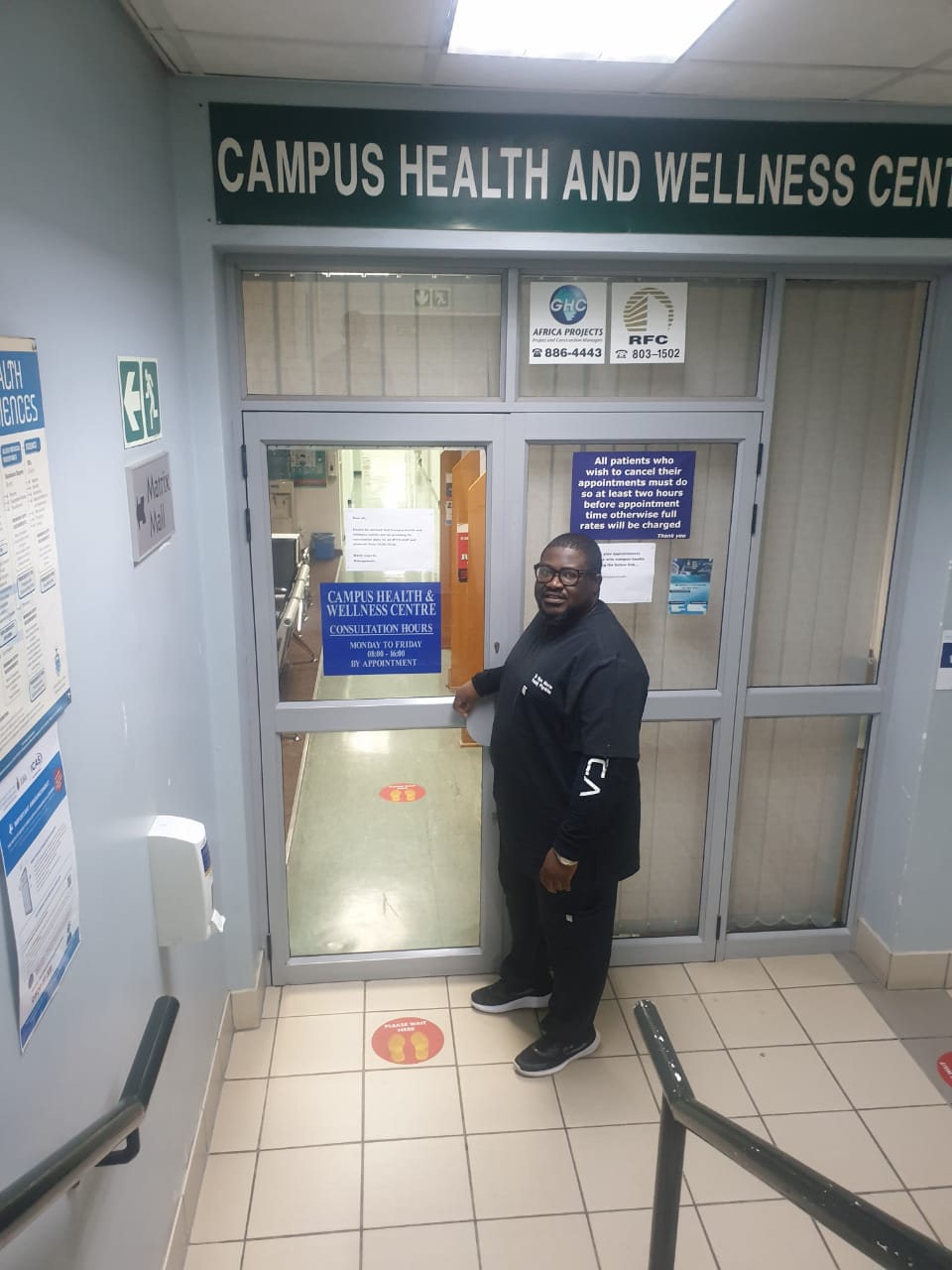
Dr. Niyo Akerele’s professional ascent began in earnest with private practice. In April 2007, he purchased Molemo Medical Practice at 185 Smit Street, Braamfontein, a venture he ran single-handedly until March 2017. That same month, he joined Wits University’s Campus Health and Wellness Centre, a position he holds today, treating students and staff for flu, stress, contraception needs, and chronic illnesses like hypertension. His academic journey, however, is a tale of grit and redemption. Enrolled at the University of Pretoria in 2003 for an MMed in Family Medicine, he encountered a racist dean in 2007 who “rusticated” him for pursuing dual master’s degrees, including an MPH. “I’d finished the MPH coursework, just needed to collect data,” he says, the loss of R59,000 a bitter pill. After two years of appeals, he returned in 2010, completing the MMed FamMed (UP) in September 2016, registering as a Specialist Family Physician with HPCSA in 2017.
His 2002 DOH&M (UP) didn’t yield specialist status due to a grandfather clause he missed as a non-citizen until 2004. Certified in Basic Life Support and Advanced Cardiac Life Support from 2009 to 2011, and diagnostic ultrasound for obstetrics in 2009 and shoulder in 2014, Dr. Niyo amassed a formidable skill set. From September 2004 to March 2007, he worked as Principal Medical Officer at George Mukhari Hospital (MEDUNSA) in the Department of Community Health, lecturing medical students, overseeing occupational health clinics, and managing after-hour calls in internal medicine’s casualty unit. At Molemo, he thrived as a sole proprietor, dispensing medications, excising lumps, and educating patients on preventative care in Braamfontein’s urban bustle. At Wits, he adapted to a younger clientele, addressing anxiety and reproductive health, a shift from the rural TB and HIV cases of his early years. These pre-COVID years cemented his dual role as educator and healer, wielding his MBBS (Ibadan), DOH&M (UP), MMed FamMed (UP), and Dip FamMed (UP) with purpose.
Philanthropy Life (The Rural Medicine Practitioner)
Dr. Omoniyi Patrick Akerele’s passion for rural medicine defines his career, a calling few embrace with such fervour. “I never lost that passion,” he insists, pride lacing his words. It took root in Zeerust from December 2001 to August 2002, where he assisted in surgeries and ran outreach clinics in North West’s rural stretches, and deepened at Matlala from September 2002 to August 2004, where he led teams to seven clinics, mastering specialties from Obstetrics to Psychiatry. He delivered babies, treated assault victims, and managed chronic conditions, driving hours across Limpopo’s rugged terrain. “Not everyone does it,” he notes, recalling weekends spent traversing provinces, Limpopo, Mpumalanga, North West, to ensure rural patients weren’t forgotten.
That dedication persists in Garankuwa, or Soshanguve, where he’s been a Family Physician at IMED Medical Practice since April 2017. He co-runs a practice, offering ultrasounds, antenatal care, and chronic disease management to Pretoria’s fringes. His skills, suturing, cauterizing, nebulizing, reflect years of rural honing. His 2016 MMed FamMed (UP) thesis, “A Review of Morbidity and Mortality Outcomes of HIV Positive Patients at Tshwane District Hospital,” is a scholarly love letter to rural health. The hours he invests, from three-hour treks to Matlala to weekend shifts in Soshanguve, highlight a rare commitment, a legacy built with years of experience.
Frontline Life (The Covid 19 Era)
When COVID-19 struck, Dr. Niyo Akerele stood firm at Far East Rand Hospital’s Casualty Department and Wellness Clinic, a Sessional Doctor since August 2017. “Doctors died, nurses fell ill; I took 30 samples daily,” he recalls, the toll evident. He stabilized emergencies with intubation and decompression, battling faulty PPE and shortages. Certified in Maternal and Perinatal Care during COVID-19 in 2021, he calls his survival a “miracle.” “We’re exposed; no one protects frontline workers,” he warns, a hard-earned truth. His expertise, from 2018’s Hypertension and Heart Failure course to 2021’s COVID-19 updates, kept him sharp, managing isolation wards and paediatric crises. This era forged his resilience, shaping a future of preparedness and care.
The Family Physician (The Z-Gen Physician)
Post-COVID, Dr. Omoniyi Patrick Akerele excels as a family physician, a “Z-Gen” healer at 54, serving IMED, Wits, and Far East Rand. “Good doctors are born,” he says, his grit tested by needle pricks and pandemics. Married since 2009, his family’s Atlanta move fuels his pride. At IMED, he manages cradle-to-grave care; at Wits, chronic clinics; at Far East Rand, emergencies. His current address is Vintage Medicare, 3 Skopje Crescent, Ext 7, Cosmo City in Roodeport. “I’m not afraid of challenges,” he declares, eyeing global rural medicine. His journey, from Nigeria to South Africa, is a holistic legacy.
The Future of Medicine
Dr. Niyo Akerele envisions a boundless family practice future. “I want a PhD,” he says, aiming to research rural health. For Dr. Omoniyi Patrick Akerele, opportunities span continents. His story, from Zeerust to Soshanguve, merits a film. “Your story’s a film,” I say. He laughs, but I’m serious. His light could spark a generation.