





What Would an African SDG Treaty Look Like?
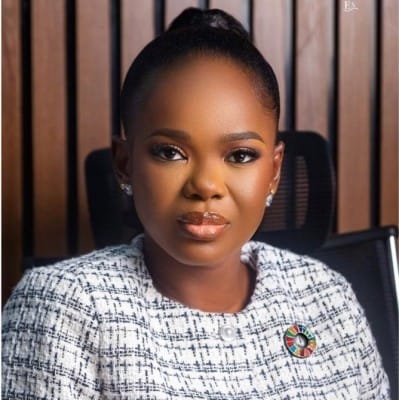

Lady Diana Eyo-Enoette
Not all diplomats wear suits, some wear purpose – DeeEnvoy
A vision without ownership is just a dream; an agenda without voice is merely a script. It is now imperative for Africa to define its own developmental goals and approach not out of superiority or deficiency, but because sustainable development must be owned, co-created, and envisioned by its beneficiaries. For development to be meaningful, Africa must be present, heard, felt, and lead.
In 2015, the United Nations launched the Sustainable Development Goals (SDGs), a bold framework to “leave no one behind.” But nearly a decade later, Africa is still running a race mapped by others, on terrain we didn’t chart. The whole world, to be honest, is running behind on this big dream. With just five years left, we’re recording less than 50% success. What’s causing the setback?
Yes, the COVID-19 pandemic wasn’t foreseen when the goals were drafted. The war in Europe, rising inflation, and the global recession have all shaken the foundation. But perhaps, just perhaps, if the SDGs had been more people-centric—rooted in realities, culture, and the voices of those they were meant to serve—they would have withstood the storms better.
I’ve walked into rooms where the SDGs are seen as elite talk, a global script that gives the UN a platform to stay relevant. While that may not be true, who can really blame the sentiment? There’s an African proverb that says, “You don’t cut a man’s hair in his absence.”
Development that is truly sustainable must be rooted in context. It must be:
For the people. By the people. With global good at the base, and communal ownership at its core.
Africa doesn’t just need a seat at the table—we need our hands on the pen that drafts the agenda.
Why Rethink the SDG Framework for Africa?
Over 60% of sub-Saharan Africa’s population is under 25 — yet most national plans overlook youth innovation. 233 million people in Africa face hunger (FAO, 2023) — yet global food aid models still dominate local agricultural solutions. Only 13% of global climate finance reached Africa between 2016 and 2019 (UNEP, 2022), despite the continent bearing the harshest climate impacts. The message is clear: A one-size-fits-all SDG model does not fit Africa.
“Development must be people-driven, not donor-defined.” — Prof. Thandika Mkandawire, former Director, UNRISD.
I couldn’t agree more.
After over a decade in the development space, I’ve witnessed KPIs that serve worksheets—not communities. I’ve led projects that felt more like jamborees than vehicles of real impact. I’ve written glowing reports to satisfy donor expectations, yet watched the real problems remain untouched.
Sometimes the numbers rise, and so does the funding—just to keep up with the problem. Other times, like we’ve seen in 2025, the funding disappears altogether. And maybe that’s okay.
Because the truth is: a man must rise to solve his own problems. Aid is just that—aid. It’s meant to assist for a time, not sustain forever.
Real, lasting development begins when we take ownership—when the metrics, the priorities, and the solutions reflect the people they’re meant to serve.
Imagining an African SDG Treaty: 5 Pillars of Continental Ownership
1. Pan-African Sovereignty in Development
Africa must define development on its own terms.
Local leadership should be the driver — not the follower.
• The African Union acts as custodian of the treaty.
• Annual peer-review summits foster accountability and shared progress.
• Foreign aid must align with African priorities — not prescribe them.
2. Indigenous Intelligence as Innovation
Africa’s traditions are not obstacles — they are solutions.
• Traditional medicine, communal governance, and local resource systems are elevated, not erased.
• Language diversity is protected as a pillar of education and innovation.
“We are the custodians of knowledge systems that never died — they were only silenced.”
— Dr. Bibi Bakare-Yusuf, Scholar and Publisher
3. Youth as Co-Creators, Not Beneficiaries
Africa’s youth are not a demographic to be managed — they are a strategy to be empowered.
• Youth representation is mandatory in every SDG decision-making council.
• Dedicated funds for youth-led innovation in circular economies, health tech, and digital inclusion.
• Youth don’t inherit the future — they are already shaping it.
4. Justice-Driven Development
Equity must be a starting point, not a side conversation.
• Justice in budgeting, land access, and service delivery is non-negotiable.
• Gender equity, post-conflict restoration, and community ownership are treaty benchmarks.
“As long as poverty, injustice and gross inequality persist in our world, none of us can truly rest.”
— Nelson Mandela
5. Climate from the Ground Up
Africa must be a leader, not just a victim, in global climate policy.
• The treaty includes a Climate Debt Clause — demanding fairness in climate financing.
• Ground-up solutions like mangrove conservation and clean cooking are prioritized.
“The polluters must pay, but Africa must lead.”
— Nairobi Declaration on Climate, 2023
Conclusion: Not Just Paper, But Power
This treaty is not merely a document — it is a declaration of dignity.
Each signatory nation would participate in a rigorous, African-led peer-review mechanism.
And for the first time, an African SDG Tribunal would be established to hear cases of environmental harm, displacement, or failed development promises — ensuring accountability beyond ambitionThe global SDG timeline may end in 2030, but Africa’s needs, dreams, and realities do not expire on a UN calendar. We are not asking for exclusion or exception. We are calling for contextual inclusion. We are not rejecting the global goals — we are simply saying: “Let Africa co-author them.” Because for any development to be truly sustainable, it must be rooted in local truth, owned by its people, and powered by justice.
Africa Always,
Lady Diana Eyo-Enoette
Honorary Consul & Special Envoy on Sustainability | London Embassy to Africa (Sovereign Kingdom of Hawaii).