







Manny Ita
The war in Ukraine entered its 1,428th day on Thursday against a backdrop of frantic high-level diplomacy at the World Economic Forum in Davos, where U.S. officials signaled that a ceasefire agreement may be within reach. U.S. Special Envoy Steve Witkoff is scheduled to fly to Moscow this evening for a direct meeting with Vladimir Putin to address what he described as the final hurdle in a potential peace deal, telling reporters that the negotiations are now “down to one issue.”
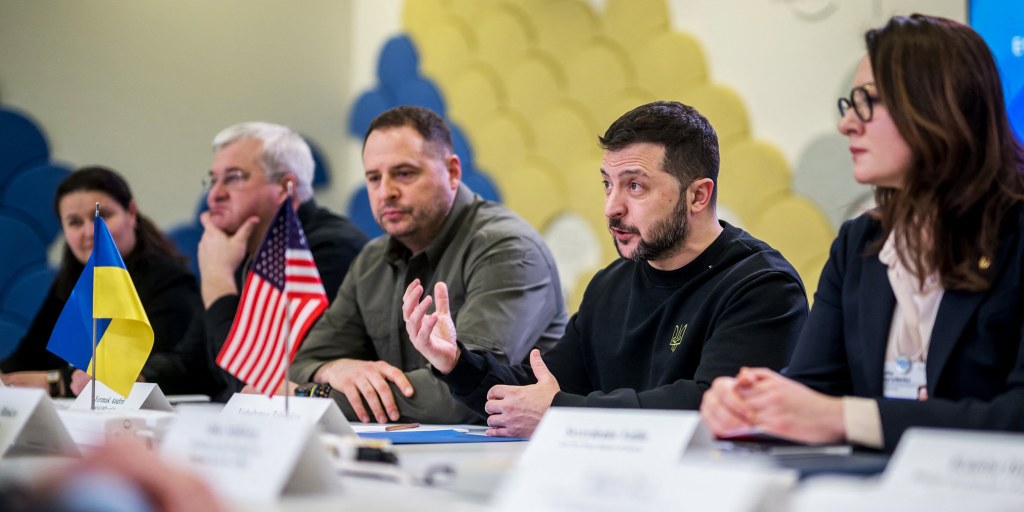
The diplomatic push has been amplified by President Trump, who used his platform in Davos to exert public pressure on both warring parties. “They’re pretty close, but they’re being stupid if they don’t get this done,” Trump stated, while notably suggesting that Ukraine remains the primary holdout in the current framework. While the President praised what he characterized as a willingness from the Kremlin to settle, Ukrainian officials have remained more guarded. Rustem Umerov, Secretary of Ukraine’s National Security and Defense Council, spent the day in closed-door meetings with Jared Kushner and executives from BlackRock to discuss the necessity of “security guarantees” and a roadmap for post-war recovery.
Despite the optimistic rhetoric in Switzerland, the situation on the ground in Ukraine has reached a critical humanitarian threshold due to a relentless Russian winter offensive. A massive wave of over 300 drones and missiles has systematically targeted the national power grid, leaving more than one million households in Kyiv without electricity or heat. The Chernihiv region has been particularly hard hit, with local authorities reporting that 87% of the province is currently without power in sub-zero temperatures. In response to shifting supply lines, Ukrainian forces have begun phasing out Chinese-manufactured Mavic drones in favor of domestically produced long-range systems.
The escalation is further complicated by recent military demonstrations, including Russia’s deployment of a hypersonic Oreshnik missile against Lviv earlier this month. The strike, occurring just 60 kilometers from the Polish border, has been interpreted by Western intelligence as a “warning shot” intended to deter NATO allies from providing the long-term security guarantees Ukraine is demanding. Current estimates suggest the human cost of the nearly four-year conflict has surpassed 1.5 million total military casualties across both sides, with Russia currently occupying approximately 19.3% of Ukrainian territory.
The primary impasse remains the status of occupied lands. While Moscow demands formal international recognition of its sovereignty over Crimea and the Donbas, Kyiv continues to advocate for a “demilitarized economic zone” and the restoration of borders as they stood prior to the February 2022 invasion. As Witkoff departs for Moscow, international observers are watching closely to see if the “one issue” remaining can be resolved before the winter crisis deepens further.


