



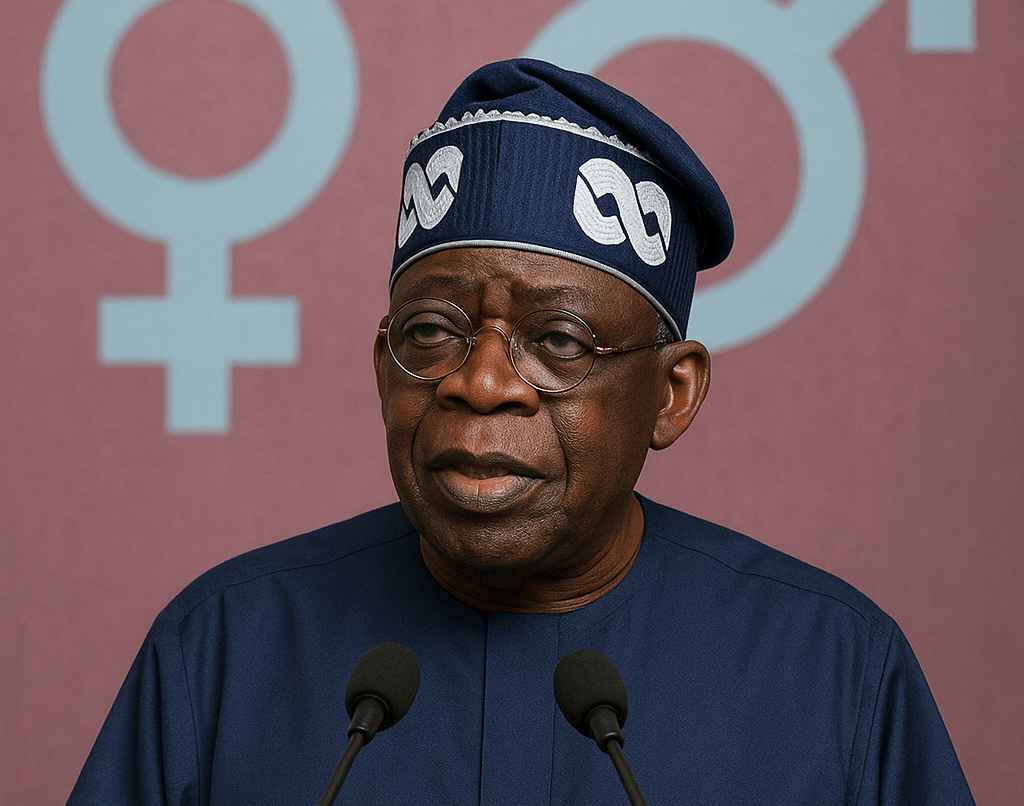
President Bola Tinubu. Photo: State House
“I have had to describe Nigeria as a republic of liars,” Soyinka said, adding that “This is one instance where I will say the nation is redeemed from that reputation of permanent lying.”
President Bola Tinubu, Nobel laureate Prof Wole Soyinka, and the Olubadan of Ibadanland, Oba Rashidi Ladoja, on Wednesday, relived memories of Nigeria’s pro-democracy struggle at the unveiling of a book written by General Secretary, National Democratic Coalition, Ayo Opadokun.
The book, titled “The NADECO story,” was unveiled at the Shell Hall of the MUSON Centre, Onikan, Lagos.
The event featured a historical reflection and a national call for continued defence of democratic values by pro-democracy actors, leading statesmen and scholars.
Speaking on behalf of Tinubu, former Ogun State Governor, Chief Olusegun Osoba, said the administration recognised the sacrifices made by NADECO members and other pro-democracy activists, noting that their actions helped preserve Nigeria’s democratic trajectory.
Tinubu said the struggle against military dictatorship came with enormous personal risks, including exile, detention, harassment and loss of livelihood.
“The President has asked me to convey his deep appreciation to all those who stood firm at a very difficult period in the history of our country,” he said.
He added that Nigeria’s current democratic stability could not be divorced from the courage of those who resisted military rule in the 1990s.
“What you did then laid the foundation for the democracy we are all enjoying today,” he said.
Tinubu also recalled the internal dynamics of NADECO, noting that the coalition brought together politicians, activists, labour leaders and intellectuals who were united by the goal of restoring democratic governance.
He urged younger Nigerians to study the history of the struggle to better appreciate the country’s democratic evolution.
On his part, Soyinka described “The NADECO Story” as a rare historical correction, saying it provided authenticity to a period often distorted in public discourse.
“I have had to describe Nigeria as a republic of liars,” Soyinka said, adding that “This is one instance where I will say the nation is redeemed from that reputation of permanent lying.”
He said the book stood out because it combined personal experience, documentary evidence and investigative narration of events that defined the resistance against military rule.
“Every page of this book rings of truth – truth that can be verified even by those who were not directly involved,” he said.
Soyinka, however, warned against reducing the struggle to a simplified narrative, stressing that the resistance movement was complex, dispersed and sustained by countless unnamed actors.
“If we were to tell the full story of that struggle, we would be here for a year, perhaps even longer,” he said.
The Nobel laureate paid tribute to late pro-democracy figures, particularly Dr Beko Ransome-Kuti, whom he described as “one of the most fearless and tragic figures of that era.”
Recounting his exile years, Soyinka said the struggle stretched across continents and involved clandestine meetings, financial sacrifices and personal risks.
“There were individuals who disappeared from our lives after playing their roles. They were not seeking recognition; they simply answered the call of history,” he said.
He also called for broader recognition of lesser-known participants, including citizens who contributed materially or logistically to the struggle.
“Sometimes it was just someone picking up a bill, or offering shelter, or quietly helping activists survive,” he said, adding that “Those gestures mattered more than we often admit.”
Soyinka further urged Nigerians to consider symbolic gestures of recognition for all contributors to the democratic struggle, saying their sacrifices should not be forgotten.
In his remarks, Oba Ladoja said democracy was preserved not only by those who protested publicly but also by individuals who worked quietly behind the scenes.
“People think that everybody must be on the streets. I think some of us might be in the background and do our work effectively,” he said.
Ladoja described himself as a committed democrat, noting that his political journey during the military era included participation in political processes, exile, and engagement with key figures in the pro-democracy movement.
“I am a democrat, and I will do anything to protect democracy,” he said.
The monarch recalled the turbulence of the Abacha era and how political rivalries and national struggles intersected at local and national levels.
He stressed that the June 12 crisis was not only about national leadership but also about grassroots political struggles and survival within a volatile system.
The event attracted a wide array of participants, including Dr Olisa Agbakoba, Dr Joe Okei-Odumakin, Dr Labaran Maku, Prof Anthony Kila, Wahab Shittu (SAN), Sam Omatseye, Tokunbo Ajasin, Moshood Erubami, Laolu Akande, Prof Sylvester Akhaine, among others.
In his welcome address, the author, Opadokun, described the event as a historic milestone aimed at correcting distortions in Nigeria’s democratic history.
He said ‘The NADECO Story’ was a documentation of resistance against military rule between 1994 and 1998, capturing sacrifices made by individuals and groups who opposed dictatorship.
“This ceremony is not just about remembrance. It is about national healing, historical accuracy and civic education,” Opadokun said.
He said many contributors to the struggle had been overlooked, adding that the book was an attempt to ensure that future generations understand the cost of democracy.
Between 1994 and 1998, he said, Nigeria stood at “the edge of political and moral collapse,” but was saved by the courage of activists, journalists, and international allies who resisted authoritarian rule.
“Men and women chose truth over fear and sacrifice over comfort,” he said.
Reviewing the book, Prof Sylvester Akhaine said ‘The NADECO Story’ provided a critical intervention in Nigeria’s historiography, particularly in correcting narratives around the June 12 struggle and military dictatorship.
He said many accounts of Nigeria’s political transition had been shaped by those who benefited from power, leaving gaps in historical documentation.
“The NADECO Story comes as a necessary corrective to distorted narratives,” he said.
Akhaine added that the book also highlighted structural issues in Nigeria’s political development, including federal imbalance, military interference and elite contests for power.
He noted that the annulment of the June 12, 1993, election remained a turning point that reshaped Nigeria’s democratic journey.
The event also saw renewed appeals for national recognition of all actors in the pro-democracy movement, including lesser-known contributors whose roles, speakers said, were often overlooked.
The event featured the presentation of awards to media houses, journalists, civil society organisations, diplomats, individuals, activists, and institutions who were committed to the struggle for democracy.