






… urge Federal Government to investigate the technical execution of the delineation exercise and urged INEC to suspend reliance on the disputed fieldwork and GIS mapping data pending an independent technical verification.
Leaders of the Itsekiri Ethnic Nationality (IEN) have rejected the proposed delineation of wards, polling units and constituencies in Warri Federal Constituency by the Independent National Electoral Commission (INEC), alleging that the exercise violates constitutional provisions, electoral laws and the commission’s operational guidelines.
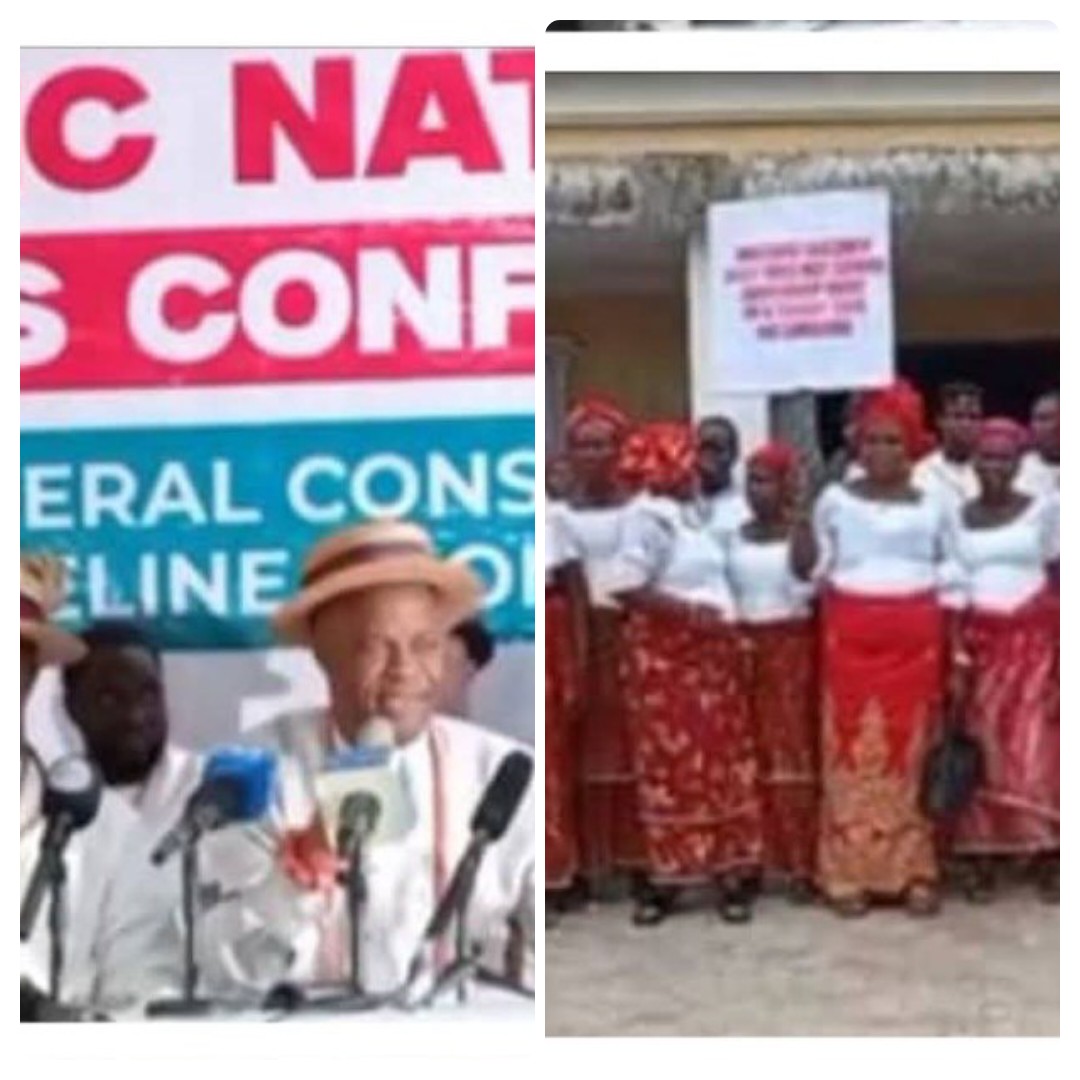
At a World Press Conference held at Ubeji Town Hall, Warri, on Tuesday, prominent Itsekiri leaders, including Chief Edward Ekpoko, Prince Yemi Emiko, Sir A.S. Mene, Alex Eyengho and Chief Robinson Ariyo, said the ethnic nationality was compelled to address what it described as fundamental irregularities in the delineation exercise released by INEC on May 20, 2026.
Speaking on behalf of the Itsekiri people, the leaders stressed that they were not opposed to electoral reforms, democratic inclusion or the implementation of the Supreme Court judgment directing INEC to conduct a fresh delineation exercise in Warri North, Warri South and Warri South-West Local Government Areas. However, they maintained that the current proposal was flawed and failed to comply with constitutional and statutory requirements.
The Itsekiri leaders argued that the exercise was based on disputed fieldwork and questionable Geographic Information System (GIS) mapping processes that allegedly distorted electoral realities within the affected local government areas.
According to them, the 1999 Constitution, the Electoral Act 2026 and INEC’s extant guidelines require that electoral wards reflect geographical contiguity, community identity, cultural balance and established local government boundaries.
They alleged that independent geographic, surveying and cartographic experts engaged to review the data released by INEC discovered significant discrepancies, including polling units reportedly mapped outside recognised local government boundaries, some extending into neighbouring Edo and Ondo states, as well as locations described as rivers, swamps, forests and other uninhabitable terrains.
The group further alleged that several proposed wards combined polling units across different local government areas, contrary to INEC guidelines which stipulate that no ward should fall within more than one local government area.
Presenting findings from what they described as an independent expert review, the Itsekiri leaders claimed that hundreds of mapped polygons in Warri South-West and Warri North were duplicated, submerged in water bodies or situated outside their statutory boundaries, resulting in what they termed an artificial demographic advantage for certain communities.
They also accused INEC of failing to adequately capture rapidly growing settlements in Warri South during the fieldwork phase, alleging that several Itsekiri communities with substantial populations were omitted from the exercise.
The leaders insisted that the Supreme Court judgment did not invalidate the 2023 voter register and argued that any lawful delineation exercise should be anchored on verified voter distribution data from the 2023 general elections rather than on what they described as arbitrary spatial allocations.
According to statistics presented at the conference, six Itsekiri wards in Warri North recorded 75,912 registered voters and 134 polling units, compared to four Ijaw wards with 34,480 registered voters and 58 polling units. In Warri South-West, the Itsekiri wards were said to have 94,074 registered voters and 175 polling units, while Ijaw wards recorded 95,042 voters and 157 polling units.
The Itsekiri leaders maintained that the controversy was not about opposing any ethnic group but about ensuring adherence to the rule of law, fairness and constitutional compliance. They argued that claims suggesting other ethnic nationalities lacked political representation in the Warri Federal Constituency were not supported by historical records.
They also expressed concern over what they described as inflammatory statements and threats allegedly issued by some Ijaw and Urhobo groups in relation to the delineation dispute, warning against actions capable of undermining peace and stability in the Niger Delta region.
The group condemned recent remarks directed at President Bola Ahmed Tinubu and First Lady Senator Oluremi Tinubu by some actors involved in the controversy, describing such comments as disrespectful to the offices they occupy.
Despite their objections to the proposed delineation, the Itsekiri leaders commended INEC’s plan to create two additional state constituencies and an additional federal constituency within Warri Federal Constituency, noting that such measures could improve representation if implemented in line with the law.
Among their demands, the Itsekiri leaders called on the Federal Government to investigate the technical execution of the delineation exercise and urged INEC to suspend reliance on the disputed fieldwork and GIS mapping data pending an independent technical verification.
They also appealed to security and oversight institutions to closely monitor the process to ensure transparency, accountability and full compliance with constitutional provisions.
Reaffirming their commitment to peace, the leaders said the Itsekiri people would continue to pursue their constitutional rights through lawful and democratic means, insisting that their demand remained rooted in equity, justice, fairness and constitutional compliance.


