






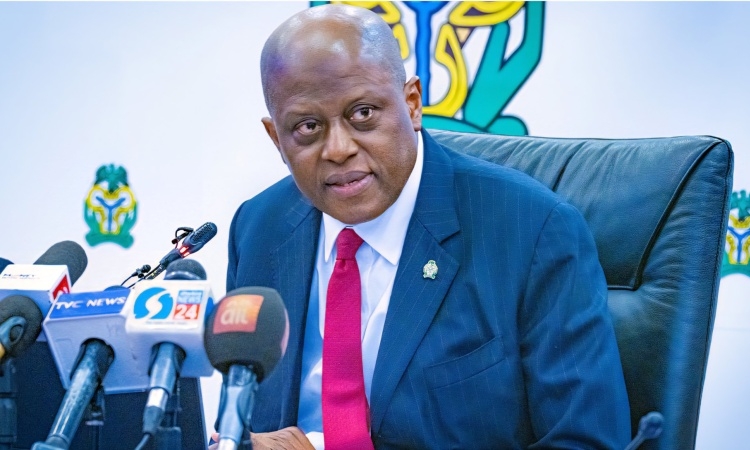
The Governor of the Central Bank of Nigeria, Mr Olayemi Cardoso. Photo: CBN
The Central Bank of Nigeria has said its decision to cut the Monetary Policy Rate from 26.5 per cent to 23 per cent was designed to stimulate productive activities while sustaining efforts to bring inflation down to single digits.
The Director, Stakeholder Engagement and Institutional Relations Department of the CBN, Mrs Hakama Sidi-Ali, said this on Tuesday at the CBN Special Day during the 21st Abuja International Trade Fair.
“The Bank recently reset the Monetary Policy Rate from 26.5 per cent to 23 per cent and recalibrated the Standing Facilities Corridor to +50/-300 basis points around the MPR, to support productive activities without losing focus on bringing inflation down to single digit from its current position of 15.39 per cent,” Sidi-Ali said.
The 350-basis-point reduction signalled a shift towards monetary easing after an extended period of tight policy aimed at containing inflation and stabilising the foreign exchange market.
Sidi-Ali said the CBN, working with fiscal authorities, had implemented reforms aimed at strengthening macroeconomic stability, restoring investor confidence and supporting sustainable growth.
According to her, businesses are better positioned to plan, invest and expand when inflation moderates, exchange rates are relatively stable and the financial system remains sound.
She said, “Resilient trade thrives in an environment of macroeconomic stability. Businesses plan and invest with greater confidence when inflation is moderated, exchange rates are relatively stable, and the financial system is sound.”
The CBN director also urged financial institutions to increase financing to productive sectors, while businesses should embrace innovation, strengthen governance and seek new markets.
“Financial institutions must continue to support productive sectors of the economy. Businesses must embrace innovation, improve governance, and explore new markets,” she added.
The CBN also disclosed that Nigeria’s gross external reserves exceeded $55bn as of September 18, 2026, which it described as the highest level in 18 years.
Sidi-Ali attributed the improvement to increased foreign exchange inflows from remittances, investments and greater participation in the formal financial system.
She also said the unification of the foreign exchange market had enhanced stability, strengthened investor confidence and reduced market distortions.
The CBN official identified the Payments System Vision 2028 and the banking sector recapitalisation exercise as other reforms intended to strengthen the financial system.
She said the apex bank would continue implementing reforms focused on price stability and financial system resilience while supporting increased competitiveness and sustainable economic growth.
Speaking at the event, the President of the Abuja Chamber of Commerce and Industry, Emeka Obegolu, called on the CBN to deepen access to affordable financing for Micro, Small and Medium Enterprises.
He said closer collaboration between the CBN, financial institutions and the organised private sector would help businesses convert economic opportunities into sustainable enterprises and employment.
“We encourage the CBN to continue strengthening initiatives that improve MSMEs’ access to affordable and sustainable financing, deepen financial inclusion, promote digital financial services and enhance the capacity of small businesses to access formal credit,” Obegolu said.
He also called for increased financing for agriculture, manufacturing, trade, technology and export-oriented businesses, noting that high operating costs and limited access to capital continued to constrain businesses.
According to him, targeted financing, credit guarantees and innovative funding mechanisms could help businesses overcome some of those challenges.


