





Manny Ita –
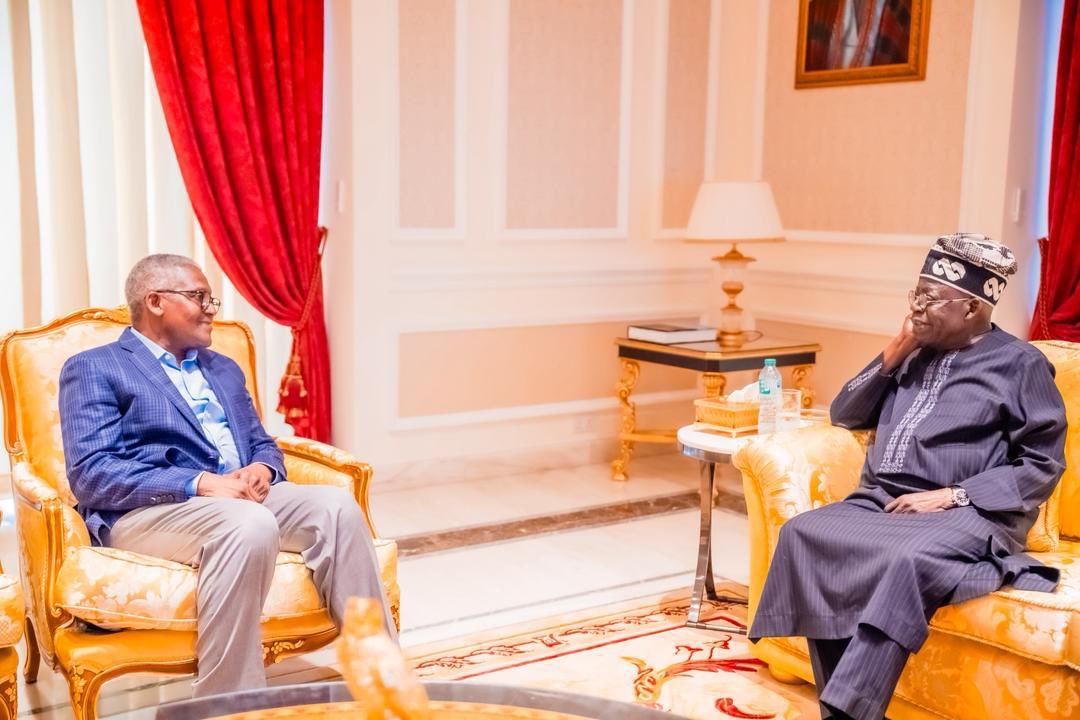
Africa’s richest man, Aliko Dangote, has warned that escalating global oil prices driven by renewed tensions in the Middle East could compel governments and businesses to reconsider work-from-home arrangements as a cost-containment measure, following a meeting with President Bola Ahmed Tinubu.
The meeting, held at the Presidential Villa in Abuja, focused on the economic implications of sustained volatility in the international oil market, particularly its knock-on effects on transportation, inflation, and productivity in Nigeria. Dangote was said to have briefed the president on emerging trends, noting that rising fuel costs could place additional strain on households and businesses already grappling with high operating expenses.
According to a source familiar with the discussions, Dangote cautioned that “if the current trajectory of oil prices continues, companies may have no option but to revisit remote work policies to reduce commuting and logistics costs.” He reportedly added that “this is not just about convenience, but about economic survival in a high-cost environment.”
The warning comes as global crude benchmarks react sharply to geopolitical uncertainty in key oil-producing regions, with analysts pointing to supply disruptions and market speculation as key drivers of recent price spikes. Economic observers say Nigeria, despite being an oil-producing nation, remains highly vulnerable to such shocks due to its dependence on imported refined petroleum products and the associated impact on domestic fuel prices.
Presidential aides indicated that Tinubu acknowledged the concerns raised during the meeting, emphasizing the administration’s commitment to cushioning the effects of global economic headwinds. “The president is fully aware of the pressures on Nigerians and is exploring a range of policy options to stabilize the economy,” one official said, adding that “engagements with key private sector players like Dangote are part of a broader consultation process.”
Stakeholders in the business community say a shift back to remote work, similar to measures adopted during the COVID-19 pandemic, could help reduce overhead costs, particularly in urban centers where commuting expenses have surged. However, some experts caution that such a move may not be feasible across all sectors, especially in manufacturing and services that require physical presence.
A Lagos-based economist noted that “while remote work can ease pressure in certain industries, it is not a one-size-fits-all solution,” adding that “the broader issue remains structural—how to insulate the economy from external shocks while improving domestic refining capacity.”
As uncertainty persists in global energy markets, Dangote’s intervention underscores growing concern within Nigeria’s private sector over the potential ripple effects of rising oil prices, with policymakers now under increasing pressure to respond swiftly to avert deeper economic strain.