







Manny Ita –
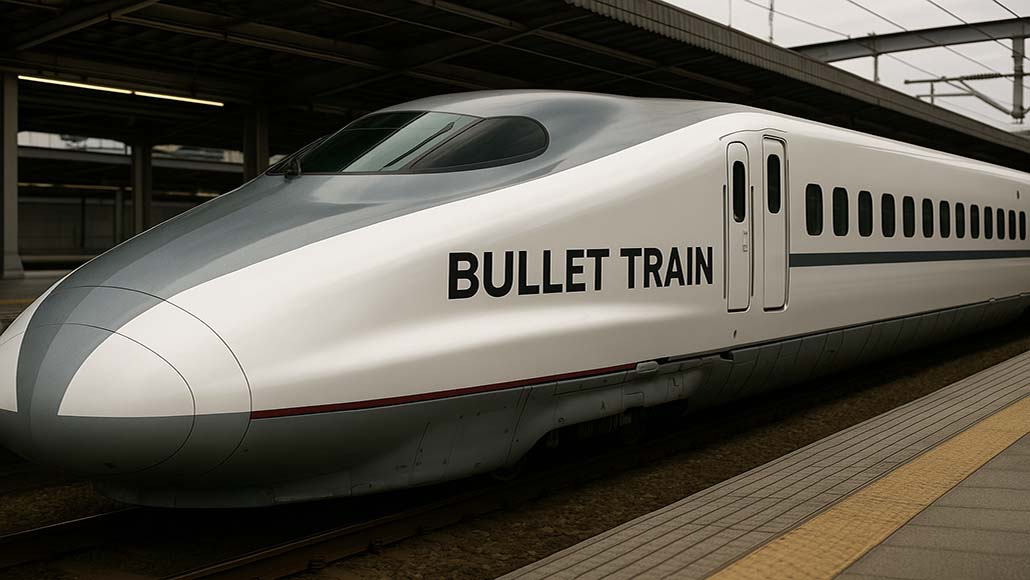
South African President Cyril Ramaphosa has announced renewed momentum for a $34 billion high-speed rail project, a 500-kilometer bullet train network intended to be the first of its kind in sub-Saharan Africa. Speaking during his State of the Nation Address on February 12, 2026, the President confirmed that the Department of Transport is progressing with preparations to link major metropolitan hubs, specifically targeting corridors between KwaZulu-Natal, Gauteng, and Limpopo. The proposed routes are expected to connect Johannesburg to Musina near the Zimbabwe border, and eThekwini to Johannesburg, as part of a broader Limpopo–Gauteng Speed Train Project. “Now this I’ve been saying that we would like this to cover routes such as Johannesburg and Musina, and eThekwini to Johannesburg,” Ramaphosa stated, emphasizing a vision to modernize long-distance travel.
The project, estimated to cost approximately R530 billion, aims to drastically reduce travel times between South Africa’s primary economic centers. President Ramaphosa criticized current transit durations, noting that “high-speed trains are happening in many parts of the world” and that South Africa should adopt similar modern solutions. “In my book, it should no longer take five to six hours to travel from eThekwini or Durban to Johannesburg,” he remarked, adding that the current 4.5-hour journey to Musina “can be done in a much shorter space of time.” To support this infrastructure, Gauteng province has committed to investing roughly $6.3 billion over the next five years to upgrade existing rail systems and expand commuter services in alignment with the high-speed corridor.
Despite the ambitious scale, the plan has garnered significant private sector attention, with nearly 30 companies expressing interest following an initial request for information. The government is now moving toward a formal request for proposals, a step Ramaphosa says “will introduce a new era of long-distance rail travel in South Africa at a faster pace.” While Morocco currently operates the continent’s only high-speed line and Egypt is developing its own extensive network with Siemens, South Africa’s project would represent a unique achievement for the sub-Saharan region if it maintains sustained speeds above 250 km/h on dedicated tracks.
Construction is tentatively scheduled to begin in late 2026, with a target for the first trains to enter service by 2030. However, the project faces ongoing scrutiny regarding long-term financing, overall viability, and the complexities of land acquisition along the 500-kilometer route. Environmental impact assessments and feasibility studies are currently underway to address safety and economic standards. If successful, the high-speed line is projected to strengthen regional trade connectivity and provincial economic integration, fulfilling a vision Ramaphosa first revived in 2019 to transform the nation’s mobility.


