







Underage Soldier Recruitment: Nigeria Listed Among Top Five Nations — UN
Nigeria has been noted as one of five countries with the highest cases of child recruitment into armed groups, the United Nations disclosed ahead of the International Day against the Use of Child Soldiers.
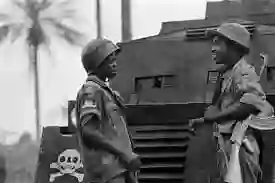

FILE: Two children soldiers of the Biafran army, Moise, 14 (L) and Ferdinand, 16 (R) discuss in Umuahia on August 31, 1968 as the Nigerian federal troops continue their advance during the Biafran war. / AFP PHOTO / Francois Mazure
In an exclusive interview with UN News, Vanessa Frazier, the UN Special Representative for Children and Armed Conflict, described the recruitment and use of minors as one of the gravest and most widespread violations recorded worldwide.
The highest levels of violations are currently recorded in the Democratic Republic of the Congo, Nigeria, Somalia, Syria and Myanmar, according to UN data. Emerging patterns in Sudan are also raising alarm, with children reportedly being targeted for roles ranging from border guards to active fighters.
“In 2024 alone, over 7,400 children were recruited or used by armed forces and armed groups — and those are only the verified cases,” Frazier said.
Nigeria’s Northeast Crisis
In Nigeria, thousands of children have been affected by insurgent violence over the past decade, particularly in the country’s northeast. Abductions and forced recruitment by armed groups, primarily Boko Haram and its splinter faction Islamic State West Africa Province (ISWAP), have left long-term scars on families and communities.
Drawing from field visits and meetings with survivors of Boko Haram abductions, Frazier described the human toll in stark terms. “You hear about a 13-year-old girl holding her baby, and you realise how deeply conflict steals childhood,” she said. “Those numbers in our reports are individuals — children who were supposed to have their whole future ahead of them.”
The UN envoy emphasized that prevention must be central to global response efforts. “Prevention is better than cure. Even in times of war, children must remain in school. When they are out of school, they become very vulnerable to recruitment, whether forced or not,” she said.
Frazier also underscored the importance of accountability, citing prosecutions in national courts and at least three cases before the International Criminal Court involving child recruitment. “One of the greatest tools of deterrence is justice and accountability,” she said. “When armed group leaders are prosecuted and sentenced, it sends a powerful message that this crime carries real consequences.”
Describing children as “the epitome of innocence,” Frazier warned that lasting peace cannot be achieved if young people are left behind.
“The sustainability of peace depends on children’s right to take it forward,” she said. “When they return from conflict, they must have access to education and the chance to aspire — to become doctors, nurses, lawyers, engineers.”
Over the past 30 years, the UN mandate on children and armed conflict has facilitated the release of more than 220,000 children from armed groups.
The disclosure comes as international concern grows over the worsening situation in conflict zones across Africa and the Middle East, where armed groups continue to exploit vulnerable children for combat and support roles.


