






Valuable ‘Fuel of the future’ has been found in Minnesota

* Researchers explore 3He as a fuel for fusion, a reaction where light atomic nuclei combine and release energy.
Helium-3 is usually talked about as a Moon resource – something future astronauts might mine from lunar dust to power fusion reactors or cool quantum machines. Its discovery beneath forests and wetlands in northern Minnesota has surprised many scientists.
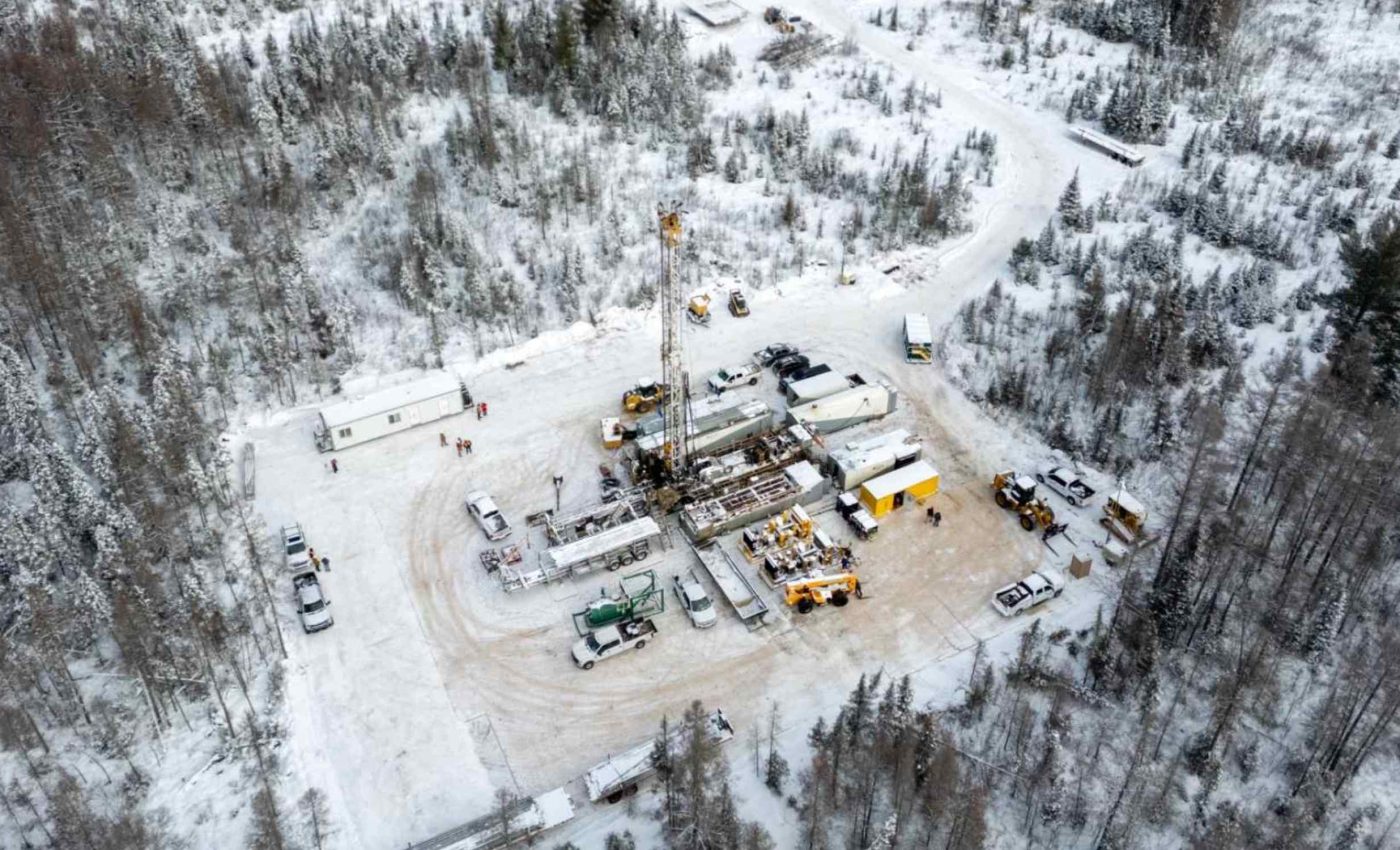
At the Topaz Project near Babbitt, drilling has revealed measurable, usable amounts of helium-3 in gas trapped deep underground.
EarthSnap
Lab tests show concentrations of about 14.5 parts per billion – remarkably similar to levels measured in Apollo samples brought back from the Moon.
The gas analyses, led by geochemist Dr. Peter Barry at the Woods Hole Oceanographic Institution, suggest Minnesota may host one of the most unexpected helium-3 reservoirs ever identified.
A rare form of helium
Helium atoms occur in different forms called isotopes. These are atoms that have an identical number of protons but have different numbers of neutrons. They all count as helium, but some are heavier than others.
Helium-3 (3He) has two protons and one neutron, whereas the far more common helium-4 (4He) has two protons and two neutrons.
Most terrestrial 3He comes from the decay of tritium in nuclear weapons and reactors. This is supplemented by tiny amounts trapped in natural gas fields.
In Earth’s atmosphere, 3He is present only at trace levels, which is many orders of magnitude lower than the gas in Minnesota’s new reservoir.
Small concentrations, big impact
This precious gas can command around nine million dollars per pound. That price makes it vastly more valuable than everyday helium, according to industry analysis.
U.S. agencies ration 3He for programs including neutron detectors and cryogenics, the science of working at low temperatures.
Because Topaz helium does not depend on aging nuclear stockpiles, even modest 3He recoveries here could ease those long-term supply constraints.
“We are thrilled to announce this remarkable helium-3 discovery,” said Thomas Abraham-James, President and CEO of Pulsar Helium.
Testing the underground gas
Gas samples from the Jetstream 1 well were analyzed in laboratories in Ohio and Massachusetts. Both laboratories agreed on the gas concentrations and ratios found.
Across gas with 4He contents between one and eleven percent, the ratio of 3He to 4He stayed constant, suggesting a single source.
Scientists express this relationship as a 3He to 4He ratio of about 0.09 relative to air. This makes it significantly higher than in typical crustal gases.
Those ratios were measured with a specialized noble gas mass spectrometer, an instrument that sorts gas atoms by mass.
Helium held for eons in Minnesota
The state’s northern bedrock is built from ancient, uranium-rich crust, which has been quietly generating helium for billions of years.
Heat from below, and old faults in the crust, help free that helium from mineral grains, letting it migrate upward through the rock.
At Topaz, nitrogen-rich gas acts as a carrier fluid, dissolving the helium and transporting it upward without adding carbon-heavy hydrocarbons.
Overlying layers of tight rock form a barrier that prevents the helium-rich mixture from leaking and allows it to build up concentrations.
Technologies that rely on helium-3
Because 3He captures slow neutrons so efficiently, it underpins highly sensitive detectors that search for illicit nuclear material and monitor research reactors.
In refrigeration systems, 3He mixes with 4He to reach extremely low temperatures. This is critical for quantum computing, a method that uses quantum physics to process information.
Researchers explore 3He as a fuel for fusion, a reaction where light atomic nuclei combine and release energy.
Helium-3 also cools specialized experiments in condensed matter physics and powers advanced imaging methods. These roles give the gas an influence far beyond its tiny volumes.
Splitting helium isotopes
Scientists measure worldwide production of 3He in tens of thousands of liters each year. This is far below the expected demand from quantum computers and laboratories.
Separating 3He from 4He in a gas stream is difficult because the two isotopes behave identically unless cooled to extremely low temperatures.
Engineers test approaches such as cryogenic distillation and adsorption columns. However, until now, no company runs a plant that produces pure 3He from gas streams.
Pulsar has invited universities and technology firms to treat Topaz as a test ground for separation methods that might unlock a 3He stream.
Minnesota weighs helium mining risks
Minnesota has never produced oil or natural gas commercially, so lawmakers are writing rules as companies prepare to tap the Topaz reservoir.
Local residents and tribal governments are weighing questions about groundwater, wildlife, and noise. They are also watching potential jobs and tax revenues gather momentum.
Some community members worry that Minnesota lacks experience with gas wells. They insist that regulators must examine drilling, flaring, and reclamation plans carefully before production.
For Minnesota, supporters see Topaz as a way to supply helium without importing from politically sensitive regions. It will also generate significant revenue for counties.
Next steps at Topaz
Startups planning to mine 3He from the Moon have signed contracts with firms making quantum computing refrigerators and with the Department of Energy.
“They will need more helium-3 than is available on planet Earth,” said Gary Lai, chief technology officer of Interlune.
For Pulsar, the next steps include drilling more wells, and estimating recoverable helium. They also need to decide whether separation technology can support a profitable project.
If helium from Minnesota can be produced at scale, this potential fuel of the future might come from forests instead of lunar soil.
Source: Earth


