






By Manny Ita
For decades, football’s most celebrated stars were wrapped in the mythology of excess—late nights, fast cars, and a lifestyle that blurred indulgence with success. In 2026, that image is quietly collapsing. A new truth is emerging at the top of the game: the most decisive competitive edge is not found in sponsorship deals or tactical tweaks, but in the stability a player returns to when the stadium lights go out.

Few careers illustrate this shift more clearly than that of Ousmane Dembélé. Once seen as the embodiment of wasted potential, he has redefined himself as a Ballon d’Or winner and the emotional core of a dominant Paris Saint-Germain side. Tactical maturity and improved fitness matter, but those closest to Dembélé consistently point elsewhere—to the grounding influence of his wife, Rima Edbouche. Marriage did not simply change his public image; it restructured his life.

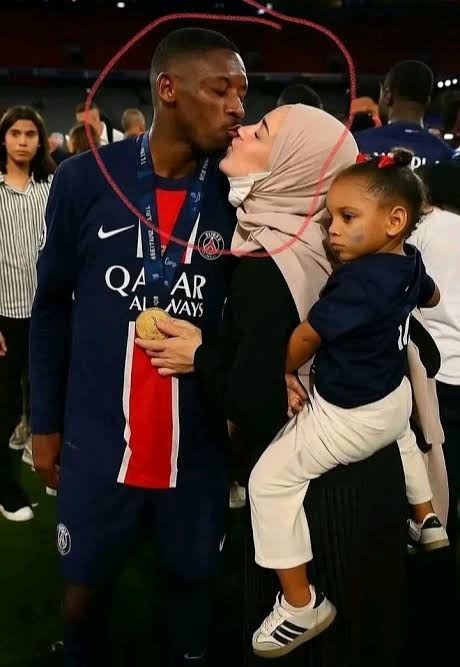

A quieter social circle, disciplined routines, and mental focus replaced chaos, turning raw talent into sustained excellence. The so-called “Rima Effect” has become shorthand for how personal order can unlock elite performance.
If Dembélé represents transformation, Declan Rice represents continuity. In a football culture often fascinated by celebrity partners, Rice’s long-term relationship with Lauren Fryer stands out for its ordinariness—and its strength.


This is no longer just anecdotal romance. Clubs are increasingly factoring a player’s personal “ecosystem” into recruitment decisions. Recovery habits, sleep patterns, mental clarity, and long-term health are all influenced by life away from training grounds. The data suggests fewer soft-tissue injuries, sharper decision-making in high-pressure moments, and longer peak years for players who operate from a place of personal balance.
The old assumption that partners are distractions is fading fast. In its place is a more mature understanding: the right partner is a performance anchor. Rima Edbouche and Lauren Fryer represent different models—one transformative, the other foundational—but the outcome is the same. They provide psychological safety, allowing their partners to take risks, recover from failure, and sustain excellence.
In modern football’s unforgiving economy of pressure and expectation, the most important signing a player ever makes is not announced on deadline day. It happens quietly, at home. As Dembélé and Rice are showing, the real power behind the noise of the stadium is the stability found far from it.


