




Manny Ita –
In March 2026, Nigeria shared a staggering N1.894 trillion from the Federation Account Allocation Committee (FAAC). On paper, it is a moment of fiscal triumph. State allocations have surged by over 32% year-on-year, buoyed by subsidy removal and currency adjustments. Government coffers are fuller than they have been in years.
Yet across the country, the lived reality tells a different story.
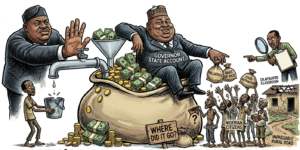
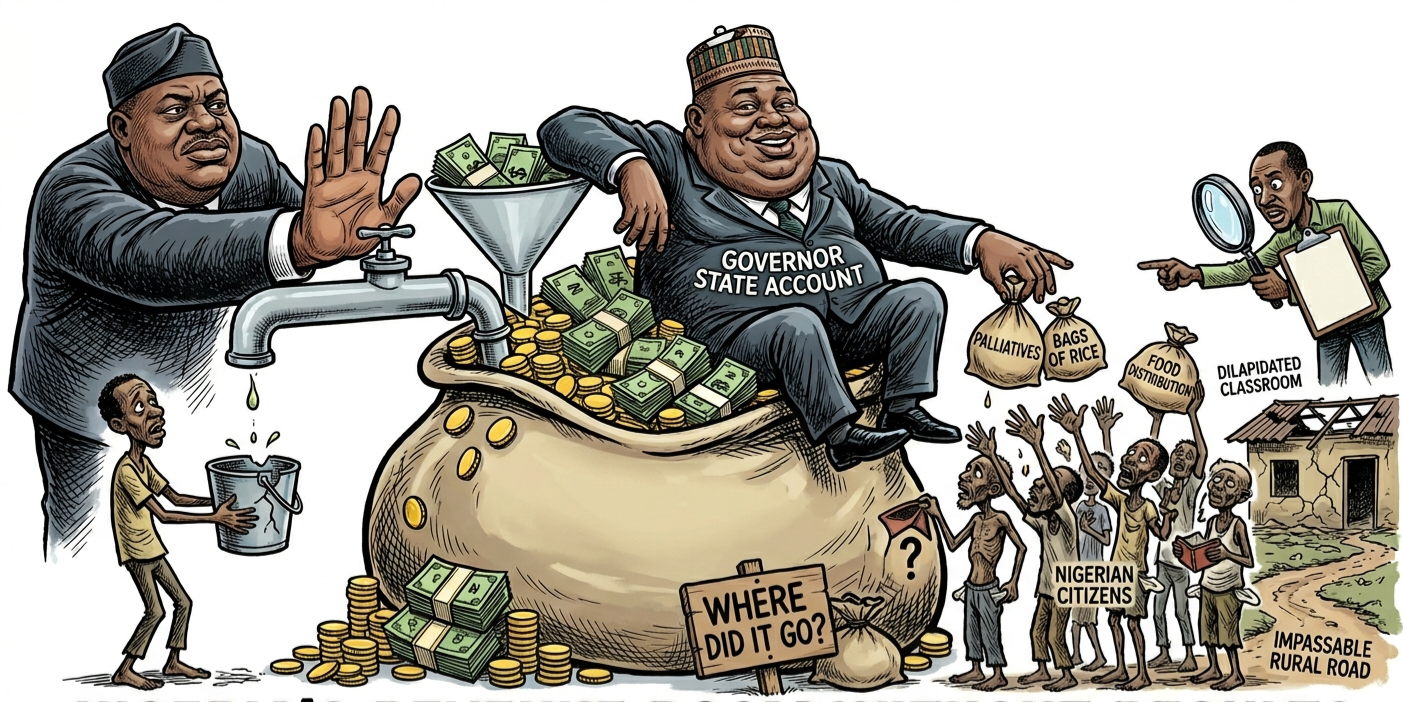
This is the paradox at the heart of Nigeria’s current political economy: a revenue surge alongside a service slump. Classrooms remain dilapidated, rural roads are impassable, and primary healthcare centres struggle to function. If revenues have more than doubled since 2022, why has the quality of governance not followed the same trajectory?
The question is no longer abstract. It is brutally simple: if the coffers are full, why are citizens’ pockets still empty?
Governors must now be challenged to present a clear “Project-to-Naira” ratio. It is no longer enough to announce allocations or celebrate FAAC figures. Nigerians deserve to see tangible, measurable outcomes tied directly to every naira received. Without that transparency, the windfall becomes little more than an accounting illusion.
Nowhere is this disconnect more glaring than at the local government level. Despite a landmark Supreme Court ruling and sustained federal pressure, the autonomy of the 774 local governments remains largely theoretical. State Joint Local Government Accounts continue to function as bottlenecks, allowing governors to act as gatekeepers of funds meant for grassroots development.
In January 2026 alone, N513 billion was allocated to local governments. Yet, across rural Nigeria, there is little evidence of this injection. The promise of transforming local councils into engines of economic activity has instead been suffocated by bureaucratic control. What should have been a grassroots revival has become a ghost story—visible in figures, invisible in impact.
At the same time, many states appear trapped in what can only be described as the “stomach infrastructure” cycle. Rather than channeling increased revenues into durable, productivity-enhancing investments—such as independent power projects, agro-processing hubs, or industrial clusters—governments continue to rely on short-term palliatives.
Food distribution exercises dominate headlines and photo opportunities. Bags of rice are handed out. Temporary relief is provided. But these gestures, while politically convenient, do little to build long-term economic resilience. A state receiving tens of billions monthly has the capacity to transform its economic base. Instead, it risks consuming its future one grain at a time.
The deeper issue underpinning all of this is accountability—or the lack of it.
While the federal budget faces intense scrutiny from the National Assembly, civil society, and the media, state finances remain largely opaque. Most Nigerians can critique federal policies in detail, yet very few can name their State Commissioner for Finance or explain how their state’s monthly allocation is spent.
This imbalance must change.
The next phase of civic engagement in Nigeria must shift from Abuja to the states. Citizens, civil society organisations, and the media must begin to demand state-level transparency with the same intensity applied at the federal level. What is needed is nothing short of a social audit of the states—a systematic interrogation of how public funds are allocated, managed, and delivered.
Because the truth is uncomfortable but unavoidable: Nigeria is not just a poor country. It is a country where wealth is increasingly centralized in government accounts while public welfare stagnates.
The FAAC windfall was supposed to be a turning point. Instead, it has exposed a deeper structural failure—one where increased revenue does not automatically translate into improved lives.
Until that link is enforced through transparency, accountability, and political will, Nigeria will remain a nation where prosperity is reported in trillions but rarely felt on the streets.


