

Manny Ita –
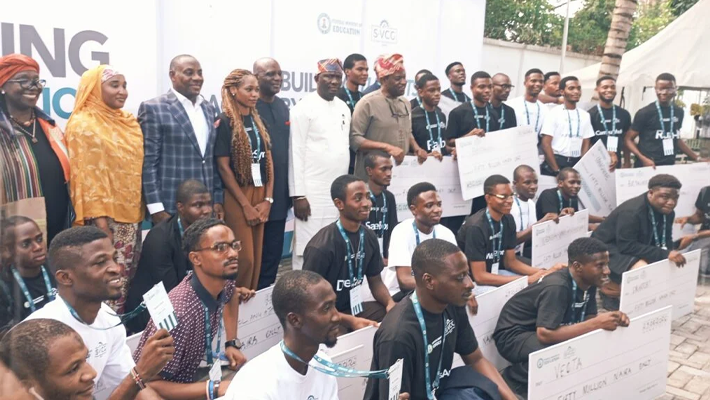
Nigeria’s student innovation ecosystem has received a significant boost following the Federal Government’s disbursement of approximately ₦2.5 billion in grants to 45 student-led startups, marking one of the country’s largest direct investments in youth entrepreneurship. The funding was awarded under the 2026 Student Venture Capital Grant (S-VCG) programme after a highly competitive selection process that attracted over 30,000 applications from more than 400 tertiary institutions nationwide.
The initiative is designed to transform universities into hubs of innovation and enterprise by providing early-stage founders with equity-free funding of up to ₦50 million, alongside mentorship, incubation support, and access to digital tools. Government officials say the programme aligns with broader economic goals of job creation, skills development, and innovation-led growth, particularly at a time when access to venture capital has become more limited for young entrepreneurs.
Among the standout beneficiaries is Refree-G, a blockchain-powered crowdfunding platform developed by alumni of Nile University. The startup secured ₦50 million in funding, positioning it to scale its technology-driven solution aimed at facilitating transparent fundraising and social impact initiatives. Early traction for the platform includes thousands of users and measurable engagement in donations and petitions, highlighting its potential to expand within and beyond Nigeria.
Officials from the Ministry of Education emphasized that the S-VCG programme is more than just financial support, describing it as a strategic effort to nurture a new generation of problem-solvers capable of building scalable businesses across sectors such as fintech, edtech, agritech, and digital services. The initiative also reflects a policy shift toward embedding entrepreneurship within Nigeria’s higher education system, ensuring that students graduate not only as job seekers but as job creators.
Stakeholders in the innovation ecosystem have welcomed the move, noting that non-dilutive funding like this can help bridge the early-stage financing gap that many startups face. By reducing the risks associated with launching new ventures, the programme is expected to stimulate more innovation, attract future private investment, and strengthen Nigeria’s position within Africa’s evolving startup landscape.
As the beneficiaries begin to deploy the funds, attention will now shift to execution and scalability, with policymakers and industry leaders hopeful that the initiative will produce sustainable businesses capable of driving long-term economic growth and employment opportunities.
