






Manny Ita –
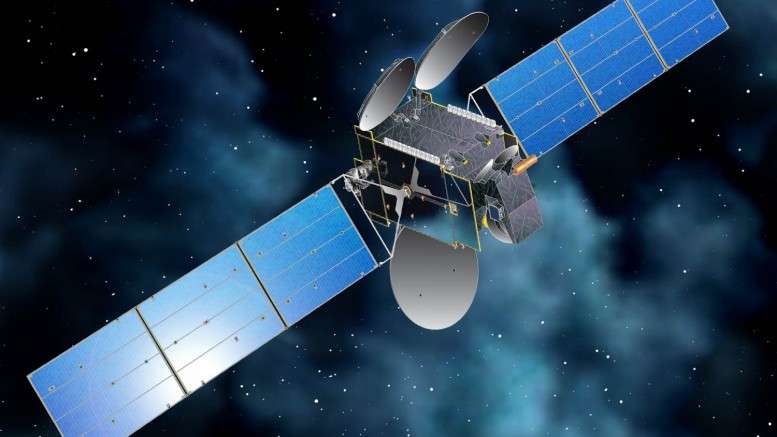
The Federal Government of Nigeria has officially entered the execution phase of its next-generation satellite program following President Bola Ahmed Tinubu’s approval for the acquisition of two new communication satellites, NIGCOMSAT-2A and 2B. The announcement was made by Mrs. Jane Nkechi Egerton-Idehen, Managing Director of Nigerian Communications Satellite Limited (NIGCOMSAT), during the opening of the 2026 Nigerian Satellite Week in Abuja. The event, themed “Harnessing Space Technology for an Extraordinary Nigeria,” highlights a strategic shift toward utilizing space assets as a primary driver for national development and sovereignty.
According to the Minister of Communications, Innovation and Digital Economy, Dr. Bosun Tijani, and NIGCOMSAT officials, NIGCOMSAT-2A is scheduled for launch in 2028, with NIGCOMSAT-2B expected to follow in 2029. The project has moved beyond the tender stage and is currently in the financing and implementation phase, with the government engaging Development Finance Institutions (DFIs) to secure the necessary investment.
The new satellites are designed to replace and expand the capabilities of Nigeria’s existing orbital assets, focusing on several critical areas. For National Security, the satellites will provide high-resolution data and real-time communication channels for military intelligence, surveillance, and reconnaissance. This is expected to significantly enhance the capacity of security agencies to track terrorism, insurgency, and cross-border crimes.
In the Agriculture sector, by enabling precision agriculture, the satellites will help monitor crop health, soil conditions, and weather patterns, ultimately increasing food security and the sector’s overall competitiveness. Furthermore, the “Project 774” initiative aims to leverage this new infrastructure to provide internet connectivity to all 774 Local Government Areas in Nigeria, bridging the digital divide for underserved rural communities through e-learning and remote healthcare.
Nigeria also aims to solidify its Regional Leadership as the only country in West Africa with a sovereign communication satellite. This positions the nation to become a regional hub, providing satellite services to neighboring countries like Niger, Chad, and Cameroon, which currently face significantly higher costs for data capacity.
Dr. Tijani emphasized that these satellites are not standalone projects but are being integrated with the ongoing rollout of 90,000 kilometers of fiber-optic cable and nearly 4,000 telecom towers across the country. “The President’s approval is a defining commitment to building the future,” Tijani stated. “Infrastructure alone is not enough; it is what we build around it. Satellite technology allows us to extend connectivity to places where physical infrastructure cannot reach, ensuring no Nigerian is left behind in the digital economy.”