

Manny Ita –
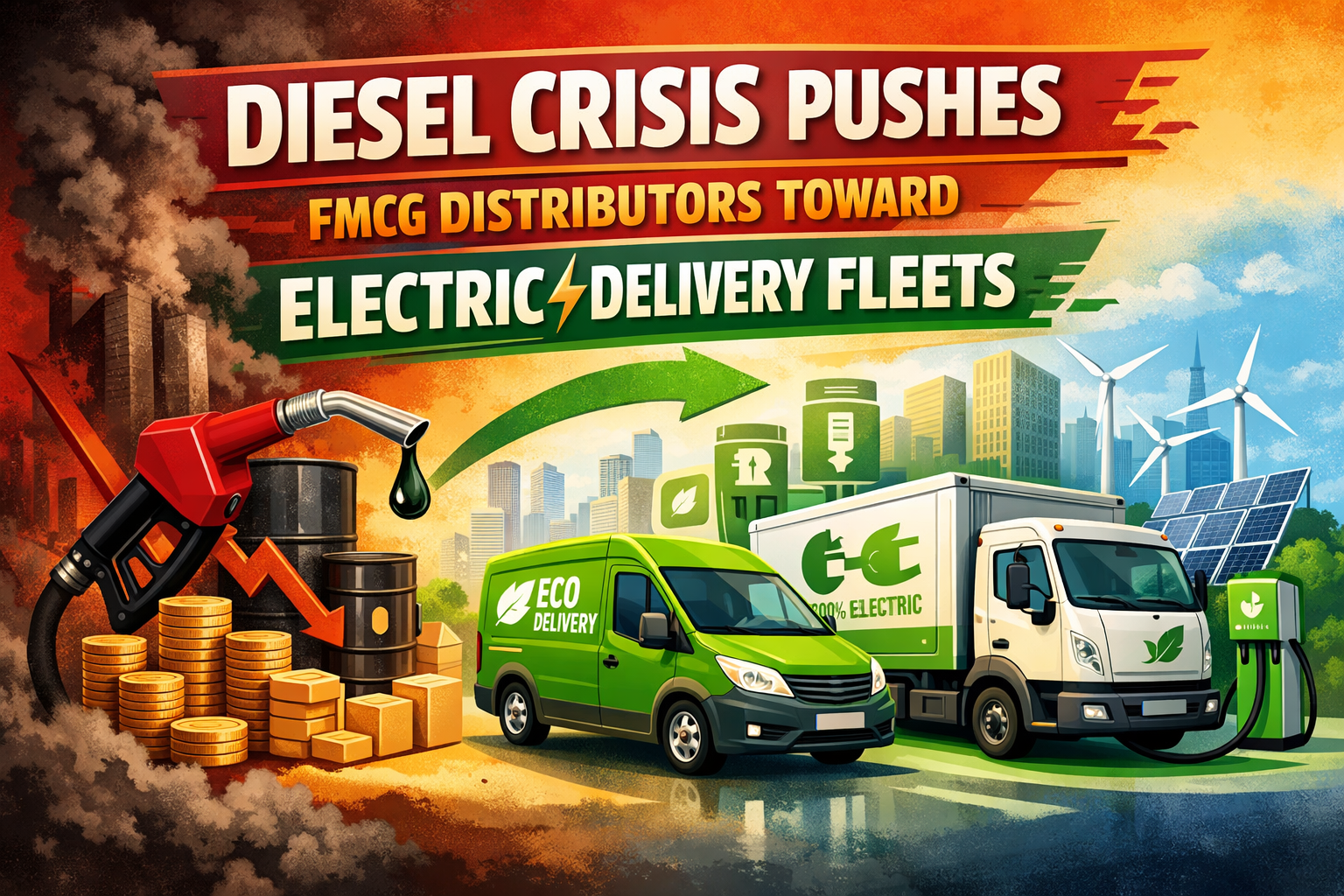
Major fast-moving consumer goods (FMCG) distributors across Nigeria are accelerating the adoption of electric vehicles (EVs) for last-mile delivery as soaring diesel prices continue to erode profit margins and disrupt supply chains. What began as limited pilot programs framed around environmental sustainability is rapidly evolving into a hard-nosed cost-optimization strategy, with companies seeking relief from volatile fuel expenses and generator-dependent logistics operations.
Industry executives say transportation has become one of the most expensive components of product distribution, particularly for companies moving goods daily between warehouses, wholesalers, and neighborhood retailers. “Diesel costs have fundamentally changed the economics of delivery,” a senior logistics manager at a multinational FMCG firm operating in Lagos said. “Electric vehicles are no longer about corporate image — they are about survival and efficiency.”
Several distributors have begun deploying electric vans, tricycles, and light trucks on high-density urban routes where daily mileage is predictable and charging logistics are manageable. Analysts note that while the upfront cost of EVs remains significantly higher than conventional vehicles, operators expect long-term savings from reduced fuel consumption, lower maintenance requirements, and fewer engine breakdowns. “When you calculate total cost of ownership over three to five years, the numbers are starting to favor electrification,” an energy consultant familiar with fleet transitions said.
Companies are also exploring private charging infrastructure at depots to bypass Nigeria’s unreliable public power supply. Some firms are pairing EV charging stations with solar installations and battery storage systems to ensure operational continuity. “Energy independence is becoming part of logistics planning,” a distribution executive explained. “If you control your power source, you control your delivery schedule.”
Retail groups report that electric two- and three-wheelers are particularly attractive for penetrating congested urban neighborhoods where conventional trucks face delays and high fuel consumption. Operators say the quieter vehicles also enable early-morning or late-night deliveries without violating noise restrictions. “They are nimble, cost-effective, and ideal for short-haul routes,” said a fleet supervisor for a major beverage distributor.
Government officials and industry bodies have welcomed the trend, arguing that transport electrification could reduce urban air pollution and ease pressure on foreign exchange reserves spent on fuel imports. However, they acknowledge that widespread adoption will depend on financing options, charging infrastructure expansion, and supportive regulatory policies. “The private sector is moving faster than policy right now,” an official at a federal transport agency noted. “Regulation will need to catch up.”
Market watchers say the shift could transform Nigeria’s distribution ecosystem if early adopters demonstrate measurable savings and operational reliability. With consumer demand remaining sensitive to price increases, distributors are under pressure to cut costs without passing them on to retailers and households. “Every naira saved in logistics helps stabilize shelf prices,” the energy consultant said.
As diesel prices remain elevated and supply uncertainties persist, more FMCG companies are expected to electrify portions of their fleets in the coming months. For many operators, the calculation is increasingly straightforward. “This is not primarily a green initiative,” the logistics manager said. “It is a business decision driven by economics, and the economics are becoming impossible to ignore.”
