

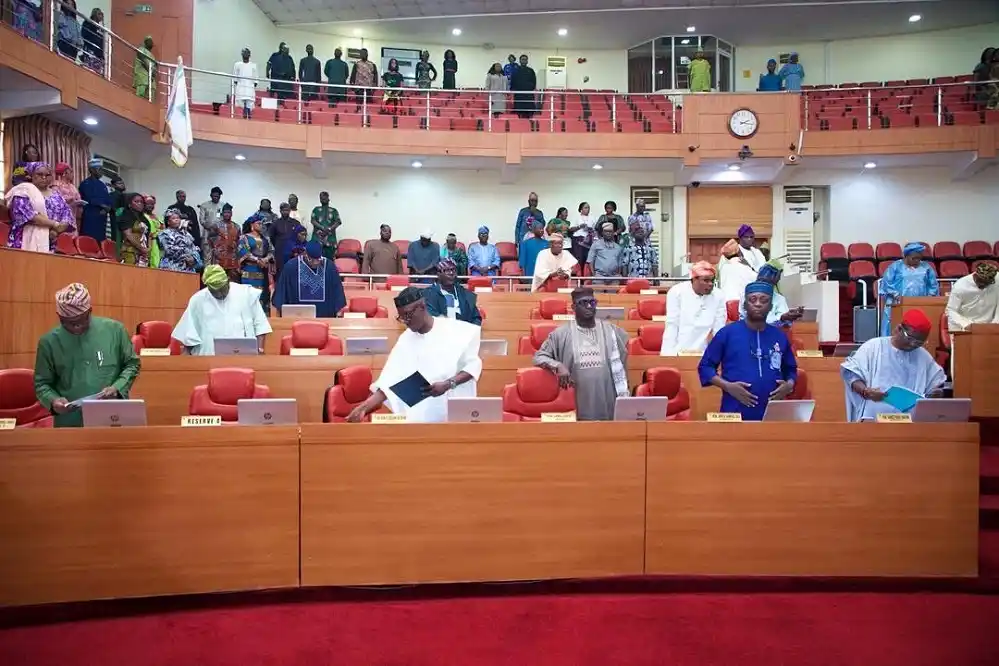
Lagos Assembly prefers full autonomy for state’s operations of its police.
The Lagos State House of Assembly has unanimously supported the proposed establishment of State Police following its consideration of the constitutional amendment bill transmitted by the National Assembly.
The Speaker, Rt. Hon. Mudashiru Obasa, disclosed this on Tuesday during plenary, after lawmakers cut short their recess to consider the bill.
After reading the relevant sections of the proposed amendment, Obasa said the establishment of State Police had been a recurring issue from the 5th to the 10th Assembly, with successive legislatures deliberating on ways to strengthen security and protect lives and property.
He described the development as a step forward but lamented that some concerns raised by State legislatures, particularly those relating to control and the relationship between federal and state policing, had not been adequately addressed.
“Well, it is unfortunate that what we believe in, our art and intention as well as our aspirations over the years, has not been fully captured in this alteration, even though we are pleased that at the end of the day, we have State Police in view.
“Yes, our interest and position have not been well taken care of in this alteration. And I am sure that if you follow, as we cited, each section and paragraph, you will realise that major control still lies at the centre.
“Even where the State House of Assembly has power, it is joined with the National Assembly. And there is a provision that, where the National and the State conflict, the National supersedes.
“I don’t know if it is State Police or an offshoot of the National Police. But whatever it is, I want to state that at least, it is a step forward. And I want to believe there is hope in the future that further amendments that will give total control to the states will happen,” Obasa said.
The proposed constitutional amendment, titled the Constitution of the Federal Republic of Nigeria, 1999 (Sixth Alteration) Act, 2026, seeks to establish State Police Services and related matters.
Obasa said he was pleased that the issue of State Police had finally received attention, and he expressed optimism that future amendments would give states greater control over their policing arrangements.
He commended President Bola Tinubu for his commitment to democracy and democratic institutions, as well as the National Assembly, particularly the Senate and the House of Representatives, for their contributions to the amendment process.
The Speaker also commended State Houses of Assembly for supporting the proposal, noting that nearly 25 states had already expressed support for the constitutional alteration.
According to him, the existing disparity could give one level of government an advantage over another. He stressed that the functions and responsibilities of State Police should be clearly defined, with appropriate provisions for state legislatures.
Obasa further called for a clear constitutional provision for parliamentary police to protect legislative institutions and preserve their independence, citing past incidents in which governors allegedly demolished or locked state legislative buildings.
He said establishing parliamentary police would help prevent such incidents, strengthen state legislatures and safeguard democracy.
The Speaker expressed confidence that the process would address outstanding issues, thanked his colleagues for supporting the amendment, and urged continued cooperation with the National Assembly.
