





Manny Ita –
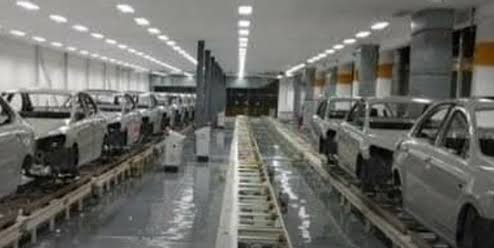
Innoson Vehicle Manufacturing (IVM) is reaching the final stages of construction on a multi-billion naira factory dedicated to the production of Compressed Natural Gas (CNG) trucks and buses. The facility, located in Umuezena, Nnewi, is positioned to become one of the largest dedicated CNG automotive plants in the world, with an installed capacity to produce 3,000 units annually across six different vehicle categories.
The expansion comes as Nigerian transporters face significant economic pressure, with petrol prices fluctuating between ₦739 and ₦910 per litre this week. Innocent Chukwuma, the Executive Chairman of Innoson Group, emphasized that the investment was a proactive response to the nation’s energy transition. “The government’s initiative on CNG is the best idea for transportation in this country because CNG offers many benefits for Nigeria,” Chukwuma stated. “That benefit is what I recognized before I started the factory to produce vehicles that run on CNG.”
The new plant is expected to be fully commissioned within the next few months and will incorporate state-of-the-art automated manufacturing technology. Beyond vehicle assembly, the facility is designed to support a broader industrial ecosystem, including a technical training scheme for Nigerian youths. Chukwuma noted that the expansion would significantly boost the company’s workforce, stating, “In 2026 alone, we intend to employ about 2,000 additional workers following the establishment of this new factory.”
The shift toward CNG is viewed by industry analysts as a critical move toward energy diversification, utilizing Nigeria’s vast natural gas reserves to mitigate inflationary pressures in the transport sector. By providing a domestic alternative to imported petrol-powered heavy-duty vehicles, IVM aims to lower operational costs for logistics and public transit providers. “Today, everyone who tries CNG will find that it is the way forward for this nation,” Chukwuma added.
As the factory nears completion, the company has also been in discussions with both state and federal authorities to integrate these locally manufactured CNG units into public mass transit schemes. The project aligns with broader national goals to reduce carbon emissions and decrease the heavy financial burden of fuel subsidies on the Nigerian economy.