







Manny Ita
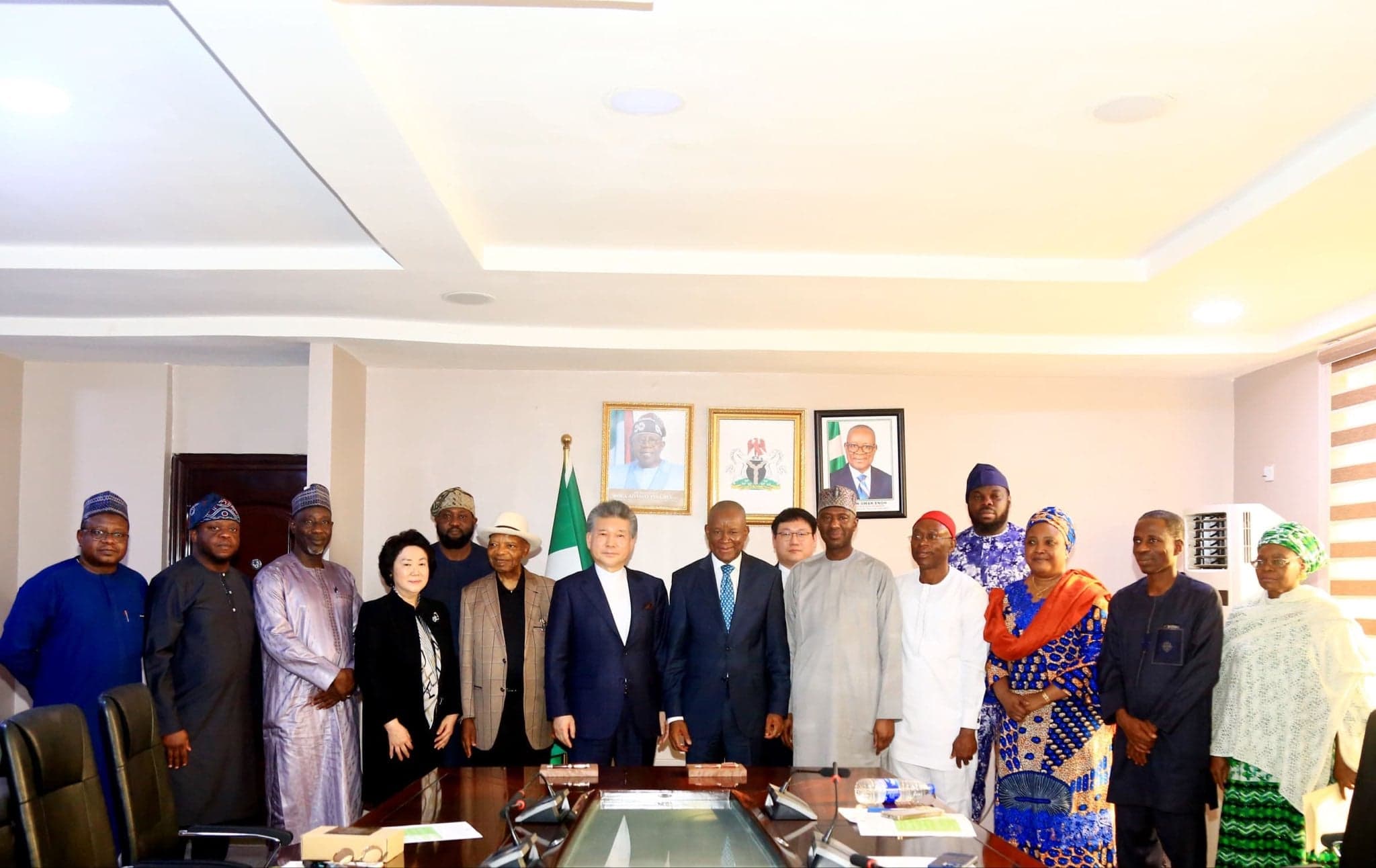
The Federal Government of Nigeria has entered into a Memorandum of Understanding (MoU) with South Korea’s Asia Economic Development Committee (AEDC) to establish the first Electric Vehicle (EV) manufacturing plant in Africa. The agreement, signed on January 30, 2026, aims to develop critical charging infrastructure across the country and position Nigeria as a regional leader in green automotive technology. Senator John Enoh, the Minister of State for Industry, Trade and Investment, signed the document on behalf of the Nigerian government, while AEDC Chairman Yoon Suk-hun represented the South Korean organization. According to a statement from the National Automotive Design and Development Council (NADDC), the partnership “aligns strongly with Nigeria’s National Energy Transition Plan (ETP) and National Automotive Industry Development Plan (NAIDP).”
The project is structured to be implemented in phases, beginning with the assembly of electric vehicles before expanding into comprehensive local manufacturing. Officials estimate that the plant will eventually reach a production capacity of 300,000 vehicles per year and generate approximately 10,000 jobs within the local economy. In its official communication, the NADDC stated, “The project will be implemented in phases, beginning with EV assembly and expanding into full in-house production, with an estimated capacity of 300,000 vehicles and the creation of approximately 10,000 jobs.” The Director-General of the NADDC, Otunba Oluwemimo Joseph Osanipin, speaking through the Head of Policy, Planning and Statistics, Mr. Nura Sidi, emphasized that the initiative is designed to accelerate investment promotion, human capital development, and research.
Industry analysts note that while the Nigerian government has ambitious goals, including a 100 percent transition to electric vehicles by 2060, the sector faces significant hurdles such as inconsistent electricity supply and poor road infrastructure. However, the government maintained that the country is “steadily building a sustainable automotive ecosystem that supports local manufacturing, green energy adoption, and global competitiveness.” This latest agreement follows several years of preliminary efforts, including a 2022 MoU with Israeli and Japanese firms and a 2025 announcement by the Chinese government regarding plans for EV factories in Nigeria. Current local players already involved in the assembly space include Innoson Vehicle Manufacturing, SAGLEV, and Jet Motor Company, which the government hopes to integrate into this expanding industrial framework.


