



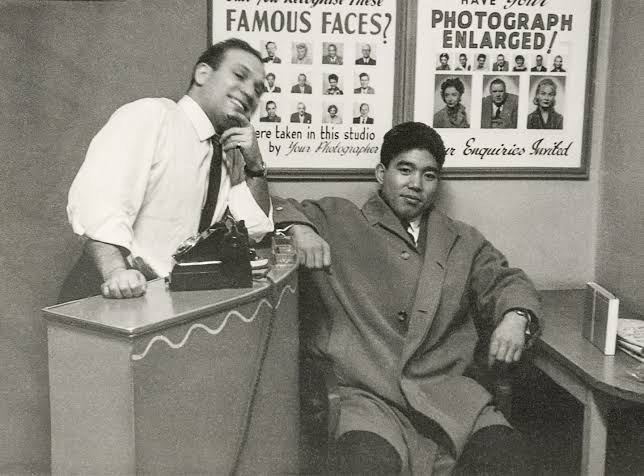
Manny Ita –
A modest photography studio tucked away on Oxford Street has emerged as an unlikely hub of celebrity history, having captured passport photographs of hundreds of global stars over more than 60 years.
The family-run Passport Photo Service, founded by Dave Sharkey and later managed by his son Philip Sharkey, built a reputation for producing quick, no-frills portraits—often in under ten minutes. Despite its simplicity, the studio attracted an extraordinary clientele due to its proximity to embassies and its efficient service.
Over the decades, around 800 notable figures sat before its camera, including icons like Muhammad Ali, Madonna, Chaka Khan, Bill Murray, Stella McCartney, Katy Perry, Arnold Schwarzenegger, and Tilda Swinton.
Although widely known among visitors for its wall of celebrity portraits, the studio’s archive remained largely unseen by the public until after its closure in 2019. The shutdown was partly influenced by changing business conditions, including the relocation of the U.S. Embassy and the transformation of Oxford Street into a high-end retail zone that left little room for small, independent businesses.
Determined to preserve the studio’s legacy, Philip Sharkey compiled a collection of more than 300 portraits into a book titled Passport Photo Service, published by Phaidon. The book spans images from the 1950s through the 2010s, offering a rare, stripped-down glimpse of celebrities in a more candid and unguarded state.
Sharkey describes passport photography as a “great equalizer,” noting that even the most famous individuals appeared without the usual glamour of stylists or publicists, often arriving straight from embassy appointments. This resulted in authentic portraits that contrast sharply with typical red-carpet images.
The studio itself evolved over time, transitioning from traditional darkroom techniques to faster automated processing and eventually digital photography, while maintaining its signature efficiency and studio lighting setup.
Beyond its celebrity connections, the project also serves as a tribute to a disappearing era of London—when small, family-run businesses could thrive in central locations. Today, the original studio space has been repurposed, symbolizing the broader changes reshaping the city.
While many famous faces are featured in the book, Sharkey revealed that some portraits remain unreleased, with a few identities deliberately kept private, preserving an element of mystery from the studio’s storied past.