





Manny Ita —
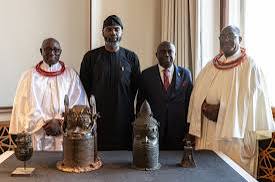
Nigeria recorded a significant cultural milestone in March 2026 as a museum in Zurich officially transferred ownership of several Benin Bronzes back to the country, marking another breakthrough in the global movement to return African heritage taken during the colonial era.
The artefacts, originally removed from the ancient Benin Kingdom during the 1897 British punitive expedition, are among the most important cultural works in West Africa, representing royal authority, spiritual traditions, and the advanced bronze-casting skills of the Benin civilisation. Their return is being described as both a historical correction and a symbolic restoration of cultural identity.
Unlike previous arrangements where artefacts were loaned or temporarily displayed abroad, the Zurich institution’s decision in March 2026 grants full legal ownership back to Nigeria. This shift reflects a growing international trend among museums to move from custodianship to restitution, especially for objects acquired under colonial circumstances.
Nigerian cultural authorities, including the National Commission for Museums and Monuments, are expected to oversee the reception, documentation, and preservation of the returned works. Plans are underway to integrate them into national museum collections and strengthen exhibition spaces that highlight Nigeria’s pre-colonial history and artistic achievements.
The returned bronzes are also expected to play a major role in boosting cultural tourism. Authorities are positioning heritage cities such as Benin City as key destinations for international visitors, researchers, and members of the African diaspora seeking deeper connection to ancestral history. Improved museum infrastructure and modern conservation facilities are part of broader plans tied to these returns.
The March 2026 restitution is being viewed by cultural experts as part of a wider global reassessment of colonial-era museum collections, where institutions across Europe are increasingly facing pressure to return contested artefacts. For Nigeria, it strengthens ongoing efforts to rebuild cultural archives and reclaim items that were dispersed across foreign museums for more than a century.
Beyond cultural symbolism, the development also carries economic and diplomatic significance. Cultural tourism linked to heritage restitution is expected to contribute to local economies through increased visitor traffic, hospitality demand, and creative industry growth.
Overall, the Zurich transfer in March 2026 stands as a landmark moment in Nigeria’s cultural revival, reinforcing historical justice while strengthening the country’s ambition to turn heritage into a powerful pillar of tourism, education, and national identity.