





Manny Ita –
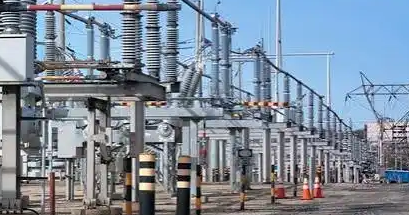
The Federal Government has officially reactivated the $2.3 billion power agreement between Nigeria and Germany aimed at overhauling the country’s electricity transmission infrastructure and scaling capacity to 25,000 megawatts by 2025/2026.
The agreement, signed under former President Muhammadu Buhari as part of the Presidential Power Initiative (PPI), is being implemented in partnership with Siemens Energy through a government-to-government framework between Nigeria and Germany. The project is designed to modernise and expand the national grid by upgrading transmission and distribution networks to improve efficiency and reliability.
Germany’s Deputy Head of Mission in Nigeria, Johannes Lehne, disclosed that the project had recorded little tangible progress before being revived by the current administration. He noted that the agreement was effectively “dormant” until President Bola Ahmed Tinubu assumed office and renewed political and administrative commitment to its execution.
Under the original roadmap of the initiative, the project was structured in phases to increase operational capacity from about 4,000MW at the time of signing to 7,000MW, then 11,000MW, and ultimately 25,000MW. However, implementation delays slowed early progress, leaving key milestones unmet.
Since the reactivation, government officials say concrete steps have been taken to accelerate delivery. These include the installation and commissioning of mobile substations and power transformers aimed at strengthening transmission capacity at critical grid points nationwide. Engineering, Procurement and Construction contracts have also been approved to facilitate broader infrastructure upgrades across the country.
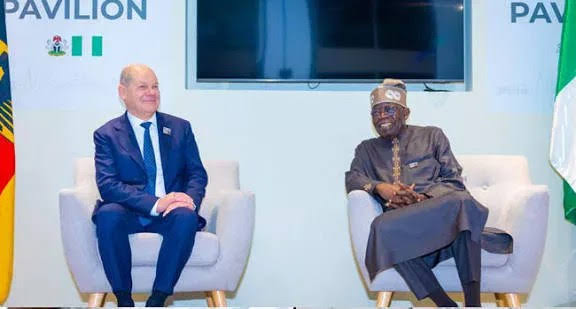
President Tinubu has reaffirmed his administration’s commitment to the initiative, pledging additional funding support, including plans to deploy 10 new mobile power stations to stabilise electricity supply while large-scale grid enhancements continue.
Industry analysts say the successful implementation of the Siemens deal could significantly transform Nigeria’s power sector by improving supply stability, reducing dependence on self-generation through diesel and petrol generators, and supporting industrial growth. Stable electricity remains a critical factor in boosting manufacturing, healthcare delivery, digital services and small-scale enterprises.
The initiative also includes provisions for technical training and technology transfer to strengthen local capacity within Nigeria’s power sector. Officials maintain that the renewed partnership with Germany signals a broader commitment to long-term energy sector reform and infrastructure modernisation.
While the 25,000MW target remains ambitious, government sources insist that the revived agreement places Nigeria back on track toward achieving substantial grid expansion and long-overdue electricity sector improvements.