







Manny Ita-
Nigerian government agencies and international partners have convened for the National Early Warning Services for Health (WISER) workshop to develop an integrated climate and health early warning system. The initiative serves as a direct response to Nigeria’s third Nationally Determined Contribution (NDC 3.0), which mandates the implementation of a national climate-health warning framework across at least 18 states by the year 2030.
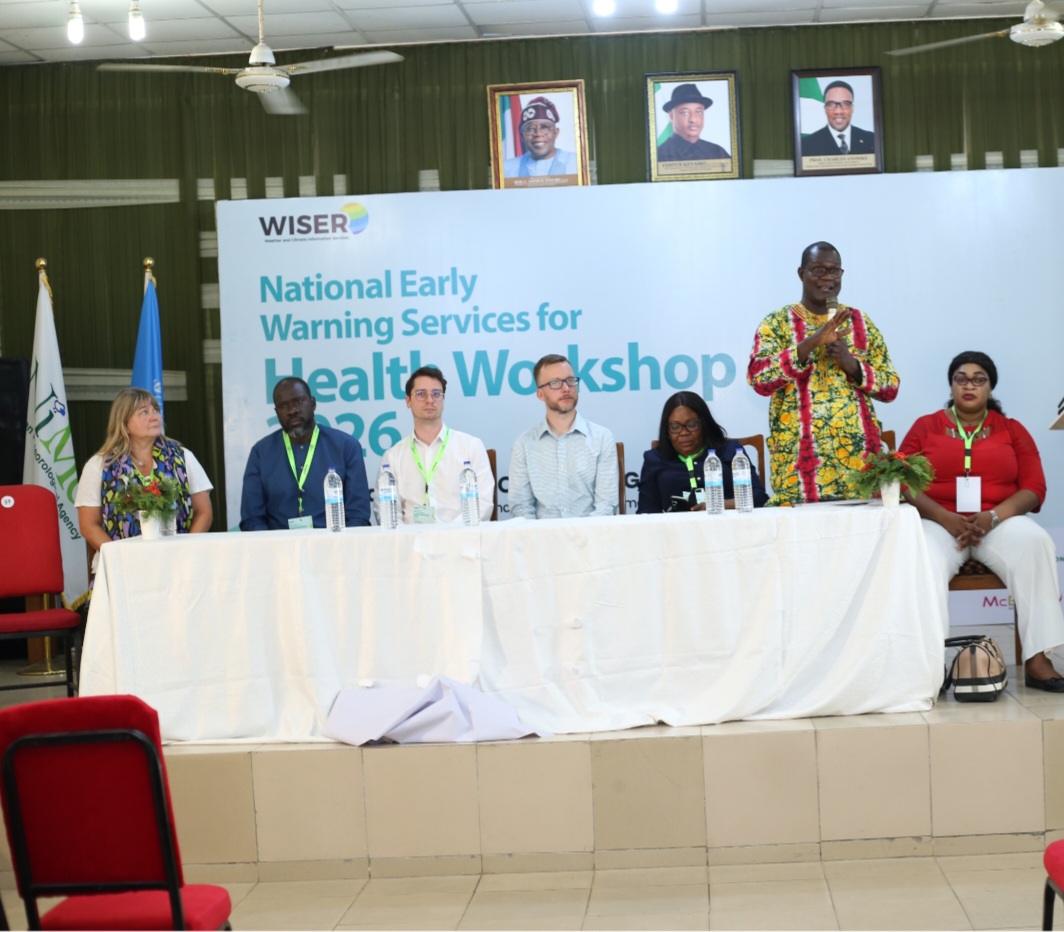

PIX 1-2: L-R: Nyree Pinder, Global Strategic Partnerships Manager, Met Office , Dr Ousmane Ndiaye, Director General, African Center of Meteorogical Application for Development (ACMAD), Nathan Post, Foreign, Commonwealth & Development Office, UK Health Lead & Met Office international economist, Hunter Jones, Global Lead, Climate Services for Health,WHO/WMO Climate and Health Joint Office, Glory Amarachi Onyegbule, Director Applied Meteorological Services, Nigerian Meteorological Agency (NiMet), Prof. Odjugo, Peter Akpodiogaga-a Ovuyovwiroye, Director Research and Training, Engr. Abohwo Ngozi Judith, Director Hydrology, Federal Ministry of Water Resources and Sanitation, at the World Press Conference of the National Early Warning Services (WISER) for Health Workshop 2026 held at the World Meteorological Organisation Regional Training Center (WMO RTC) in Oshodi, Lagos, Nigeria today
The project aims to address escalating health risks driven by climate change, pollution, and ecosystem degradation, including respiratory illnesses, water-borne diseases, and food insecurity. Hosted by the Nigerian Meteorological Service (NiMet), the collaboration includes the Federal Ministry of Health and Social Welfare, the National Emergency Management Authority (NEMA), the National Hydrological Services Agency (NIHSA), and the National Orientation Agency (NOA). Representatives from the ministries of agriculture, budget planning, and the Lagos State Government are also participating in the cross-sectoral effort.
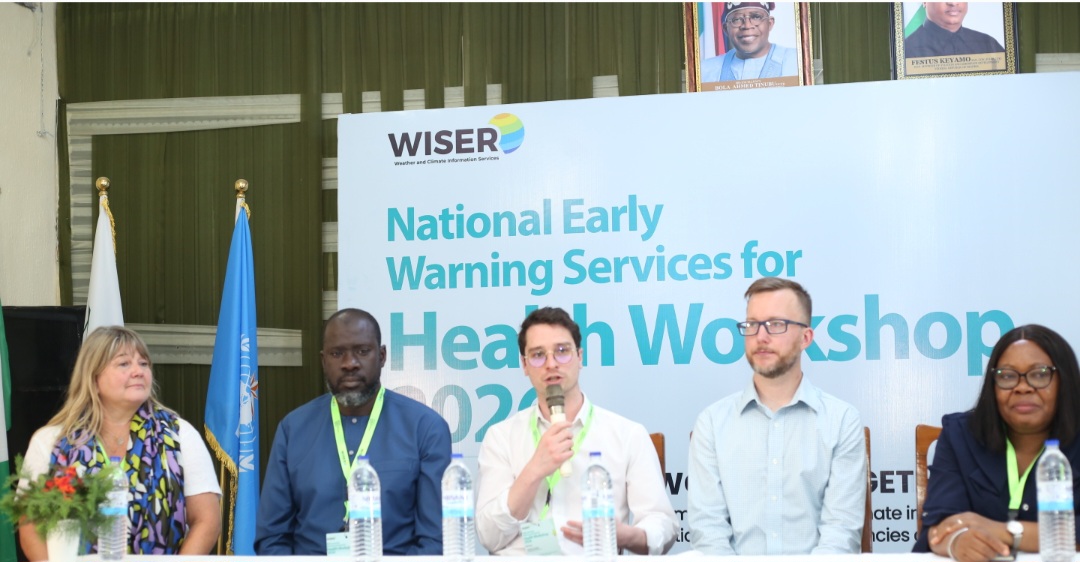

L-R: Nyree Pinder, Global Strategic Partnerships Manager, Met Office, Dr Ousmane Ndiaye, Director General, African Center of Meteorogical Application for Development (ACMAD), Nathan Post, Foreign, Commonwealth & Development Office, UK Health Lead & Met Office international economist, Hunter Jones, Global Lead, Climate Services for Health, WHO/WMO Climate and Health Joint Office, Glory Amarachi Onyegbule, Director Applied Meteorological Services, Nigerian Meteorological Agency (NiMet), at the World Press Conference of the National Early Warning Services (WISER) for Health Workshop 2026 held at the World Meteorological Organisation Regional Training Center (WMO RTC) in Oshodi, Lagos Nigeria today.
To ensure the services are inclusive, the workshop’s activities are being informed by a community-level survey conducted across various Nigerian regions, focusing on the needs of vulnerable populations. The program is supported by international expertise from the UK Met Office, the World Health Organization, the World Bank, and the Rockefeller Foundation. This effort is part of the global WISER Health initiative, co-funded by the UK and the Rockefeller Foundation.
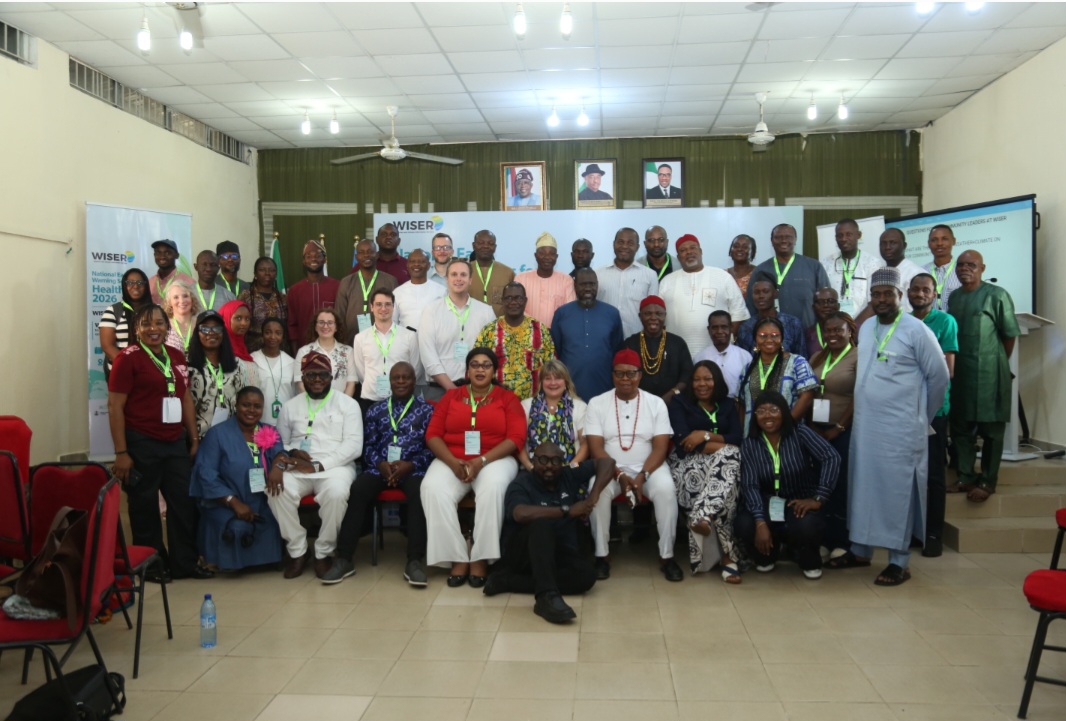

L-R: Nyree Pinder, Global Strategic Partnerships Manager, Met Office, Dr Ousmane Ndiaye, Director General, African Center of Meteorogical Application for Development (ACMAD), Nathan Post, Foreign, Commonwealth & Development Office, UK Health Lead & Met Office international economist, Hunter Jones, Global Lead, Climate Services for Health, WHO/WMO Climate and Health Joint Office, Glory Amarachi Onyegbule, Director Applied Meteorological Services, Nigerian Meteorological Agency (NiMet), at the World Press Conference of the National Early Warning Services (WISER) for Health Workshop 2026 held at the World Meteorological Organisation Regional Training Center (WMO RTC) in Oshodi, Lagos Nigeria today.
Juliet Whitley, Head of Health at the British High Commission in Abuja, noted the significance of the move, stating, “Nigeria is leading the way in developing an early warning system that will better enable its health sector to prepare for and respond to extreme weather. The UK is proud to support Nigeria’s commitment to building a health system that is more resilient to climate change.”
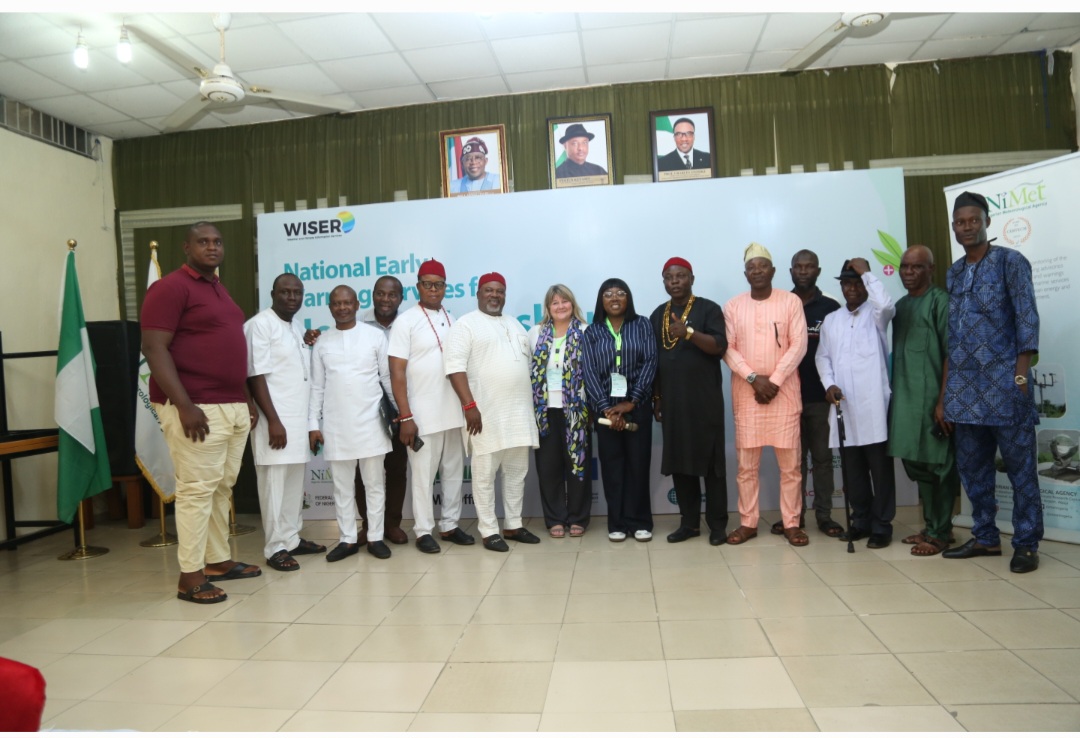

Partners and community leaders at the World Press Conference of the National Early Warning Services (WISER) for Health Workshop 2026 held at the World Meteorological Organisation Regional Training Center (WMO RTC) in Oshodi, Lagos, Nigeria today
Dr. Zakariya Mohammed, Director and Head of Climate Change and Environmental Health Division at the Federal Ministry of Health and Social Welfare, emphasized the timing of the workshop, stating, “With the integration of health considerations into Nigeria’s recently submitted NDC 3.0, this workshop provides an excellent starting point for collaborative efforts toward establishing an operational early warning system for climate and health in Nigeria.”
NEMA’s Chief Disaster Risk Reduction Officer, Isa Abulkasir, highlighted the agency’s operational commitment, adding, “As Nigeria integrates health into its NDC 3.0 framework, this workshop offers a timely opportunity to advance our collaborative efforts toward a climate-resilient health system. NEMA is committed to leveraging climate information and early warning systems to mitigate health risks, enhance community resilience, and reduce the impact of climate-sensitive diseases and disasters—building a safer, more resilient future for all Nigerians.”
A spokesperson for NiMet concluded by framing the project as a necessary shift toward proactive public health protection. “Building an efficient early warning system is not just a scientific responsibility; it is a national imperative. Through collaboration with the health sector and strategic partners, we are working to ensure timely, accurate, and impact-based forecasts translate into early action that saves lives and safeguards livelihoods across Nigeria. Together, we can transform climate intelligence into resilience for healthier communities nationwide.”


